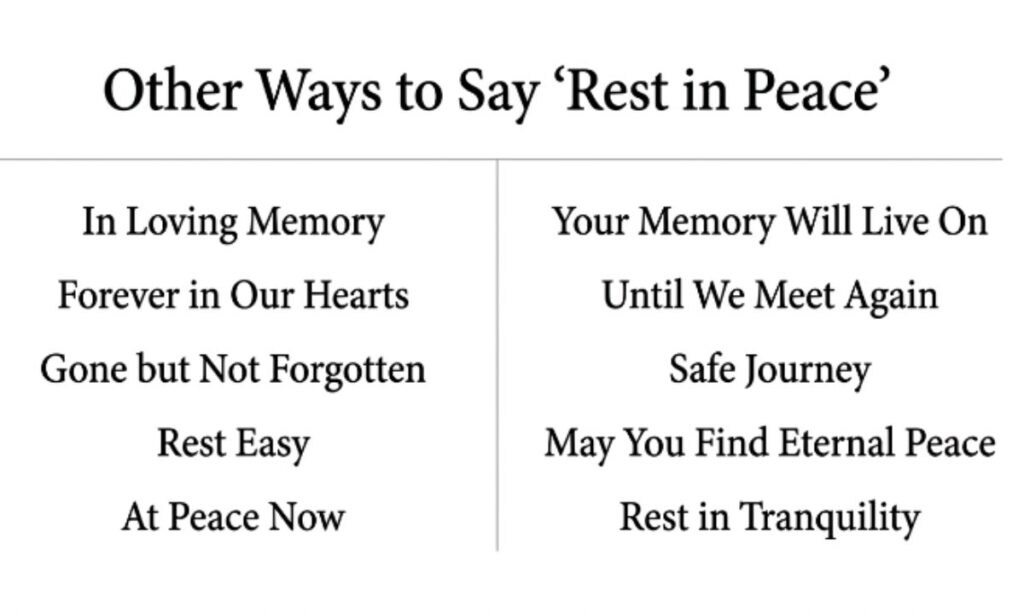
Finding the right words after someone dies is never easy. “Rest in peace” is the phrase most of us reach for first, but it can start to feel automatic when you write it again and again. Looking for other ways to say rest in peace helps you choose words that actually match your relationship with the person and the moment you’re in. This guide walks through 25 heartfelt alternatives, when to use them, and when to leave them alone.
What Does “Rest in Peace” Mean?
“Rest in peace” is a wish for the deceased to be free from pain, struggle, and the weight of life. It comes from an old Latin phrase, requiescat in pace, used in Christian burial rites for centuries.
Today it’s used far beyond religious settings. You’ll see it on gravestones, in obituaries, on social media posts, and in quiet condolence cards. It simply means, “I hope you’re at peace now.”
Is It Professional?
“Rest in peace” is appropriate in most professional settings, including workplace emails, LinkedIn posts, and formal condolence cards. It reads as respectful and measured rather than overly emotional.
That said, in a strictly formal HR communication or a company-wide announcement, some writers prefer more neutral phrasing like “we extend our condolences” or “we honor their memory.” RIP still works fine in most cases, but knowing a few alternatives gives you more control over tone.
Grammar and Correct Usage
“Rest in peace” functions as an imperative wish, not a complete grammatical sentence on its own. It’s typically written with no punctuation needed beyond a period, though many people skip the period entirely.
The abbreviation “RIP” is common in texts and social media but feels too casual for formal writing like obituaries or sympathy cards. Capitalize “Rest in Peace” when it appears as a heading or title, and lowercase it mid-sentence: “May he rest in peace.”
When to Use It
Use “rest in peace” or its alternatives when writing a condolence card, commenting on a memorial post, speaking at a funeral, or marking an anniversary of someone’s passing. It also fits naturally in obituaries and eulogies.
It works well for both close family members and more distant acquaintances, since it’s a universally understood expression of respect.
When Not to Use It
Avoid it in a first message of comfort to someone who just received tragic news; lead with your own words of sympathy first. Skip it entirely if you’re unsure of the family’s religious beliefs and want to stay neutral, since “peace” can carry spiritual undertones for some readers.
It also feels flat when repeated across multiple messages to the same person. Vary your wording so each message feels sincere rather than copied.
25 Better Alternatives to “Rest in Peace”
In Loving Memory
Meaning: This phrase centers on the love that remains after someone is gone. It’s warm, simple, and works across almost any relationship.
Example conversation:
- Person A: “I saw the flowers you sent for the service.”
- Person B: “Yes, I had them write ‘in loving memory’ on the card.”
Best Use: Memorial cards, gravestones, and obituaries. Worst Use: Casual text messages right after hearing the news.
Tone: Gentle, timeless. Quick Tip: Pair it with the person’s name for a more personal feel.
Forever in Our Hearts
Meaning: This phrase promises that the person’s memory will never fade, even as time passes. It leans emotional and personal rather than formal.
Example conversation:
- Person A: “How do you want the plaque to read?”
- Person B: “Forever in our hearts. That’s exactly how we feel.”
Best Use: Family memorials and anniversary tributes. Worst Use: Professional or workplace condolence emails.
Tone: Tender, heartfelt. Quick Tip: Best used by close family or friends, not distant acquaintances.
Gone but Not Forgotten
Meaning: This acknowledges the loss directly while promising the memory will live on. It doesn’t shy away from the sadness of death.
Example conversation:
- Person A: “It’s been a year since he passed.”
- Person B: “Gone but not forgotten. He’d be proud of how far you’ve come.”
Best Use: Anniversary posts and remembrance messages. Worst Use: Formal obituaries needing a more polished tone.
Tone: Honest, reflective. Quick Tip: Works well spoken aloud at gatherings, not just in writing.
Rest Easy
Meaning: A more casual, comforting way to wish someone peace, often used between close friends. It suggests relief from struggle rather than a spiritual destination.
Example conversation:
- Person A: “I still can’t believe he’s gone.”
- Person B: “I know. Rest easy, old friend.”
Best Use: Messages to close friends or informal social posts. Worst Use: Formal business condolences.
Tone: Warm, conversational. Quick Tip: Sounds most natural when spoken directly to the person as if they can hear you.
At Peace Now
Meaning: This phrase brings comfort when someone suffered before passing, focusing on the relief that pain has ended. It’s grounded rather than spiritual.
Example conversation:
- Person A: “The last few months were so hard for her.”
- Person B: “I know. She’s at peace now.”
Best Use: Situations involving illness or long suffering. Worst Use: Sudden or unexpected deaths, where “peace” may feel premature.
Tone: Calm, reassuring. Quick Tip: Use this when comforting someone who watched a loved one suffer.
Eternal Rest
Meaning: A more formal, often religious phrase describing lasting peace beyond life. It carries weight and tradition, especially in Christian and Catholic contexts.
Example conversation:
- Person A: “What should the priest say at the service?”
- Person B: “He mentioned eternal rest during the prayer.”
Best Use: Religious funerals and formal obituaries. Worst Use: Non-religious families or secular ceremonies.
Tone: Solemn, reverent. Quick Tip: Confirm the family’s beliefs before using explicitly religious phrasing.
Sleep in Peace
Meaning: This gentle phrase compares death to a peaceful sleep, softening the finality of loss. It’s especially common for children or unexpected deaths.
Example conversation:
- Person A: “The card just said ‘sleep in peace, little one.'”
- Person B: “Those are exactly the right words for her.”
Best Use: Messages involving young children or sudden losses. Worst Use: Long, drawn-out illnesses where “sleep” may feel dismissive.
Tone: Soft, comforting. Quick Tip: Works beautifully in poems, cards, and short tributes.
Until We Meet Again
Meaning: This phrase expresses hope for a future reunion, often rooted in a belief in an afterlife. It softens goodbye into “see you later.”
Example conversation:
- Person A: “I don’t know how to end the eulogy.”
- Person B: “Try closing with ‘until we meet again.'”
Best Use: Religious services or families who believe in an afterlife. Worst Use: Strictly secular settings where reunion imagery may not resonate.
Tone: Hopeful, tender. Quick Tip: Pairs well with a personal memory shared right before it.
Safe Journey
Meaning: This phrase treats death as a passage to somewhere new, offering comfort through the idea of travel rather than ending. It’s flexible across many belief systems.
Example conversation:
- Person A: “He loved traveling so much.”
- Person B: “Safe journey, then. This one’s just his last trip.”
Best Use: People who loved adventure, travel, or exploration. Worst Use: Very formal, traditional obituaries.
Tone: Poetic, symbolic. Quick Tip: Especially fitting for pilots, sailors, or frequent travelers.
Peaceful Journey
Meaning: Similar to “safe journey” but leans more spiritual, suggesting the soul is moving toward something calm and good. It softens the idea of departure.
Example conversation:
- Person A: “What did you write in the guest book?”
- Person B: “I wished her a peaceful journey home.”
Best Use: Memorial guest books and sympathy cards. Worst Use: Text messages sent immediately after the news breaks.
Tone: Gentle, spiritual. Quick Tip: Reads especially well when handwritten rather than typed.
Your Memory Lives On
Meaning: This phrase shifts focus from the person’s rest to their lasting impact on the people who loved them. It centers on legacy, not just peace.
Example conversation:
- Person A: “I keep thinking about all the advice he gave me.”
- Person B: “That’s how you know his memory lives on.”
Best Use: Tributes about mentors, teachers, or influential figures. Worst Use: Very short, quick condolence messages.
Tone: Reflective, appreciative. Quick Tip: Add a specific memory right after this phrase for more impact.
Fly High
Meaning: A short, uplifting phrase that imagines the soul soaring freely, often used for younger people or those with an adventurous spirit. It’s casual and modern.
Example conversation:
- Person A: “The whole team posted about him online.”
- Person B: “Someone wrote ‘fly high, buddy’ and it made me smile.”
Best Use: Social media tributes, especially for younger people. Worst Use: Formal obituaries or older, traditional family settings.
Tone: Light, uplifting. Quick Tip: Fits naturally in short captions under a photo tribute.
Rest in Power
Meaning: This phrase honors someone’s strength, influence, or fight for a cause, going beyond simple peace. It’s often used for activists, leaders, and community figures.
Example conversation:
- Person A: “She spent thirty years fighting for that cause.”
- Person B: “Rest in power. She earned that title.”
Best Use: Tributes to activists, leaders, or people who overcame hardship. Worst Use: Casual acquaintances with no notable public impact.
Tone: Bold, respectful. Quick Tip: Use it to honor legacy, not just to express sadness.
Gone Too Soon
Meaning: This phrase names the unfairness of an early or unexpected death directly. It doesn’t try to soften the loss, which can feel more honest to some readers.
Example conversation:
- Person A: “He was only forty-two.”
- Person B: “Gone too soon. It still doesn’t feel real.”
Best Use: Sudden deaths, accidents, or young people passing. Worst Use: Deaths after a long illness, where it may feel dismissive of their journey.
Tone: Raw, sorrowful. Quick Tip: Best said in person or spoken aloud, since it carries strong emotion.
Free from Pain
Meaning: This offers relief-focused comfort for families who watched someone suffer. It acknowledges hardship while offering a sense of release.
Example conversation:
- Person A: “Those last weeks in the hospital were brutal.”
- Person B: “At least she’s free from pain now.”
Best Use: Long illnesses, hospice care, or chronic conditions. Worst Use: Sudden, accidental deaths where there was no prior suffering.
Tone: Compassionate, relieved. Quick Tip: Say this gently, ideally after listening to the other person first.
With the Angels Now
Meaning: A religious, comforting image suggesting the person is being cared for in heaven. It’s especially common in Christian communities.
Example conversation:
- Person A: “How is your grandmother doing with all this?”
- Person B: “She keeps saying he’s with the angels now, and it helps her.”
Best Use: Christian families and religious memorial services. Worst Use: Secular or non-religious households.
Tone: Comforting, devotional. Quick Tip: Only use this if you know the family shares that belief.
In God’s Care
Meaning: This phrase reassures the bereaved that their loved one is now protected by a higher power. It works well in faith-based sympathy cards.
Example conversation:
- Person A: “The pastor spoke beautifully at the service.”
- Person B: “He said she’s in God’s care now, and it brought me comfort.”
Best Use: Christian funerals, church bulletins, and religious cards. Worst Use: Non-religious or interfaith gatherings.
Tone: Faithful, reassuring. Quick Tip: Pair with a short prayer if writing a full sympathy card.
Always in Our Thoughts
Meaning: A gentle way to say someone is remembered daily, without focusing on the afterlife or spiritual imagery. It suits nearly any relationship.
Example conversation:
- Person A: “It’s the anniversary of his passing today.”
- Person B: “He’s always in our thoughts, every single day.”
Best Use: Anniversary messages and quiet check-ins with grieving friends. Worst Use: First message of condolence, which needs more direct sympathy.
Tone: Steady, sincere. Quick Tip: Great for short texts checking in on someone months later.
A Life Well Lived
Meaning: This phrase celebrates the person’s accomplishments and character rather than focusing only on loss. It works especially well for long, full lives.
Example conversation:
- Person A: “She was ninety-three and still gardening last summer.”
- Person B: “That’s a life well lived, truly.”
Best Use: Older individuals or long, meaningful lives. Worst Use: Very young people or tragic, early deaths.
Tone: Celebratory, respectful. Quick Tip: Follow it with a specific accomplishment or memory for warmth.
Resting Peacefully
Meaning: A simple variation on “rest in peace” that softens the tone slightly and feels a touch more personal. It works well in spoken tributes.
Example conversation:
- Person A: “What should I say at the wake tonight?”
- Person B: “Just tell them he’s resting peacefully. It’s enough.”
Best Use: Spoken tributes, wakes, and small gatherings. Worst Use: Repeated too often across multiple written messages.
Tone: Calm, understated. Quick Tip: Use sparingly since it closely echoes the original phrase.
Reunited at Last
Meaning: This phrase brings comfort when the deceased has passed after losing a spouse or close family member earlier. It frames death as a joyful reunion.
Example conversation:
- Person A: “He never really recovered after she passed last year.”
- Person B: “At least they’re reunited at last.”
Best Use: Elderly couples or long-separated family members. Worst Use: Situations with unresolved family conflict.
Tone: Bittersweet, comforting. Quick Tip: Confirm the relationship history before using this phrase.
In Sacred Rest
Meaning: A formal, spiritual phrase suited to religious ceremonies and written tributes. It carries a sense of reverence and quiet dignity.
Example conversation:
- Person A: “The engraving needs a short phrase.”
- Person B: “Let’s go with ‘in sacred rest.’ It feels right.”
Best Use: Headstones, plaques, and formal religious tributes. Worst Use: Everyday conversation or casual messages.
Tone: Formal, reverent. Quick Tip: Fits best in written, permanent formats rather than speech.
Never Forgotten
Meaning: A short, direct promise that the person’s memory won’t fade with time. It’s simple enough to fit almost anywhere.
Example conversation:
- Person A: “It’s been five years already.”
- Person B: “Five years, and still never forgotten.”
Best Use: Anniversary tributes and short social media captions. Worst Use: Long, detailed eulogies needing more depth.
Tone: Firm, sincere. Quick Tip: Works well alongside a photo rather than standing alone.
Held in Loving Memory
Meaning: A slightly more formal twist on “in loving memory,” suggesting the person is actively carried in the hearts of those who loved them. It suits written tributes.
Example conversation:
- Person A: “What should the memorial booklet cover say?”
- Person B: “Held in loving memory feels warm without being too plain.”
Best Use: Memorial booklets, funeral programs, and printed tributes. Worst Use: Quick verbal condolences at a gathering.
Tone: Warm, formal. Quick Tip: Add the person’s full name directly beneath it.
Wishing You Peace
Meaning: Unlike most alternatives, this phrase speaks to the grieving family rather than the deceased. It offers comfort to the living, not just a wish for the departed.
Example conversation:
- Person A: “I don’t know what to write in the card.”
- Person B: “Just write ‘wishing you peace during this difficult time.'”
Best Use: Sympathy cards addressed directly to grieving family members. Worst Use: Gravestones or obituaries, since it’s meant for the living.
Tone: Supportive, sincere. Quick Tip: Add a specific offer of help right after this line.
Common Mistakes to Avoid
- Using religious phrases like “with the angels” or “in God’s care” without knowing the family’s beliefs.
- Repeating the same alternative in every message you send to the same person.
- Choosing overly casual phrases like “rest easy” for formal business or workplace condolences.
- Adding eternity or afterlife language when the death was sudden, and the family is still in shock.
- Forgetting to include a personal memory or detail alongside the phrase, which can make it feel generic.
Comparison Table
| Phrase | Formal | Religious | Casual | Best For |
| In Loving Memory | Yes | No | No | Cards, gravestones |
| Forever in Our Hearts | No | No | Yes | Family tributes |
| Rest Easy | No | No | Yes | Close friends |
| Eternal Rest | Yes | Yes | No | Religious funerals |
| Sleep in Peace | No | No | Yes | Children, sudden loss |
| Safe Journey | No | No | Yes | Travelers, adventurers |
| Rest in Power | No | No | Yes | Activists, leaders |
| Gone Too Soon | No | No | Yes | Sudden, early deaths |
| With the Angels Now | No | Yes | No | Christian families |
| A Life Well Lived | Yes | No | No | Long, full lives |
| Wishing You Peace | Yes | No | No | Sympathy cards |
Frequently Asked Questions
What is a respectful alternative to “Rest in Peace”?
“In loving memory” and “forever in our hearts” are both widely respected and fit almost any occasion.
What do you say instead of RIP for a non-religious person?
Try “rest easy,” “always in our thoughts,” or “a life well lived,” since none of these rely on afterlife imagery.
Is “Rest in Power” the same as “Rest in Peace”?
Not quite. “Rest in Power” honors strength and influence, while “Rest in Peace” focuses purely on calm and rest.
Can I use these phrases in a text message?
Yes, casual phrases like “rest easy” or “fly high” work well in texts, while formal phrases suit cards and obituaries better.
What should I avoid saying to someone who just lost a loved one?
Avoid rushing straight to a phrase like RIP; start with genuine sympathy and let the alternative phrase come second.
Final Thoughts
Choosing the right words after a loss is an act of care, not just etiquette. These 25 alternatives give you room to match your message to the person, the relationship, and the moment. When in doubt, keep it simple and let your sincerity carry the words.