The words on an invitation set the tone before a guest even reads the details. Using the same formal line on every card can start to feel stiff, even when the event itself is warm and personal.
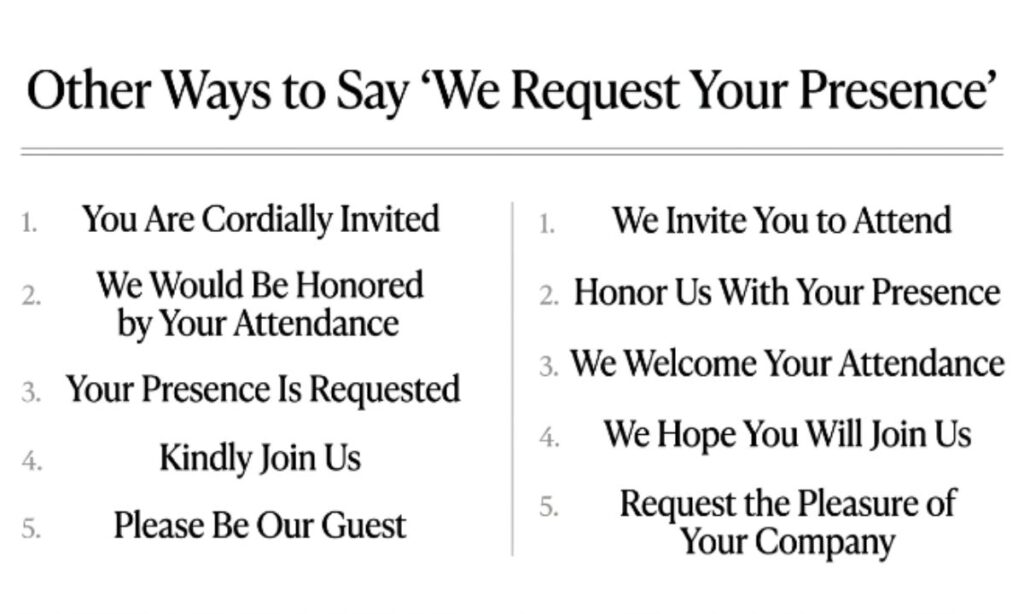
The right phrase can match the mood of a wedding, gala, or company dinner far better than a generic line. This guide covers 25 other ways to say “we request your presence” so your invitations always sound intentional.
What Does “We Request Your Presence” Mean?
“We request your presence” is a formal way of asking someone to attend an event. It’s a direct, active request, not just a suggestion.
The phrase usually appears on printed invitations, official announcements, or formal emails. It tells the reader that their attendance matters enough to be asked for formally, rather than casually mentioned.
Is It Professional?
Yes, “we request your presence” is fully professional and appropriate for formal writing. It fits weddings, galas, award ceremonies, and corporate events without sounding out of place.
That said, it can feel too stiff for everyday work emails or casual gatherings. A team lunch invite doesn’t need the same formality as a wedding announcement.
Grammar and Correct Usage
The phrase is grammatically correct and uses an active sentence structure. “We” is the subject, “request” is the verb, and “your presence” is the object being asked for.
It differs slightly from “your presence is requested,” which is passive. The passive version feels more like an announcement, while the active version feels more personal, since it names who is doing the asking.
When to Use It
Use this phrase for weddings, formal dinners, galas, award ceremonies, and official company events. It also works well in printed invitations or letterhead announcements where a polished tone matters.
It’s a strong choice when the host wants to convey respect and significance, not just share event details.
When Not to Use It
Avoid it for birthday parties, casual get-togethers, or messages to close friends. It can sound cold or overly formal in situations meant to feel relaxed.
It also doesn’t fit social media posts or group chat invites, where a friendlier tone usually works better.
25 Better Alternatives: “We Request Your Presence”
Each phrase below includes its meaning, an example exchange, and guidance on where it fits best.
1. You Are Cordially Invited
Meaning: A traditional, polite way to invite someone to a formal event. It signals both warmth and formality at once, which is why it’s common on wedding cards.
Example Conversation:
- Person A: “Did you get an invite to Sarah’s wedding?”
- Person B: “Yes, the card said we’re cordially invited to the ceremony.”
Best Use: Wedding invitations. Worst Use: Office team lunches. Tone: Formal, warm. Quick Tip: Pair it with clear date and venue details.
2. We Would Be Honored by Your Presence
Meaning: Shifts the focus from the host’s request to the host’s appreciation. It suggests the guest’s attendance is meaningful, not just expected.
Example Conversation:
- Person A: “How should we word the gala invite?”
- Person B: “Let’s say we’d be honored by your presence at the dinner.”
Best Use: Galas, award ceremonies. Worst Use: Casual reunions. Tone: Respectful, formal. Quick Tip: Use for guests you want to make feel valued.
3. Your Presence Is Requested
Meaning: A passive version of the original phrase. It reads slightly more like an announcement than a direct ask, which suits large or official events.
Example Conversation:
- Person A: “Is this invite from the company or HR directly?”
- Person B: “It’s official. It says your presence is requested at the annual meeting.”
Best Use: Corporate announcements. Worst Use: Personal notes to friends. Tone: Formal, neutral. Quick Tip: Good for mass-printed invitations.
4. We Invite You to Attend
Meaning: A clear, professional way to ask someone to come to an event without heavy ceremonial language. It works across most formal settings.
Example Conversation:
- Person A: “What does the conference email say?”
- Person B: “It says we’re invited to attend the opening keynote on Monday.”
Best Use: Conferences, seminars. Worst Use: Intimate family events. Tone: Professional, direct. Quick Tip: Follow with session times and locations.
5. Please Join Us
Meaning: A friendlier, less rigid alternative that still works in semi-formal settings. It softens the request while keeping it polite.
Example Conversation:
- Person A: “How formal should the office party invite be?”
- Person B: “Not too stiff. Let’s just say please join us for the holiday dinner.”
Best Use: Office parties, community events. Worst Use: Royal or state ceremonies. Tone: Warm, semi-formal. Quick Tip: Works well in email subject lines.
6. We Kindly Request Your Attendance
Meaning: Adds politeness to a direct request, making it sound considerate rather than demanding. It’s common in business and official letters.
Example Conversation:
- Person A: “How do we phrase the board meeting notice?”
- Person B: “We kindly request your attendance at Thursday’s session.”
Best Use: Business meetings, official notices. Worst Use: Birthday invites. Tone: Formal, courteous. Quick Tip: Pair with a firm date and time.
7. We Request the Honor of Your Presence
Meaning: One of the most formal versions available, often reserved for weddings held in religious or ceremonial settings. It emphasizes reverence.
Example Conversation:
- Person A: “Is this a religious wedding invite?”
- Person B: “Yes, it opens with ‘ We request the honor of your presence at the ceremony.”
Best Use: Religious weddings. Worst Use: Casual dinners. Tone: Highly formal. Quick Tip: Reserve for ceremony cards, not reception details.
8. We Request the Pleasure of Your Company
Meaning: A refined phrase that focuses on companionship rather than duty. It feels elegant without sounding overly serious.
Example Conversation:
- Person A: “What’s the wording for the anniversary dinner?”
- Person B: “We request the pleasure of your company at our thirtieth anniversary.”
Best Use: Anniversary dinners, formal receptions. Worst Use: Quick work catch-ups. Tone: Elegant, formal. Quick Tip: Ideal for evening or seated events.
9. We Would Love for You to Join Us
Meaning: A warm, personal invitation that softens formality while still sounding sincere. It works well for family milestones and personal celebrations.
Example Conversation:
- Person A: “How do we invite grandma to the christening?”
- Person B: “We’d love for you to join us that Sunday morning.”
Best Use: Family celebrations. Worst Use: Corporate press releases. Tone: Warm, personal. Quick Tip: Great for handwritten notes.
10. Kindly Attend
Meaning: A short, formal instruction rather than a soft invitation. It’s often used in official or workplace settings where attendance is expected.
Example Conversation:
- Person A: “Is attendance optional for the training?”
- Person B: “No, the memo says kindly attend the session at nine.”
Best Use: Workplace notices. Worst Use: Social invitations. Tone: Formal, instructive. Quick Tip: Best for mandatory events, not optional ones.
11. We Welcome Your Attendance
Meaning: A gentler way to invite someone that avoids sounding like a strict demand. It leaves room for the guest to feel genuinely welcomed.
Example Conversation:
- Person A: “Should we require RSVPs for the open house?”
- Person B: “Let’s just say we welcome your attendance any time that day.”
Best Use: Open houses, community events. Worst Use: Strict formal ceremonies. Tone: Welcoming, semi-formal. Quick Tip: Pairs well with flexible timing.
12. Accept Our Invitation
Meaning: A direct call to action that nudges the guest toward a decision. It works well when a response is genuinely needed.
Example Conversation:
- Person A: “The fundraiser needs confirmed numbers.”
- Person B: “Let’s word it as accept our invitation and RSVP by Friday.”
Best Use: Fundraisers, ticketed events. Worst Use: Passive announcements. Tone: Direct, formal. Quick Tip: Always include an RSVP deadline nearby.
13. We Extend Our Invitation
Meaning: A slightly ceremonial way of offering an invite, often used in official letters or press-style announcements. It reads as generous rather than routine.
Example Conversation:
- Person A: “How should the press release open?”
- Person B: “We extend our invitation to media partners for the launch event.”
Best Use: Press releases, official launches. Worst Use: Personal texts. Tone: Formal, ceremonial. Quick Tip: Works well as an opening line.
14. Please Be Our Guest
Meaning: A hospitable phrase that shifts focus toward comfort and welcome, rather than obligation. It sounds generous and inviting.
Example Conversation:
- Person A: “Should we charge friends for the dinner?”
- Person B: “No, just tell them, please be our guest that evening.”
Best Use: Hosted dinners, private events. Worst Use: Ticketed public events. Tone: Hospitable, warm. Quick Tip: Signals no cost is expected from the guest.
15. Be Present for the Occasion
Meaning: Frames attendance as part of something significant, rather than a simple visit. It works well for milestone or once-a-year events.
Example Conversation:
- Person A: “How do we describe the retirement party?”
- Person B: “Let’s ask everyone to be present for the occasion honoring her career.”
Best Use: Retirement parties, milestones. Worst Use: Routine meetings. Tone: Formal, meaningful. Quick Tip: Pair with a short note on why the event matters.
16. We Ask for Your Attendance
Meaning: A plain, respectful version of a formal request. It avoids ornate language while still keeping a professional tone.
Example Conversation:
- Person A: “The city council notice needs simple wording.”
- Person B: “We ask for your attendance at the public hearing works fine.”
Best Use: Public notices, hearings. Worst Use: Emotional family events. Tone: Neutral, formal. Quick Tip: Good for legal or civic contexts.
17. We Hope You Will Join Us
Meaning: Softens a request into a hope, which reduces pressure while still expressing a clear wish for attendance. It feels considerate.
Example Conversation:
- Person A: “Some guests might not be able to make it.”
- Person B: “That’s fine, we hope you will join us if your schedule allows.”
Best Use: Optional gatherings. Worst Use: Mandatory business events. Tone: Gentle, hopeful. Quick Tip: Use when attendance isn’t strictly required.
18. Your Company Is Requested
Meaning: Similar to “presence,” but “company” leans slightly more personal and social. It suggests the value of shared time, not just attendance.
Example Conversation:
- Person A: “The card feels too stiff right now.”
- Person B: “Try your company is requested at the evening reception instead.”
Best Use: Evening receptions, dinners. Worst Use: Large public conferences. Tone: Formal, personal. Quick Tip: Fits seated or intimate gatherings best.
19. We Solicit Your Participation
Meaning: An older, formal phrase that emphasizes active involvement rather than simple attendance. It can sound forceful in casual settings.
Example Conversation:
- Person A: “Is this wording too strong for a school event?”
- Person B: “It might be. We solicit your participation sounds better for academic panels.”
Best Use: Academic or research events. Worst Use: Social gatherings. Tone: Formal, dated. Quick Tip: Use sparingly in modern invitations.
20. Join Us for the Celebration
Meaning: A direct, upbeat way to invite guests to a joyful event. It keeps things simple while signaling a festive mood.
Example Conversation:
- Person A: “What’s the tone for the birthday invite?”
- Person B: “Keep it light: join us for the celebration this Saturday.”
Best Use: Birthdays, anniversaries. Worst Use: Somber or official ceremonies. Tone: Cheerful, casual-formal. Quick Tip: Add the guest of honor’s name for warmth.
21. We’d Be Delighted to Have You
Meaning: Expresses genuine enthusiasm about a guest’s attendance, rather than framing it as a request at all. It feels personal and sincere.
Example Conversation:
- Person A: “Will the invite feel too formal for close friends?”
- Person B: “Not if we say we’d be delighted to have you at the housewarming.”
Best Use: Housewarmings, small gatherings. Worst Use: Formal state events. Tone: Warm, sincere. Quick Tip: Works well in spoken invitations too.
22. We Look Forward to Your Attendance
Meaning: Assumes a positive response while still sounding professional. It works well when confirming details rather than asking for the first time.
Example Conversation:
- Person A: “The client already confirmed. What do we send next?”
- Person B: “A short note: we look forward to your attendance next week.”
Best Use: Confirmation emails. Worst Use: First-time invitations. Tone: Professional, confident. Quick Tip: Best used after an RSVP, not before.
23. Come Celebrate With Us
Meaning: A casual, inclusive phrase that invites shared participation rather than formal attendance. It works well for community-driven events.
Example Conversation:
- Person A: “Should the flyer sound corporate?”
- Person B: “No, let’s say come celebrate with us at the block party.”
Best Use: Community events, festivals. Worst Use: Formal dinners. Tone: Casual, friendly. Quick Tip: Pairs well with bold, simple flyer design.
24. We Invite You to Share This Occasion
Meaning: Frames the event as something meant to be experienced together, not just attended. It’s often used for milestone family events.
Example Conversation:
- Person A: “How do we phrase the baptism invite?”
- Person B: “We invite you to share this occasion with our family.”
Best Use: Religious or family milestones. Worst Use: Business seminars. Tone: Warm, formal. Quick Tip: Fits well on printed keepsake invitations.
25. Honor Us With Your Presence
Meaning: Flips the usual dynamic by suggesting the guest is doing the host a favor by attending. It feels gracious and respectful.
Example Conversation:
- Person A: “How do we word the retirement dinner invite for our mentor?”
- Person B: “Try honor us with your presence as we celebrate her career.”
Best Use: Tribute dinners, honorary events. Worst Use: Routine work meetings. Tone: Gracious, formal. Quick Tip: Best for guests you’re honoring, not just informing.
Common Mistakes
- Using highly formal phrases like “we solicit your participation” for casual events, which can sound stiff or outdated.
- Mixing active and passive versions inconsistently within the same invitation, which reads as unpolished.
- Forgetting to include date, time, and location right after the invitation line.
- Choosing warm, casual phrasing for strict ceremonial events, which can undercut the occasion’s significance.
- Repeating the same phrase across every invitation type instead of matching tone to the event.
Comparison Table
| Phrase | Tone | Best For | Formality Level |
| You Are Cordially Invited | Formal, warm | Weddings | High |
| We Would Be Honored by Your Presence | Respectful | Galas | High |
| Please Join Us | Warm | Office parties | Medium |
| We Invite You to Attend | Professional | Conferences | Medium-High |
| Please Be Our Guest | Hospitable | Private dinners | Medium |
| Join Us for the Celebration | Cheerful | Birthdays | Low-Medium |
| We Solicit Your Participation | Formal, dated | Academic panels | High |
| Come Celebrate With Us | Casual | Community events | Low |
Frequently Asked Questions
What does “we request your presence” mean?
It’s a formal way of asking someone to attend an event, showing that their attendance is being directly requested.
Is “we request your presence” grammatically correct?
Yes, it’s a correct, active sentence commonly used in formal invitations.
What can I say instead of “we request your presence”?
Alternatives like “you are cordially invited” or “please join us” work well depending on how formal the event is.
Is “your presence is requested” the same as “we request your presence”?
They mean the same thing, but “your presence is requested” is passive, while “we request your presence” is more direct and personal.
What’s a professional alternative to “please join us”?
“We invite you to attend” or “we welcome your attendance” both work well in professional settings.
Final Thoughts
The phrase you choose sets the tone before a single detail is read. Matching formality, warmth, and context turns a generic invitation into one that feels intentional. Once you know these alternatives, every invitation can sound as thoughtful as the event itself.