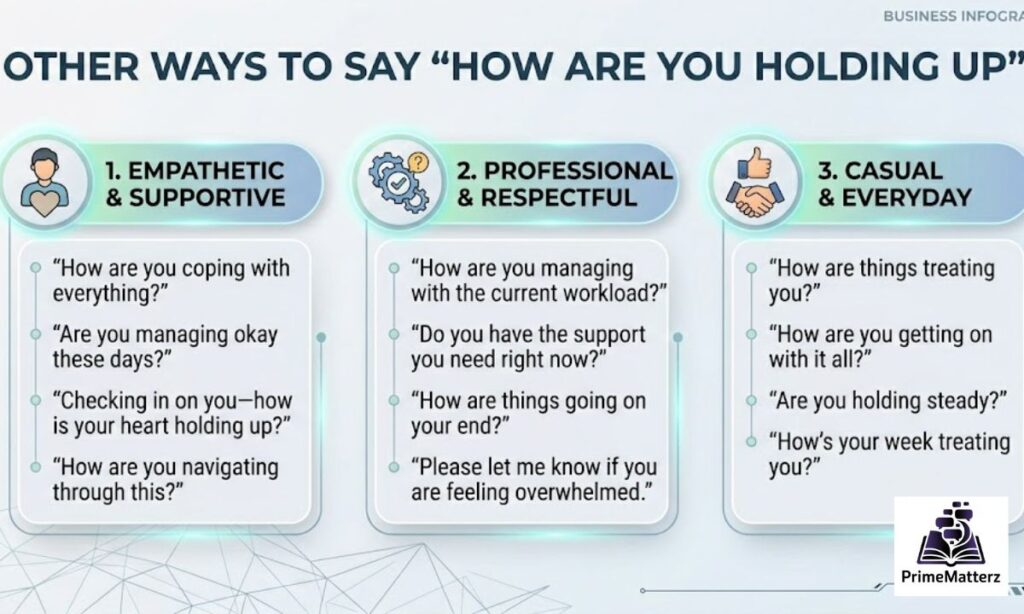
When someone is going through a hard time, the words you choose matter more than you might think. Saying “how are you holding up” is kind, but if you use it every time, it can start to feel routine — and the person on the other end may sense that.
Finding a better way to check in shows you actually thought about them, which is what genuine support looks like. This guide gives you 20 natural alternatives with real examples, tone labels, and guidance on when each one fits.
“How are you holding up” is a caring question you ask someone who is going through something difficult. It’s not a casual greeting — it signals that you know things are hard and you want to know how they’re really coping. You’d use it after a loss, during an illness, after a breakup, or during a period of serious stress.
The phrase is more personal than “how are you.” It gives the other person space to be honest. It says: I know life is heavy right now, and I’m asking because I care, not just to fill silence.
When Should You Use “How Are You Holding Up”?
Use this phrase when you know someone is dealing with something hard. It works well in person, over text, in a phone call, or in a personal email to a friend or family member. It’s warm enough for close relationships and careful enough for sensitive situations like grief or illness.
It’s less suited for professional settings or first-time check-ins with colleagues. In the workplace, something like “are you managing okay?” tends to feel more appropriate.
With close friends or family during rough times, “how are you holding up” is a solid, caring opener — but the alternatives below can help you say it with more heart.
Is “How Are You Holding Up” Professional or Polite?
It’s polite and caring, but it sits closer to the personal end of the scale. It works beautifully in the right context but can feel misplaced in formal or professional settings.
Pros
Shows genuine concern without being intrusive
Invites the person to be honest about how they’re feeling
Works across many difficult situations — grief, illness, stress, burnout
Feels warm and human, not scripted
Easy to use in both spoken and written communication
Cons
Can feel too casual for workplace emails or professional settings
Repeated use makes it sound habitual rather than sincere
Doesn’t offer help — only opens the door to a conversation
May feel vague if the person isn’t sure what you’re referring to
Can create awkwardness if the person isn’t ready to talk
15+ Other Ways to Say “How Are You Holding Up”
1. How Are You Feeling Today?
Meaning: A gentle, day-by-day check-in on someone’s emotional or physical state.
Why It Works: Adding “today” makes it feel immediate and specific. It gives the person a small frame — just today — which is easier to answer than a broad “how are you doing.”
Example:
Person A: “I’ve been trying to get through it.”
Person B: “I know — how are you feeling today?”
Best Use: Illness, recovery, grief, daily check-ins with someone going through a long difficult period.
Worst Use: Casual, upbeat conversations where it sounds overly clinical.
Tone: Gentle, caring, personal
2. Are You Managing Okay?
Meaning: Asking whether the person is keeping their head above water and handling what’s on their plate.
Why It Works: “Managing” acknowledges difficulty without dramatizing it. It’s practical and respectful, which makes it ideal for professional settings or when you don’t want to be intrusive.
Example:
Person A: “It’s been a really overwhelming week.”
Person B: “I can imagine — are you managing okay?”
Best Use: Workplace check-ins, colleagues going through stress, semi-formal situations.
Worst Use: Grief or deep emotional pain — it can sound too practical for those moments.
Tone: Semi-formal, considerate, measured
3. I’ve Been Thinking of You
Meaning: A statement that shows you have the person on your mind, even without asking a direct question.
Why It Works: It removes pressure. You’re not demanding an answer — you’re simply letting them know you care. This is especially powerful for grief, where people often don’t know what to say in response to questions.
Example:
Person A: (no reply needed)
Person B: “Hey, I’ve been thinking of you. No need to reply — just wanted you to know.”
Best Use: Grief, illness, loss — situations where asking questions might feel like too much.
Worst Use: Casual stress or everyday check-ins where something more direct is appropriate.
Tone: Warm, gentle, low-pressure
4. Are You Doing Okay?
Meaning: A simple, open-ended check-in that invites honesty without pressure.
Why It Works: It’s short and non-threatening. The person can answer briefly or open up more — the choice is theirs. That openness is what makes it feel safe.
Example:
Person A: “Just taking things one day at a time.”
Person B: “That’s all you can do. Are you doing okay?”
Best Use: Close friends and family during any difficult period.
Worst Use: Formal emails or professional settings where more precision is needed.
Tone: Casual, warm, friendly
5. How Are You Coping?
Meaning: Asking how the person is dealing with something emotionally challenging.
Why It Works: “Coping” acknowledges that things are hard and asks directly how they’re handling it. It opens the door to a real conversation without minimizing what they’re going through.
Example:
Person A: “Some days are better than others.”
Person B: “That makes sense — how are you coping overall?”
Best Use: Grief, loss, illness, or serious personal stress.
Meaning: An open invitation to reach out — no pressure, no timeline.
Why It Works: It hands the control to the other person. They get to decide when, if, and how much they share. That kind of respect for someone’s pace is deeply supportive.
Example:
Person A: “I don’t really know where to start.”
Person B: “You don’t have to. I’m here if you want to talk.”
Best Use: Any difficult situation — grief, breakup, burnout, anxiety.
Worst Use: When you need an actual answer and the person has something specific to communicate.
Tone: Warm, open, supportive
7. How’s Everything Going?
Meaning: A softer, broader check-in that doesn’t spotlight the difficult situation directly.
Why It Works: Sometimes people don’t want to talk about the hard thing. This phrase lets them steer the conversation — they can bring it up if they want, or talk about something else entirely.
Example:
Person A: “Oh, you know — managing.”
Person B: “Yeah, I figured. How’s everything going in general?”
Best Use: Checking in on someone without putting them on the spot.
Worst Use: When the situation is serious and you want to make sure they know you’re aware of it.
Tone: Gentle, low-key, flexible
8. Do You Need Anything?
Meaning: A direct offer of help, not just a question about how they’re feeling.
Why It Works: It moves from words to action. For people going through grief or illness, knowing someone is ready to actually help — not just ask — can be deeply reassuring.
Example:
Person A: “I’m not sure, honestly.”
Person B: “That’s okay. I’m around — do you need anything at all?”
Best Use: Close friends and family during grief, illness, or crisis.
Worst Use: Professional settings where an offer of personal help may feel out of place.
Tone: Practical, caring, direct
9. My Heart Is with You
Meaning: A heartfelt expression of emotional solidarity and compassion.
Why It Works: It says “I feel this with you” without requiring a response. It’s especially powerful in grief situations where the person may be too exhausted to have a real conversation.
Example:
Person A: (grieving, no response needed)
Person B: “My heart is with you and your family.”
Best Use: Grief, loss, serious illness — especially in written messages or cards.
Worst Use: Casual stress or everyday difficulties where it may feel too heavy.
Tone: Warm, compassionate, heartfelt
10. What’s Been on Your Mind Lately?
Meaning: An invitation to share whatever is taking up space in their thoughts.
Why It Works: It’s open-ended and doesn’t assume what they’re struggling with. It gives the person room to define what they want to talk about, which feels respectful and curious.
Example:
Person A: “Honestly, a lot.”
Person B: “I figured. What’s been on your mind lately?”
Best Use: Close relationships during ongoing stress or uncertainty.
Worst Use: Brief or professional check-ins where this level of depth may feel too personal.
Tone: Curious, open, personal
11. You Okay?
Meaning: The shortest possible version of checking in — casual and direct.
Why It Works: Sometimes simplicity is the most powerful choice. Two words can carry a lot of care, especially from the right person at the right moment.
Example:
Person A: “Yeah, just tired.”
Person B: “You okay? Like actually okay?”
Best Use: Close friends, quick texts, informal check-ins.
Worst Use: Formal or professional communication where it sounds too brief.
Tone: Casual, direct, warm
12. How Has This Week Been for You?
Meaning: A time-specific check-in that focuses on recent experience rather than the overall situation.
Why It Works: Narrowing it to a week makes it easier to answer. It feels concrete and conversational, not heavy or clinical.
Example:
Person A: “Rough, if I’m honest.”
Person B: “I’m sorry to hear that. How has this week been for you overall?”
Best Use: Ongoing check-ins during a difficult period — illness, grief, work stress.
Worst Use: One-time check-ins after a sudden event where this may feel too casual.
Tone: Conversational, caring, grounded
13. I Can’t Imagine How Hard This Is
Meaning: An acknowledgment of the difficulty without pretending to fully understand it.
Why It Works: It validates what the person is going through without comparing it to your own experience. Saying “I can’t imagine” is more honest and respectful than “I know how you feel.”
Example:
Person A: “It’s just been so much.”
Person B: “I know. I can’t imagine how hard this is.”
Best Use: Grief, loss, serious illness — any situation where the weight of what someone carries deserves acknowledgment.
Worst Use: Minor stress or everyday challenges — it can come across as dramatic.
Tone: Empathetic, honest, sincere
14. Want to Talk About It?
Meaning: A direct but gentle invitation to open up.
Why It Works: It gives the person a clear yes or no choice. No pressure, no expectation — just an open door. That simplicity is often exactly what someone needs.
Example:
Person A: “I don’t know, it’s complicated.”
Person B: “That’s okay. Want to talk about it?”
Best Use: Close relationships during breakups, stress, or emotional difficulty.
Worst Use: Professional settings where this level of intimacy isn’t expected.
Tone: Gentle, supportive, personal
15. How Are You Really Doing?
Meaning: A version of “how are you” that signals you want an honest answer, not a polite one.
Why It Works: The word “really” changes everything. It tells the person you see past the automatic “I’m fine” answer and you’re asking for the truth.
Example:
Person A: “I’m fine, I guess.”
Person B: “No, but how are you really doing?”
Best Use: Close friends and family, especially when you sense someone is holding back.
Worst Use: Casual acquaintances or professional settings where it may feel too probing.
Tone: Direct, caring, close
16. I’m Here for You
Meaning: A simple statement of availability and support — no strings attached.
Why It Works: It doesn’t ask the person to explain, respond, or perform. It just reassures them that they have somewhere safe to go when they’re ready.
Example:
Person A: “I just don’t know what to do right now.”
Person B: “You don’t have to figure it out alone. I’m here for you.”
Best Use: Any difficult moment — especially when someone seems overwhelmed or lost.
Worst Use: When specific action or information is needed and this feels too passive.
Tone: Reassuring, warm, unconditional
17. Sending You Love and Support
Meaning: A warm expression of care, often used in written messages when you can’t be there in person.
Why It Works: It’s brief, kind, and doesn’t require a response. It’s ideal for reaching out when you don’t have much to say but want the person to feel less alone.
Example:
Person A: (no response needed)
Person B: “Thinking of you through all of this. Sending you love and support.”
Best Use: Text messages, cards, or emails during grief or illness.
Worst Use: In-person conversations where it can sound like a written phrase said out loud.
Tone: Warm, gentle, written
18. You Don’t Have to Have It Together Right Now
Meaning: Permission to not be okay — a reassurance that falling apart is allowed.
Why It Works: Many people feel pressure to cope well and appear strong. This phrase removes that pressure completely. It’s one of the most generous things you can say to someone in pain.
Example:
Person A: “I feel like I should be handling this better.”
Person B: “You don’t have to have it together right now. Seriously.”
Best Use: Grief, loss, emotional breakdown — when someone is being hard on themselves.
Worst Use: Professional check-ins where someone needs to stay functional and focused.
Tone: Compassionate, freeing, intimate
19. I’m Glad You Told Me
Meaning: A response that validates the person for opening up and sharing how they feel.
Why It Works: Opening up takes courage. Acknowledging that makes the person feel heard and less alone, and encourages them to keep talking rather than shutting down.
Example:
Person A: “I’ve been really struggling, honestly.”
Person B: “I’m glad you told me. That took guts.”
Best Use: When someone has just shared something vulnerable or difficult.
Worst Use: As an opening phrase — it works as a response, not a conversation starter.
Tone: Validating, warm, supportive
20. How’s Your Head With Everything?
Meaning: A casual way of asking how someone is doing mentally and emotionally amid a lot going on.
Why It Works: It’s informal and a little unexpected, which can actually make it easier to answer honestly. It sidesteps the weight of “how are you holding up” while still asking something real.
Example:
Person A: “It’s a lot to process.”
Person B: “Yeah — how’s your head with everything?”
Best Use: Close friendships, especially among people who communicate in a relaxed, easy way.
Worst Use: Formal settings or with people you don’t know well — it can sound too informal.
Tone: Casual, friendly, easy
Phrases to Avoid — and What to Say Instead
Some phrases feel supportive but actually add pressure or dismiss what someone is going through.
“Stay strong” puts a burden on the person to perform resilience. Try “healing has no timeline” instead.
“I know exactly how you feel” centers you. Try “I can’t imagine how hard this is.”
“Everything happens for a reason” can feel dismissive. Try “this must feel so senseless right now.”
“At least…” followed by anything tends to minimize pain. Just say “I’m here.”
“You look like you’re doing well” skips past the reality. Try “how are you actually holding up?”
How to Follow Up After Checking In
Asking is only the first step. What you do with the answer matters just as much.
If someone opens up, listen without trying to fix anything. Resist the urge to jump in with advice. A simple “that sounds really hard” or “how long have you been feeling this way?” tells the person you’re still with them.
If they say they’re fine but clearly aren’t, don’t push. Just leave the door open: “okay — I’m here whenever.” That matters more than you might think.
Frequently Asked Questions
What does “how are you holding up” mean?
It means asking whether someone is coping okay during a difficult or painful time in their life.
When should I use “how are you holding up” vs. “how are you”?
Use “holding up” when you know someone is going through something hard — grief, illness, job loss, or serious stress.
What is a softer alternative to “how are you holding up”?
“I’ve been thinking of you” or “I’m here if you want to talk” are gentler options that remove pressure to respond.
Is “are you managing okay” appropriate at work?
Yes — it’s semi-formal, respectful, and works well for checking in on a colleague during a stressful period.
Can I use these phrases in a text message?
Yes — short options like “you okay?”, “thinking of you”, and “I’m here” work especially well over text.
Final Thoughts
Checking in on someone during a hard time is one of the kindest things you can do — and the right words make that kindness land.
Whether you go with something simple like “you okay?” or something heartfelt like “I can’t imagine how hard this is,” what matters most is that you showed up and said something.
These 20 alternatives give you options for every relationship, every situation, and every tone — so you can always find the phrase that fits the moment.