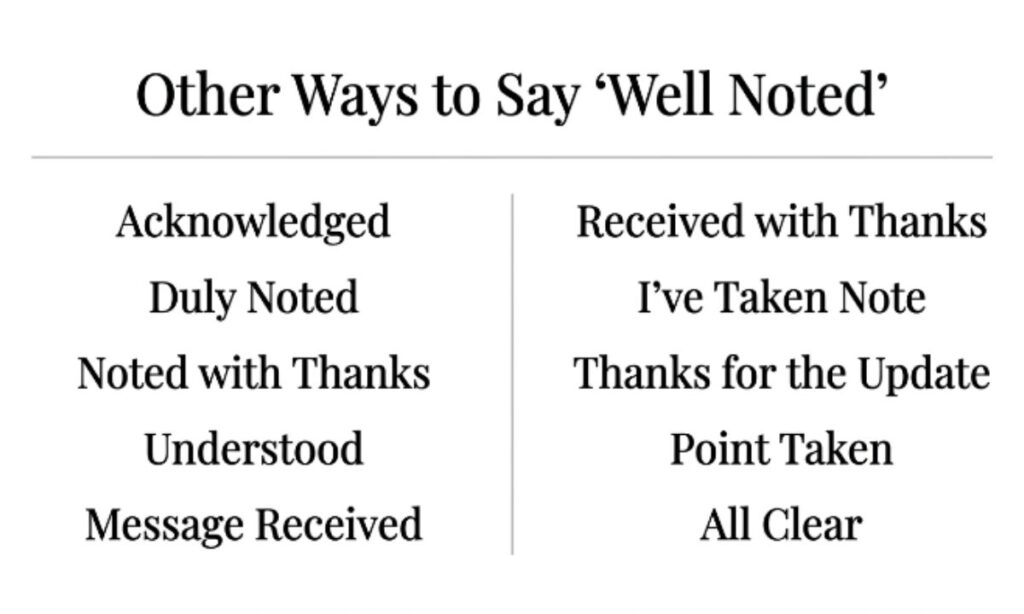
“Well Noted” does the trick, but it doesn’t always sound like it came from a real person. If you simply repeat it in every answer it starts to feel flat, almost robotic. It’s not just your message, but the words you pick that shape how people read your tone. Learn alternative ways to express “well noted” to make your emails and messages sound natural instead of like a copy-paste.
“Well noted” means you’ve received a piece of information, read it, and understood it. It’s a short way of saying “I got this, and I’m aware of it now.”
People use it to close the loop on updates, instructions, or feedback without writing a full reply. Say a colleague emails you new deadline dates. Replying “Well noted, thank you” tells them the message landed and you’re not going to miss it.
Is It Professional?
Yes, “well noted” is professional. It’s common in business emails, meeting follow-ups, and workplace chats.
But it has a downside. Used alone, without any warmth, it can sound blunt or distant. “Well noted.” with a period and nothing else can read as dismissive, especially to a client or someone senior. Add a small phrase like “thank you” or “I’ll follow up if I have questions,” and it instantly feels more human.
Grammar and Correct Usage
“Well” here is an adverb modifying “noted,” a past participle. Together they act as a short, standalone sentence, though technically incomplete grammatically (missing a subject and verb like “This has been”).
That’s fine in informal business writing, where fragments are common and expected. Just avoid stacking it with other fragments in the same email, since that can make your writing feel choppy and unfinished.
When to Use It
Use “well noted” when you’re confirming instructions, updates, policy changes, or feedback that doesn’t need a detailed response. It works well in written, formal contexts like emails, internal memos, or project updates where a quick acknowledgment is all that’s needed.
When Not to Use It
Skip it when the moment calls for warmth, collaboration, or a personal touch, like replying to a colleague who shared bad news or a client who needs reassurance. Also avoid it in casual chats with close teammates, where it can sound stiff and overly formal for the setting.
15+ Better Alternatives to “Well Noted”
Duly Noted
Meaning: A polite and formal way to show you’ve received and recorded the information. It tells the other person their message has been understood correctly. People often use it in professional settings where accuracy matters.
Example Conversation:
Person A: The meeting has been moved to 3 PM tomorrow.
Person B: Duly noted. I’ll update my calendar and let the team know.
Best Use: Official emails, business correspondence, meeting notes, workplace instructions, and situations where you need to sound professional.
Worst Use: Casual chats with friends or coworkers because it may sound distant or overly serious.
Tone: Formal, respectful, and professional.
Quick Tip: Add the action you’ll take next, such as updating a document or changing your schedule, to make your reply feel more natural.
Understood
Meaning: A simple and direct way to confirm that you’ve clearly understood a request or instruction. It leaves little room for confusion. It’s one of the easiest responses to use in both work and everyday conversations.
Example Conversation:
Person A: Please send the completed report before Friday afternoon.
Person B: Understood. I’ll have it finished and sent before the deadline.
Best Use: Responding to instructions, assignments, requests, or workplace tasks that require a clear confirmation.
Worst Use: Sensitive conversations where someone expects empathy rather than a short acknowledgment.
Tone: Neutral, confident, and straightforward.
Quick Tip: Follow it with what you plan to do next. That small addition shows you’re already taking action instead of simply replying.
Got It
Meaning: A relaxed way to let someone know you’ve received and understood their message. It sounds friendly and approachable. People commonly use it in everyday conversations and workplace chats.
Example Conversation:
Person A: Don’t forget to copy the design team on the email.
Person B: Got it. I’ll include everyone before I send it.
Best Use: Team chats, text messages, Slack conversations, and informal discussions with coworkers or friends.
Worst Use: Formal emails to executives, clients, or people you’ve never worked with before.
Tone: Casual, friendly, and conversational.
Quick Tip: This phrase works best when the conversation is already relaxed. For formal communication, choose a more professional alternative instead.
Acknowledged
Meaning: This phrase confirms that you’ve received a message or instruction. It tells the sender their information has been recognized. It’s often used in workplaces where clear documentation is important.
Example Conversation:
Person A: Please review the attached contract before tomorrow.
Person B: Acknowledged. I’ll review it today and send my feedback in the morning.
Best Use: Legal matters, compliance work, project management, official business communication, and corporate emails.
Worst Use: Friendly conversations because it can sound robotic or emotionally distant.
Tone: Formal, professional, and businesslike.
Quick Tip: Mention when you’ll complete the task. That makes your response sound more proactive and reassuring.
Noted With Thanks
Meaning: This response confirms you’ve received the information while also showing appreciation. It acknowledges both the message and the effort behind it. The extra gratitude helps create a warmer interaction.
Example Conversation:
Person A: I’ve attached the updated pricing sheet with all the latest changes.
Person B: Noted with thanks. This will make preparing the proposal much easier.
Best Use: When someone provides helpful information, detailed updates, or goes the extra mile to assist you.
Worst Use: Everyday routine updates where adding thanks may feel unnecessary.
Tone: Warm, polite, and appreciative.
Quick Tip: Use this phrase when you genuinely want the other person to know you value their time and effort. It helps strengthen professional relationships.
Message Received
Meaning: This phrase lets someone know that you’ve seen their message and understand it. It’s short, clear, and works well when a quick confirmation is all that’s needed. People often use it during busy conversations where everyone wants fast updates.
Example Conversation:
**Person A: The client has delayed the launch by two weeks.
**Person B: Message received. I’ll update the project timeline and notify the team.
Best Use: Fast-moving team chats, text messages, project updates, and situations where a quick acknowledgment is enough.
Worst Use: Conversations that require a detailed response or thoughtful discussion instead of a simple confirmation.
Tone: Direct, efficient, and professional.
Quick Tip: If you’re expected to take action, mention your next step so the sender knows exactly what will happen.
I’ve Taken Note of This
Meaning: This phrase shows you’ve carefully registered the information for future use. It suggests you won’t forget the detail because you’ve made a mental or written note. It’s especially useful when someone shares preferences, reminders, or long-term instructions.
Example Conversation:
Person A: The client prefers phone calls instead of email whenever possible.
Person B: I’ve taken note of this and will contact them by phone from now on.
Best Use: Client preferences, recurring instructions, workplace reminders, and details you’ll need again later.
Worst Use: Urgent situations where immediate action is expected rather than simply remembering the information.
Tone: Thoughtful, attentive, and reliable.
Quick Tip: This response works best when the information will influence your future decisions or communication.
Point Taken
Meaning: This phrase shows that you’ve understood someone’s opinion, advice, or constructive feedback. It tells the speaker you recognize the value of what they said. It also helps keep conversations respectful during disagreements.
Example Conversation:
Person A: We should test the new feature before launching it to everyone.
Person B: Point taken. Let’s run a small pilot first and review the results.
Best Use: Feedback sessions, brainstorming meetings, constructive criticism, and professional discussions.
Worst Use: Simple factual updates that don’t involve opinions, suggestions, or different viewpoints.
Tone: Respectful, open-minded, and cooperative.
Quick Tip: After saying “Point taken,” briefly explain what you’ll change. That shows you’re taking the feedback seriously.
Consider It Done
Meaning: This phrase confirms you’ve accepted a task and intend to complete it. It gives the other person confidence that the work is already in motion. It’s a strong response when you’re ready to act immediately.
Example Conversation:
Person A: Can you send the meeting invite to the entire team?
Person B: Consider it done. I’ll send it within the next few minutes.
Best Use: Task requests, workplace assignments, and situations where you can start right away.
Worst Use: Updates that don’t require action or tasks you aren’t certain you can finish on time.
Tone: Confident, reassuring, and action-focused.
Quick Tip: Only use this phrase when you’re genuinely prepared to complete the task. It creates expectations that you’ll follow through.
Thanks for Letting Me Know
Meaning: This response confirms you’ve received the information while showing appreciation. It lets the other person know you value being informed. The phrase feels friendly without sounding overly formal.
Example Conversation:
Person A: Just a heads-up, the server will be offline tonight for maintenance.
Person B: Thanks for letting me know. I’ll finish my work before the downtime starts.
Best Use: Helpful updates, reminders, schedule changes, warnings, or useful information shared in advance.
Worst Use: Formal instructions or official directives where gratitude may not fit naturally.
Tone: Friendly, appreciative, and conversational.
Quick Tip: This simple reply helps build stronger relationships because it shows you appreciate people who keep you informed.
I’ll Keep This in Mind
Meaning: This phrase tells the other person that you’ve understood the information and plan to remember it in the future. It doesn’t always mean you’ll act immediately. Instead, it shows the advice or reminder will influence your future decisions. It’s a thoughtful response when someone shares helpful guidance, tips, or context that may become important later.
Example Conversation:
Person A: Remember, the client is three hours ahead of us, so morning meetings work better.
Person B: I’ll keep this in mind when scheduling our next call.
Best Use: Helpful advice, reminders, client preferences, travel tips, workplace guidance, and information that affects future planning.
Worst Use: Urgent situations where the sender expects immediate action instead of a promise to remember something later.
Tone: Considerate, thoughtful, and forward-looking.
Quick Tip: This phrase works best when the information will help you make better decisions later. If you’re taking action immediately, choose a stronger confirmation instead.
Confirmed
Meaning: “Confirmed” is one of the clearest ways to verify that you’ve received and accepted specific information. People often use it when discussing appointments, schedules, bookings, deadlines, or agreements. It’s brief, professional, and removes any uncertainty about whether the details were received correctly.
Example Conversation:
Person A: Your interview is scheduled for Thursday at 10:00 AM.
Person B: Confirmed. I’ll be there ten minutes early.
Best Use: Appointment confirmations, meeting schedules, travel plans, reservations, deadlines, contracts, and business agreements.
Worst Use: Personal conversations or emotional discussions where a warmer response would feel more appropriate.
Tone: Professional, precise, and confident.
Quick Tip: If the arrangement involves time or location, repeat those details in your reply to avoid misunderstandings.
I Appreciate the Update
Meaning: This phrase acknowledges the information while expressing sincere gratitude. It tells the sender that their effort to keep you informed is valued. The response sounds warm and professional without being overly formal, making it suitable for many workplace conversations.
Example Conversation:
Person A: The vendor confirmed the shipment will arrive on Monday instead of Friday.
Person B: I appreciate the update. That gives us enough time to adjust our schedule.
Best Use: Ongoing projects, client communication, team updates, progress reports, and situations where regular communication is important.
Worst Use: Very small or routine updates where expressing appreciation every time may sound repetitive.
Tone: Warm, professional, and appreciative.
Quick Tip: This response helps strengthen professional relationships because it shows you recognize the effort someone made to keep you informed.
Noted for Action
Meaning: This phrase tells someone you’ve received the information and will act on it. Unlike a simple acknowledgment, it clearly communicates that follow-up work is already planned. It’s commonly used in project management, customer support, and task tracking where accountability is important.
Example Conversation:
Person A: This software bug should be fixed before the product launch.
Person B: Noted for action. I’ll assign it to the development team today and monitor the progress.
Best Use: Task management, issue tracking, project planning, support tickets, quality assurance, and workplace assignments.
Worst Use: Friendly conversations or casual messages where no actual task exists.
Tone: Professional, efficient, and action-oriented.
Quick Tip: Whenever possible, include who will handle the task or when it will be completed. That makes your response more useful and reassuring.
I’m On It
Meaning: This phrase shows that you’ve received the request and have already started working on it. It creates confidence because it suggests immediate action rather than a future promise. People often use it in fast-paced workplaces where quick responses keep projects moving.
Example Conversation:
Person A: Can you fix the broken link on the homepage before customers notice it?
Person B: I’m on it. I’ll update the page and test everything within the next few minutes.
Best Use: Quick workplace tasks, team collaboration, internal chats, urgent requests, and situations where you’re ready to begin immediately.
Worst Use: Formal client emails, official business documents, or tasks that you can’t realistically start right away.
Tone: Casual, energetic, confident, and proactive.
Quick Tip: Only use this phrase when you’ve actually started or are about to start the task. Saying “I’m on it” and then delaying the work can quickly reduce trust with coworkers and clients.
Copy That
Meaning: “Copy that” comes from radio communication, where it means a message has been received and understood clearly. Today, it’s often used in workplaces, especially in tech, operations, customer support, and other fast-paced teams.
The phrase sounds confident and efficient, but it’s still quite informal, so it’s important to know your audience before using it.
Example Conversation:
Person A: We’re switching today’s meeting from Microsoft Teams to Zoom.
Person B: Copy that. I’ll join the Zoom link and let everyone else know.
Best Use: Team chats, operations teams, IT departments, customer support, logistics, and workplaces where quick communication is common.
Worst Use: Formal emails, conversations with new clients, executive communication, or situations where a more professional response is expected.
Tone: Casual, quick, and confident.
Quick Tip: This phrase works best with coworkers who are familiar with informal workplace language. If you’re speaking with clients or senior management, choose a more professional alternative like “Confirmed” or “Acknowledged.”
Sounds Good
Meaning: “Sounds good” is a relaxed way to show that you understand and agree with what’s been suggested. It confirms that you’re comfortable with the plan without making the conversation feel too formal. Because it’s friendly and natural, it’s one of the most commonly used responses in everyday communication.
Example Conversation:
Person A: Let’s move our meeting to 4 PM instead.
Person B: Sounds good. I’ll see you then.
Best Use: Casual scheduling, team conversations, everyday workplace discussions, family plans, and friendly agreements.
Worst Use: Legal matters, compliance instructions, official approvals, or situations where a formal acknowledgment is required.
Tone: Friendly, relaxed, and conversational.
Quick Tip: “Sounds good” is perfect when both people already agree on the plan. If the situation requires certainty or documentation, use a more precise confirmation instead.
I’ve Made a Note of That
Meaning: This phrase lets someone know you’ve carefully recorded an important detail so it won’t be forgotten. It suggests that you’ve either written it down or made a mental note for future reference. The response shows attention to detail and reassures the other person that their information matters.
Example Conversation:
Person A: The client wants every invoice sent as a PDF instead of a Word document.
Person B: I’ve made a note of that and will use PDFs for all future invoices.
Best Use: Client preferences, recurring instructions, formatting requirements, workplace procedures, and information you’ll need again later.
Worst Use: Time-sensitive requests where immediate action is expected instead of simply remembering the information.
Tone: Careful, dependable, and professional.
Quick Tip: This response is especially useful when someone shares a preference or recurring instruction. It reassures them that you won’t overlook the detail next time.
This Has Been Noted Accordingly
Meaning: This is a highly formal way to confirm that information has been properly recorded in a file, system, or official record.
It’s commonly used in customer service, compliance departments, government offices, and administrative work where documentation is essential. Although it’s accurate and professional, it can sound overly formal in everyday conversations.
Example Conversation:
Person A: Please log this customer complaint in the support system.
Person B: This has been noted accordingly and added to the customer’s file for future reference.
Best Use: Official documentation, customer service records, compliance work, administrative tasks, support tickets, and legal communication.
Worst Use: Personal conversations, casual workplace chats, or friendly messages because it can feel overly rigid.
Tone: Formal, procedural, and professional.
Quick Tip: Reserve this phrase for situations involving official records or documentation. In everyday communication, a simpler response will usually sound more natural.
Received and Understood
Meaning: This phrase confirms two things at once: you’ve successfully received the message, and you’ve fully understood its meaning. It provides stronger reassurance than a simple “Received” because it removes any doubt about your understanding.
For that reason, it’s often used when discussing important updates, company policies, major announcements, or detailed instructions.
Example Conversation:
Person A: Beginning next quarter, all expense reports must be submitted through the new system.
Person B: Received and understood. Thanks for explaining the new process so clearly.
Best Use: Company announcements, policy changes, operational updates, safety procedures, important workplace instructions, and major project changes.
Worst Use: Everyday conversations, routine reminders, or small updates where such a detailed confirmation would feel unnecessary.
Tone: Clear, formal, and reassuring.
Quick Tip: Use this phrase when confirming important information that leaves no room for misunderstanding. It shows both receipt and comprehension, making it an excellent choice for significant workplace communication where clarity matters most.
Common Mistakes to Avoid
Overusing one phrase. Repeating “well noted” or any single alternative in every reply makes your writing sound automated.
Using casual phrases in formal settings. “Copy that” or “I’m on it” can feel out of place in an email to a senior client.
Leaving it too blunt. A one-word reply like “Noted” without context or warmth can come across as dismissive.
Mismatching tone and relationship. “Duly noted” to a close friend can sound sarcastic or overly formal.
Skipping the next step. When action is expected, confirming receipt without saying what happens next leaves people guessing.
Comparison Table
Phrase
Tone
Best For
Formality
Duly Noted
Formal
Official records
High
Understood
Neutral
Instructions
Medium
Got It
Casual
Team chats
Low
Acknowledged
Formal
Legal/compliance
High
Noted With Thanks
Warm
Helpful updates
Medium
Message Received
Direct
Quick confirmations
Medium
Point Taken
Respectful
Feedback
Medium
Consider It Done
Confident
Task requests
Medium
Noted for Action
Efficient
Project tracking
Medium
I’m On It
Casual
Quick tasks
Low
Copy That
Casual
Informal teams
Low
Received and Understood
Formal
Major announcements
High
Frequently Asked Questions
What does “well noted” mean in an email?
It means the sender’s message has been received, read, and understood.
Is “well noted” rude?
It can sound blunt or cold if used alone without any warmth or follow-up.
What’s a more polite way to say “well noted”?
“Noted with thanks” or “I appreciate the update” both sound warmer and more personal.
Can I use “well noted” with clients?
Yes, but pair it with a thank you or next step so it doesn’t feel dismissive.
What should I say instead of “well noted” in a casual chat?
Try “Got it,” “Sounds good,” or “I’m on it” for a more relaxed tone.
Final Thoughts
“Well noted” works fine, but it’s not your only option. Choosing the right alternative shows people you’re paying attention to more than just the message; you’re paying attention to them. Match the phrase to the moment, and your replies will always sound genuine.