15+ Other Ways to Say “Thank You for Your Concern”
Hayat
June 12, 2026No comments
The words you choose say a lot about you. When someone checks on your well-being, a generic response can feel flat — even if you mean it sincerely. Knowing different ways to express gratitude for someone’s concern helps you sound more natural, more professional, and more genuinely warm depending on who you are talking to and why.
“Thank you for your concern” is a polite way to acknowledge that someone cares about your situation. It recognizes their empathy and shows you noticed their kindness.
People use it most often in professional settings — after sharing health news, discussing a personal challenge, or responding to a worried colleague. It is a complete, grammatically correct sentence that works in emails, meetings, and face-to-face conversations.
When Should You Use “Thank You for Your Concern”?
This phrase fits best in formal or semi-formal situations — workplace emails, professional conversations, or when someone you do not know well expresses worry about you. It sets a respectful, appreciative tone without getting too personal.
It also works well in customer service contexts, when a client or manager has raised concern about a project or your well-being. For close friends or family, though, it can sound a little stiff. In those cases, a warmer or more casual alternative usually lands better.
Is “Thank You for Your Concern” Professional or Polite?
It is both — but like any phrase, it has limits.
Pros:
Sounds respectful and composed in professional settings
Works well in formal written communication like emails or letters
Signals emotional maturity and gratitude
Appropriate for health updates, difficult situations, or workplace conversations
Easy to build on — you can follow it with more detail naturally
Cons:
Can feel cold or distant in close personal relationships
May come across as rehearsed or scripted if used too often
Not ideal for casual texts or social media replies
Can unintentionally create emotional distance when warmth is needed
Grammar and Correct Usage of “Thank You for Your Concern”
Is it grammatically correct? Yes. “Thank you for your concern” is a complete, standard English expression.
Correct structure: Subject (implied “I”) + “thank you” + “for” + possessive pronoun + noun. Example: “Thank you for your concern about my recovery.”
Common mistake: Writing “thank you for your concerns” (plural) can sound awkward unless you are specifically addressing multiple issues someone raised.
Formal use: Add the person’s name or context — “Thank you for your concern regarding this matter.”
Informal use: Shorten it — “Thanks for your concern!” works fine in a semi-casual email.
Avoid: Starting with “I want to thank you for your concern” — it adds words without adding meaning.
Common Mistakes When Using “Thank You for Your Concern”
Overusing it: Saying it in every email makes it feel automatic rather than genuine.
Wrong context: Using it when someone raises a complaint can sound dismissive — like you are brushing them off instead of taking action.
Tone mismatch: In a warm, close conversation, this phrase can sound surprisingly formal and create unintended distance.
Stopping too soon: Saying only “thank you for your concern” without any follow-up can feel abrupt. Add a short line about how you are doing or what happens next.
Plural error: “Thank you for your concerns” only works when someone has listed specific worries. Do not use it as a general courtesy.
How to Respond to “Thank You for Your Concern”
Sometimes you are on the other side — you expressed care, and now someone is thanking you for it. Here are five natural ways to respond:
1. “Of course — I hope things get better soon.” Meaning: Warm and simple. Best Use: Any setting, especially personal. Example: “Of course — I hope things get better soon. I am rooting for you.”
2. “I am always here if you need anything.” Meaning: Opens the door for continued support. Best Use: Close relationships or supportive colleagues. Example: “No need to thank me — I am always here if you need anything.”
3. “Happy to check in. Take care of yourself.” Meaning: Light, caring, and not heavy. Best Use: Casual or semi-professional. Example: “Happy to check in. Take care of yourself — reach out anytime.”
4. “I appreciate you saying that — wishing you well.” Meaning: Mutual warmth. Best Use: Professional or formal settings. Example: “I appreciate you saying that. Wishing you a smooth recovery.”
5. “It is no trouble at all.” Meaning: Reassures the person they did not impose. Best Use: When someone seems overly apologetic. Example: “It is no trouble at all. I genuinely wanted to know how you were doing.”
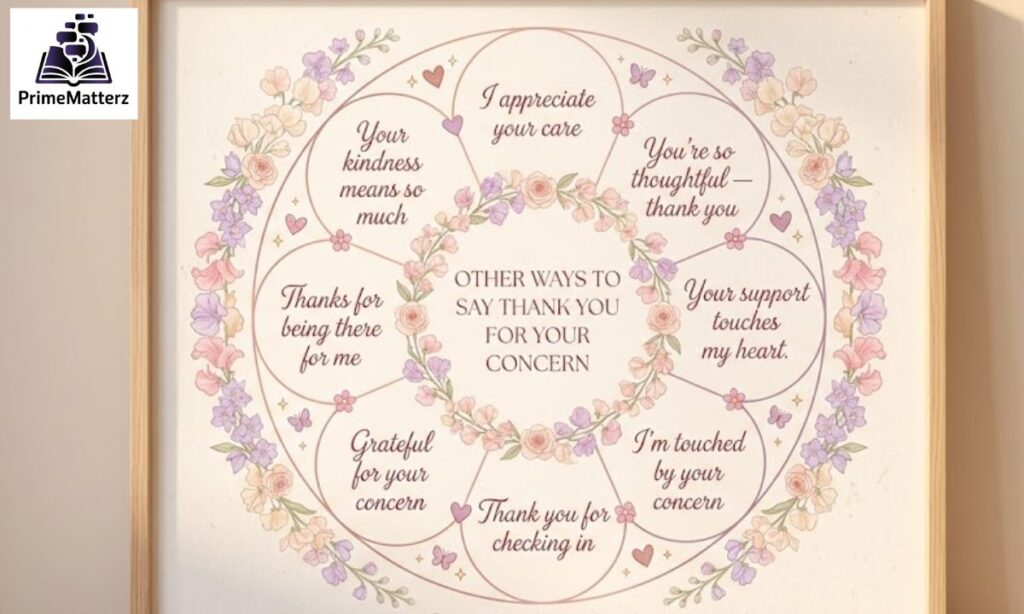
15+ Other Ways to Say “Thank You for Your Concern”
I Appreciate Your Concern
Meaning: A slightly more personal version of the original phrase. It puts the word “appreciate” front and center, which signals genuine gratitude rather than a polite reflex. Example:
Person A: “I heard things have been difficult. How are you holding up?”
Person B: “I appreciate your concern — I am doing better, thank you.”
Best Use: Professional emails, workplace conversations. Worst Use: Replying to a very close friend who expected something warmer. Tone: Formal, Respectful
Thank You for Checking In
Meaning: Casual and friendly. It acknowledges that someone took a moment out of their day to see how you are doing. It feels less formal and more human. Example:
Person A: “Just wanted to see how you were doing after last week.”
Person B: “Thank you for checking in — it really means something.”
Best Use: Text messages, casual emails, conversations with colleagues. Worst Use: Formal written correspondence or addressing senior executives. Tone: Warm, Casual, Friendly
I’m Grateful for Your Thoughtfulness
Meaning: Goes a step further than a standard thank-you. “Thoughtfulness” recognizes the effort someone put into caring about your situation, not just the act itself. Example:
Person A: “I wanted to make sure you were okay after hearing the news.”
Person B: “I am grateful for your thoughtfulness — it made a hard day easier.”
Best Use: Personal notes, heartfelt conversations, thank-you cards. Worst Use: Quick replies in a group chat or casual back-and-forth. Tone: Warm, Heartfelt, Sincere
Your Support Means a Lot to Me
Meaning: This one is emotionally rich. It moves beyond acknowledging concern and names the impact it had on you. It tells the other person their care actually mattered. Example:
Person A: “I have been thinking about you and hoping you are okay.”
Person B: “Your support means a lot to me — truly, thank you.”
Best Use: Close friends, family members, or long-term colleagues during difficult times. Worst Use: Professional emails with people you barely know. Tone: Emotional, Warm, Personal
Thank You for Your Kindness
Meaning: Broad and versatile. “Kindness” covers concern, care, and generosity all at once. It is simple, genuine, and appropriate in most contexts. Example:
Person A: “I just wanted to pass along my well wishes during this time.”
Person B: “Thank you for your kindness — I really do appreciate it.”
Best Use: Professional and personal settings alike. Works in emails and in person. Worst Use: Situations where something more specific would be more meaningful. Tone: Polite, Neutral, Respectful
It Means a Lot That You Care
Meaning: This phrase acknowledges the emotional weight behind someone’s concern. It is less formal and more heartfelt — it tells the person their care registered with you on a personal level. Example:
Person A: “I have been worried about you. How are you really doing?”
Person B: “It means a lot that you care enough to ask.”
Best Use: Friends, family, close colleagues. Worst Use: Formal work emails or messages to clients. Tone: Warm, Sincere, Emotional
Thank You for Your Support
Meaning: Slightly broader than concern — “support” includes encouragement, help, and care together. Good when someone has done more than just express worry. Example:
Person A: “I wanted you to know I am here for you through all of this.”
Person B: “Thank you for your support — I could not do this without people like you.”
Best Use: During ongoing challenges — health issues, stressful work periods, life changes. Worst Use: A one-off check-in where “support” may feel like an overstatement. Tone: Warm, Sincere, Professional or Personal.
I Appreciate You Thinking of Me
Meaning: Acknowledges that the person took a moment to hold you in their thoughts. It is personal and warm without being overly emotional. Example:
Person A: “I heard about what happened and just wanted to reach out.”
Person B: “I appreciate you thinking of me — that genuinely helps.”
Best Use: After receiving a message, card, or unexpected check-in. Worst Use: In a fast-paced work conversation where brevity matters more. Tone: Warm, Friendly, Slightly Informal
Your Concern Is Greatly Appreciated
Meaning: A formal, structured version. It is polished and appropriate for official communication. It sounds composed and professional. Example:
Person A: “We wanted to follow up and make sure you are doing well.”
Person B: “Your concern is greatly appreciated — I am on the mend.”
Best Use: Formal emails, official correspondence, messages to senior colleagues. Worst Use: Texts or casual conversations — it will sound stiff. Tone: Formal, Professional, Composed
Thanks for Being There for Me
Meaning: Personal and direct. It speaks to presence and reliability — not just words, but the feeling of not being alone. Example:
Person A: “I just wanted you to know I am in your corner.”
Person B: “Thanks for being there for me — it means more than you know.”
Best Use: Close relationships, personal conversations, heartfelt messages. Worst Use: Workplace emails or formal letters. Tone: Warm, Personal, Casual
Thank You for Your Well Wishes
Meaning: Ideal when someone has expressed hope for your recovery or positive outcome. “Well wishes” is specific — it responds to the good intentions someone sent your way. Example:
Person A: “I hope you feel better soon and everything goes smoothly.”
Person B: “Thank you for your well wishes — I am hopeful things will improve.”
Best Use: Health updates, announcements about personal challenges, professional context. Worst Use: When no specific wishes were expressed — it can feel mismatched. Tone: Polite, Warm, Slightly Formal
I Acknowledge Your Concern With Gratitude
Meaning: This is the most formal option on the list. It is structured and deliberate — best for written professional communication where tone matters. Example:
Person A: “We wanted to express our concern regarding your current situation.”
Person B: “I acknowledge your concern with gratitude and will keep you updated.”
Best Use: Formal letters, official emails, responses to HR or management. Worst Use: Any casual setting — it will feel out of place immediately. Tone: Formal, Official, Professional
Thank You for Looking Out for Me
Meaning: Casual and warm. “Looking out” implies someone has been watching your back — it is a phrase of loyalty and care, not just polite concern. Example:
Person A: “I just wanted to make sure you knew I had your back through this.”
Person B: “Thank you for looking out for me — I really value that.”
Best Use: Friends, close colleagues, family. Worst Use: Formal professional emails. Tone: Casual, Warm, Friendly
I Am Touched by Your Concern
Meaning: Expresses genuine emotional impact. When something “touches” you, it moved you. This phrase is for moments when someone’s care genuinely affected you. Example:
Person A: “I have been thinking about you and just had to reach out.”
Person B: “I am touched by your concern — this came at exactly the right time.”
Best Use: Emotional conversations, personal letters, meaningful exchanges. Worst Use: Quick email replies or professional check-ins. Tone: Heartfelt, Sincere, Emotional
Thank You for Your Empathy
Meaning: Specifically acknowledges that someone understood how you feel — not just that they cared, but that they put themselves in your shoes. Example:
Person A: “I can only imagine how hard this must be for you right now.”
Person B: “Thank you for your empathy — it makes a real difference.”
Best Use: Deep conversations, therapeutic or supportive contexts, emotional exchanges. Worst Use: Situations where empathy was not specifically demonstrated. Tone: Warm, Thoughtful, Sincere
I’m Glad to Have Your Support
Meaning: Affirms the relationship and the value of the other person’s presence. It is confident and warm without being heavy. Example:
Person A: “I am here for you whatever you need, just say the word.”
Person B: “I am glad to have your support — it gives me more confidence.”
Best Use: Ongoing difficult situations, team settings, close relationships. Worst Use: Single brief exchanges where “support” may feel overstated. Tone: Warm, Confident, Friendly
Formal vs Informal Alternatives
Formal Alternatives
Informal Alternatives
Your concern is greatly appreciated
Thanks for checking in
I acknowledge your concern with gratitude
Thanks for looking out for me
Thank you for your thoughtfulness
Thanks for being there
I appreciate your concern regarding this matter
It means a lot that you care
Thank you for your well wishes
I am glad you reached out
Thank you for your empathy
Thanks for thinking of me
Your support is sincerely appreciated
Thanks for having my back
I am grateful for your consideration
You are the best for checking in
Thank you for your kindness during this time
Really appreciate it
I am touched by your concern
Means the world, honestly
Which Alternative Should You Choose?
Workplace / Manager: Use “I appreciate your concern” or “Your concern is greatly appreciated.” These stay professional without sounding cold.
Email to a client: “Thank you for your kindness” or “Thank you for your well wishes” work well — warm but still polished.
Close colleague: “Thanks for checking in” or “Thank you for looking out for me” feel natural and human.
Friend or family member: Go with “It means a lot that you care,” “Thanks for being there,” or “I am touched by your concern.” These carry real emotional warmth.
Social media or public reply: Keep it short and genuine — “Thank you for your support” or “Your kind words mean a lot” land well without oversharing.
Frequently Asked Questions
Is “thank you for your concern” too formal for texting a friend?
Yes — for close friends, something like “thanks for checking in” or “means a lot that you care” feels much more natural.
Can I use “thank you for your concern” in a professional email?
Absolutely — it is one of the most appropriate phrases for formal workplace communication.
What is a warm way to thank someone for caring?
“It means a lot that you care” or “I am touched by your concern” both carry genuine emotional warmth.
Is it correct to say “thank you for your concerns” (plural)?
Only if someone raised specific, multiple concerns — as a general courtesy phrase, the singular “concern” is correct.
What should I say after “thank you for your concern”?
Follow up with a brief update — something like “I am feeling much better” or “things are slowly improving” makes the response feel complete.
Final Thoughts
Choosing the right words when someone cares about you is a small thing that makes a big difference. Whether you are writing a professional email, texting a friend, or responding in a meeting, having a range of natural alternatives to “thank you for your concern” helps you communicate with more confidence and more heart. The right phrase, in the right moment, tells someone their care was not wasted.