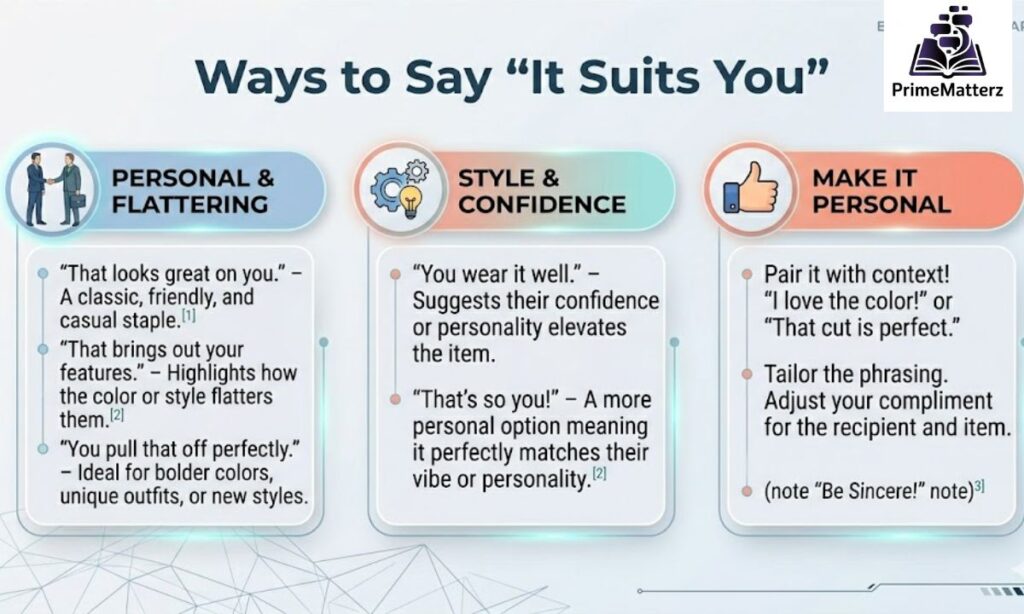
Knowing how to give a genuine compliment is a real social skill. Whether you’re shopping with a friend, leaving feedback for a client, or commenting on a colleague’s new look, finding the right words can make the moment feel warm and real instead of awkward or canned.
“It suits you” is a perfectly good phrase, but saying it every single time gets old fast. This guide gives you 20 natural alternatives — with tone labels, real examples, and guidance on when to use each one.
“It suits you” means something looks good on a person or matches their personality and style. It’s a compliment that goes beyond just size or fit — it says that the item, color, or look feels right for who that person is. You might say it about a dress, a haircut, a color, or even a new pair of glasses.
People use it because it’s polite, specific, and personal. It doesn’t just say “that looks nice” — it connects the item to the person wearing it. That makes it feel more thoughtful than a generic compliment.
When Should You Use “It Suits You”?
“It suits you” works well in a wide range of situations. You can use it in a fitting room with a friend, in a professional styling session, in a workplace compliment, or even as a caption comment on someone’s photo.
It’s appropriate in both spoken and written English, and it doesn’t come across as too formal or too casual for most settings.
That said, it leans slightly formal compared to phrases like “you look amazing in that.” In very casual conversations with close friends, something a little warmer or more enthusiastic might feel more natural.
In professional settings — like giving feedback to a client or writing a note to a colleague — “it suits you” is a reliable, safe choice.
Is “It Suits You” Professional or Polite?
Yes, it’s both. It’s one of the more versatile compliments in English — useful in fashion, the workplace, and everyday conversation. But like any phrase, it has limits.
Pros
Feels personal because it connects the item to the individual
Works for clothes, colors, hairstyles, accessories, and even personality traits
Appropriate in professional and semi-formal contexts
Sounds genuine without being over the top
Easy to understand across different English-speaking cultures
Cons
Can sound slightly stiff in very casual conversations
Less enthusiastic than “you look amazing” — may feel underwhelming for big moments
Doesn’t specify what exactly looks good, which can make it feel vague
Rarely used in formal written documents like reports or emails
Can come across as flat if said without warmth in your tone
Meaning: The item or look is clearly flattering and works well for that person.
Why It Works: It’s enthusiastic but not over the top. It feels natural in almost any setting and comes across as genuinely warm.
Example:
Person A: “What do you think of this jacket?”
Person B: “That looks great on you.”
Best Use: Casual shopping trips, complimenting friends, social media comments.
Worst Use: Very formal professional writing where more precise language is expected.
Tone: Friendly, warm, casual
2. You Wear It Well
Meaning: The person carries the look with confidence — it’s not just about the item, but how they own it.
Why It Works: It gives credit to the person, not just the clothing. It suggests natural confidence and style, which feels like a deeper compliment.
Example:
Person A: “I wasn’t sure about this bold color.”
Person B: “Don’t second-guess it — you wear it well.”
Best Use: Complimenting someone with a bold or unexpected fashion choice.
Worst Use: Giving feedback about size or fit — this phrase is about presence, not proportion.
Tone: Confident, encouraging, neutral
3. That Really Works for You
Meaning: The style, color, or look is a strong match for that particular person.
Why It Works: “Works for you” is specific and practical. It sounds like honest feedback rather than empty flattery, which makes it more believable.
Example:
Person A: “Trying something different with my hair.”
Person B: “I like it — that really works for you.”
Best Use: Hair changes, new accessories, outfit feedback from a friend or stylist.
Worst Use: Very formal emails where the phrase sounds too casual.
Tone: Honest, supportive, semi-casual
4. That Color Is Flattering on You
Meaning: The specific color of the item enhances the person’s appearance — their skin tone, eyes, or overall look.
Why It Works: It’s specific. Mentioning color makes the compliment feel more thoughtful and credible. It shows you actually noticed something.
Example:
Person A: “I found this burgundy blouse — not sure if it works.”
Person B: “Yes, that color is really flattering on you.”
Best Use: Shopping sessions, styling consultations, fashion feedback.
Worst Use: When you haven’t actually noticed the color and it sounds generic.
Tone: Observant, warm, semi-formal
5. You Pull It Off
Meaning: The person manages to make a bold or unusual choice look good.
Why It Works: This phrase implies the look wasn’t easy to pull off — but they did it. It’s a compliment that acknowledges courage and personal style at the same time.
Example:
Person A: “Is this too much for a Tuesday?”
Person B: “Not at all — you pull it off.”
Best Use: Bold fashion choices, statement pieces, unexpected combinations.
Worst Use: Conservative or traditional outfits where the phrase implies the look needed special effort to work.
Tone: Casual, energetic, encouraging
6. It Looks Amazing on You
Meaning: The item or look is strikingly good on that person — a stronger version of “it suits you.”
Why It Works: It raises the emotional temperature. When you want to show genuine enthusiasm, this phrase delivers more energy than a calm “it suits you.”
Example:
Person A: “I just got this dress for the wedding.”
Person B: “It looks amazing on you.”
Best Use: Special occasions, big style moments, close friends and family.
Worst Use: Workplace settings where “amazing” can feel excessive.
Tone: Enthusiastic, warm, friendly
7. That Style Complements You
Meaning: The style enhances the person’s natural features or personality rather than just fitting them physically.
Why It Works: “Complements” is a precise, thoughtful word. It suggests a deeper match — one that goes beyond simple appearance.
Example:
Person A: “My stylist recommended this cut.”
Person B: “Good call — that style really complements you.”
Best Use: Styling sessions, semi-formal compliments, professional fashion feedback.
Worst Use: Casual chats with friends where it can sound stiff.
Tone: Polished, semi-formal, thoughtful
8. It’s So You
Meaning: The item matches the person’s personality and personal style so well that it almost defines them.
Why It Works: It goes beyond appearance and touches on identity. It says the item feels authentic to who they are, which is a meaningful thing to hear.
Example:
Person A: “Found this vintage scarf at a market.”
Person B: “It’s so you — I love it.”
Best Use: Close friends, personal style conversations, social media comments.
Worst Use: Professional or formal settings where it may sound too casual.
Tone: Playful, personal, affectionate
9. That Fits You Perfectly
Meaning: The item looks like it was made for that person — in style, shape, or overall vibe.
Why It Works: “Perfectly” adds emphasis. It leaves no room for doubt — it’s a clear, decisive compliment that feels satisfying to hear.
Example:
Person A: “I’m trying on these trousers — too formal?”
Person B: “No, that fits you perfectly.”
Best Use: Shopping feedback, outfit approval, casual styling input.
Worst Use: Avoid when you’re unsure — “perfectly” is a strong word and sounds insincere if the look is actually average.
Tone: Clear, positive, encouraging
10. You Look Fantastic in That
Meaning: The person looks noticeably good while wearing the item.
Why It Works: “Fantastic” adds excitement and warmth. It’s a strong word that signals genuine admiration without feeling over the top.
Example:
Person A: “New blouse — going to a dinner tonight.”
Person B: “You look fantastic in that — have a great night.”
Best Use: Pre-event compliments, social gatherings, when you want to boost someone’s confidence.
Worst Use: Everyday casual settings where the energy might feel excessive.
Tone: Warm, enthusiastic, friendly
11. That’s a Good Look for You
Meaning: The overall style or combination works well for that particular person.
Why It Works: It’s a relaxed, conversational compliment. It doesn’t overthink things — it just confirms that the look works.
Example:
Person A: “Tried a new style today. Too casual?”
Person B: “Not at all — that’s a good look for you.”
Best Use: Everyday conversations, casual workplaces, friends and peers.
Worst Use: High-stakes situations like job interviews or formal events where more weight is needed.
Tone: Relaxed, casual, straightforward
12. It Enhances Your Features
Meaning: The item — usually a color, cut, or style — brings out specific facial or physical features in a flattering way.
Why It Works: This is specific and professional. It works especially well when you want to give detailed, constructive feedback about why something looks good.
Example:
Person A: “Do you think this neckline works?”
Person B: “Yes — it enhances your features beautifully.”
Best Use: Styling consultations, fashion feedback, professional compliments.
Worst Use: Casual texting with friends where it feels like fashion-show commentary.
Tone: Professional, observant, semi-formal
13. That’s Exactly Your Style
Meaning: The item matches the person’s established taste and personal aesthetic.
Why It Works: It shows you know the person well enough to recognize their style. That kind of noticing is what makes a compliment feel real.
Example:
Person A: “Not sure if this is too minimalist.”
Person B: “Are you kidding? That’s exactly your style.”
Best Use: Complimenting close friends, partners, or anyone whose style you know well.
Worst Use: Saying it to someone you don’t know well — it can feel presumptuous.
Tone: Personal, warm, familiar
14. It Flatters You
Meaning: The item makes the person look more attractive or brings out their best features.
Why It Works: “Flatters” is a classic, reliable word. It’s precise and polite — people know exactly what it means, and it sounds thoughtful rather than throwaway.
Example:
Person A: “Is this cut okay for my shape?”
Person B: “Absolutely — it flatters you.”
Best Use: Fashion advice, styling feedback, personal shopping situations.
Worst Use: When you want to sound enthusiastic — “flatters” is positive but measured, not excited.
Tone: Polite, measured, semi-formal
15. You Make That Look Good
Meaning: The person is elevating the item — their confidence and presence make it look better than it might on its own.
Why It Works: It flips the credit back to the person, not the clothing. That’s a more generous compliment — it says they bring something to the look.
Example:
Person A: “This is a pretty simple outfit.”
Person B: “Simple or not — you make that look good.”
Best Use: Casual compliments, friend conversations, situations where confidence needs a boost.
Worst Use: Very formal settings where the phrasing sounds too colloquial.
Tone: Casual, genuine, affirming
16. That Color Does Wonders for You
Meaning: The specific color of the item noticeably improves or brightens the person’s overall appearance.
Why It Works: “Does wonders” is vivid and expressive. It says the color isn’t just fine — it’s genuinely transformative. That’s a memorable compliment.
Example:
Person A: “Found this olive green top — does it work?”
Person B: “Yes — that color does wonders for you.”
Best Use: Color-focused feedback, shopping, styling conversations.
Worst Use: When you’re not actually confident about the color choice — it’s too strong a statement to use tentatively.
Tone: Enthusiastic, specific, warm
17. It Was Made for You
Meaning: The item fits and looks so well that it seems like it was designed specifically for that person.
Why It Works: It’s a strong, poetic compliment. It goes beyond the practical and says something almost destined about the match — which feels genuinely special.
Example:
Person A: “This coat fits so perfectly — should I get it?”
Person B: “Get it. It was made for you.”
Best Use: Big purchases, special occasion outfits, moments that deserve a real compliment.
Worst Use: Everyday, average outfits where the hyperbole won’t land as genuine.
Tone: Enthusiastic, warm, slightly dramatic
18. That Matches Your Vibe
Meaning: The item fits the person’s overall energy, attitude, or personal aesthetic.
Why It Works: “Vibe” connects the clothing to personality, not just appearance. It’s modern, easy to understand, and feels authentic in casual conversation.
Example:
Person A: “Went for something a bit different today.”
Person B: “I love it — that totally matches your vibe.”
Best Use: Younger audiences, social media, casual conversations among friends.
Worst Use: Professional or formal settings where “vibe” sounds too informal.
Tone: Casual, modern, friendly
19. That’s a Perfect Match for You
Meaning: The item aligns so well with the person’s features or style that there’s no question it’s the right choice.
Why It Works: “Perfect match” is specific and decisive. It removes doubt and reassures the person that the choice is genuinely right for them.
Example:
Person A: “I keep going back and forth on this jacket.”
Person B: “Stop. That’s a perfect match for you.”
Best Use: Decision-making moments in shopping or styling sessions.
Worst Use: When you haven’t really looked — “perfect” demands conviction.
Tone: Decisive, encouraging, warm
20. It Brings Out the Best in You
Meaning: The item highlights the person’s best features — physical or otherwise — in a meaningful way.
Why It Works: This is one of the more generous compliments on the list. It says the item does something for the person, not just on them. That extra layer of meaning makes it feel special.
Example:
Person A: “I feel good in this but I’m not sure why.”
Person B: “Because it brings out the best in you.”
Best Use: Close relationships, meaningful style moments, sincere compliments when you want to say something that really lands.
Worst Use: First meetings or casual acquaintances — it’s intimate enough that it may feel too personal.
Tone: Sincere, warm, heartfelt
“It Suits You” vs. “It Fits You” — What’s the Difference?
This is one of the most common sources of confusion. The two phrases sound similar but mean very different things.
“It fits you” is about size and shape. If a jacket fits you, the shoulders sit right, the sleeves hit the right spot, and there’s no pulling or bunching. It’s a practical observation about proportion.
“It suits you” is about style and personality. If a jacket suits you, it looks right for who you are — the color, cut, or vibe matches your personality and appearance. You could be wearing something that fits perfectly but doesn’t suit you at all, or vice versa.
When you’re giving a style compliment, “it suits you” is almost always the better choice.
How to Give Compliments That Actually Feel Genuine
The difference between a forgettable compliment and one that sticks usually comes down to specificity. “You look nice” slides off. “That color does wonders for you” stays.
When you give a compliment, try to name something specific — the color, the cut, the way the person carries themselves. Adding one detail turns a generic observation into something that sounds like you actually noticed. And that’s what people remember.
Also, match your energy to the moment. A quiet “that flatters you” works in a calm conversation. A big occasion might need “it was made for you.” Neither is wrong — it’s about reading the room.
Frequently Asked Questions
What does “it suits you” mean?
It means something looks good on someone or matches their personality and personal style.
Is “it suits you” formal or casual?
It sits in the middle — appropriate for semi-formal and professional contexts, and natural in everyday conversation too.
What’s the difference between “suits you” and “fits you”?
“Suits you” is about style and personality match; “fits you” is about physical size and shape.
Which phrase works best for bold fashion choices?
“You pull it off” or “you wear it well” are the strongest options for unexpected or daring looks.
Can these alternatives work for hairstyles and accessories?
Yes — most of them work just as well for haircuts, jewelry, glasses, or any personal style element.
Final Thoughts
A well-chosen compliment does more than acknowledge how someone looks — it makes them feel seen. Whether you’re shopping with a friend, giving styling feedback, or just noticing that someone looks genuinely good today, having a few solid alternatives to “it suits you” means you’ll always find the right words for the moment.