Saying the right words at the right time makes a big difference. Whether you are ending a work email, texting a friend, or wrapping up a customer call, the phrase “have a nice day ahead” can sometimes feel plain or overused.
Choosing a fresher, more fitting alternative helps you sound more natural, more genuine, and more professional — all at once.
“Have a nice day ahead” is a polite farewell phrase. It means you are wishing someone a good experience for the rest of their day. People use it to end conversations on a warm and positive note.
It is commonly used in customer service, work emails, and everyday conversations. The word “ahead” adds a forward-looking feel, suggesting you care about what comes next in that person’s day.
When Should You Use “Have a Nice Day Ahead”?
This phrase works well in professional settings like work emails, customer support chats, and business calls. It is polite, neutral, and easy to understand. Many people use it when they want to close a conversation without sounding too casual or too stiff.
In personal conversations with friends and family, it can sometimes feel a little formal. That is when switching to a warmer or more relaxed alternative makes the message feel more natural and genuine.
Is “Have a Nice Day Ahead” Professional or Polite?
It sits right in the middle — not too formal, not too casual. It works in most situations, but it can feel a bit repetitive if used too often.
Pros
Easy to use in any setting
Sounds polite and friendly
Works across cultures and languages
Safe for professional and personal use
Simple and easy to understand
Cons
Can feel overused or generic
May sound slightly stiff in casual chats
Lacks warmth in emotional conversations
Does not stand out in writing
Can feel robotic when used repeatedly
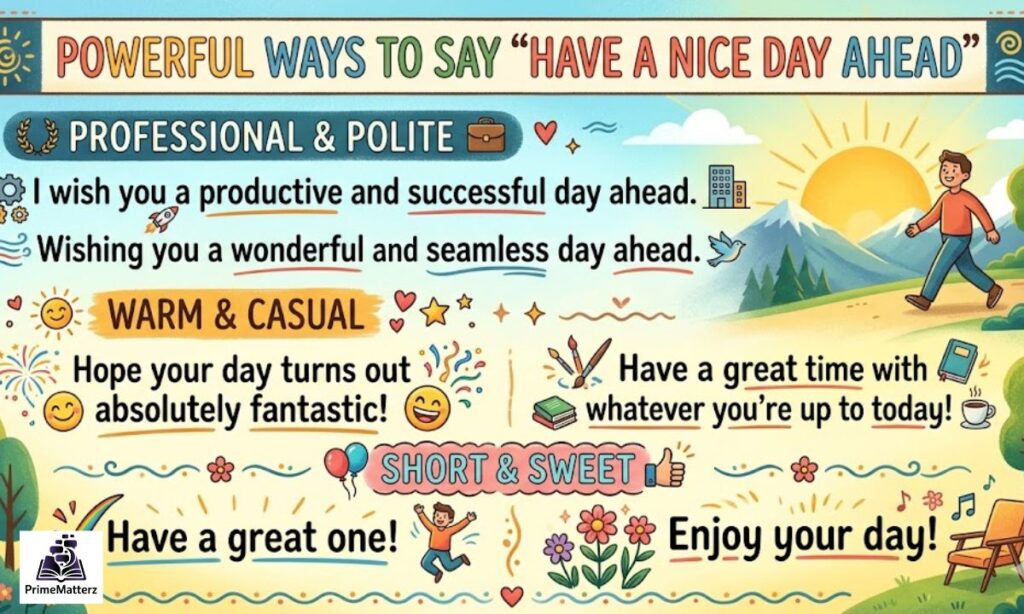
15+ Other Ways to Say “Have a Nice Day Ahead”
1. Have a Wonderful Day
Meaning: A warm wish for someone to enjoy their entire day.
Why It Works: The word “wonderful” adds a little more enthusiasm than “nice.” It feels genuine without going over the top.
Example:
Person A: “Thanks for your help with the project.”
Person B: “Of course! Have a wonderful day.”
Best Use: Emails, friendly workplace conversations, customer service
Worst Use: Very formal business letters where simpler language is preferred
Tone: Warm, Friendly, Positive
2. Hope Your Day Goes Well
Meaning: You are expressing genuine hope that things go smoothly for the other person.
Why It Works: It sounds natural and caring. It also avoids the command-like feel of “have a nice day.”
Example:
Person A: “I have back-to-back meetings today.”
Person B: “Oh, that sounds busy. Hope your day goes well!”
Best Use: Text messages, casual emails, coworker chats
Worst Use: Very formal professional documents
Tone: Casual, Warm, Genuine
3. Wishing You a Great Day
Meaning: A sincere wish that the person’s day is enjoyable and positive.
Why It Works: The phrase “wishing you” feels personal and thoughtful. It is slightly more elevated than “have a nice day.”
Example:
Person A: “I will send over those files shortly.”
Person B: “Perfect. Wishing you a great day!”
Best Use: Professional emails, business communication, LinkedIn messages
Worst Use: Very quick informal chats where it may feel too polished
Tone: Professional, Warm, Polished
4. Take Care
Meaning: A short farewell that shows you care about the other person’s wellbeing.
Why It Works: It is short, sincere, and works in almost every situation. It feels natural rather than scripted.
Example:
Person A: “I’ll talk to you later!”
Person B: “Sounds good. Take care!”
Best Use: Everyday conversations, text messages, phone calls
Worst Use: Formal business emails where a longer closing is expected
Tone: Casual, Friendly, Caring
5. Have a Good One
Meaning: A relaxed way to wish someone well without specifying whether it is their day, evening, or week.
Why It Works: It feels natural and informal. Native English speakers use it all the time in everyday conversation.
Example:
Person A: “Alright, I’m heading out.”
Person B: “See you! Have a good one.”
Best Use: Friends, coworkers, casual customers
Worst Use: Formal emails, official correspondence, or messages to senior executives
Tone: Casual, Laid-back, Friendly
6. Enjoy the Rest of Your Day
Meaning: You are encouraging someone to make the most of the time left in their day.
Why It Works: It acknowledges that the day is already in progress, which makes it feel more real and specific.
Example:
Person A: “I think we’ve covered everything.”
Person B: “Great. Enjoy the rest of your day!”
Best Use: End-of-call sign-offs, afternoon emails, customer service closings
Worst Use: Early morning greetings where “rest of the day” may not apply
Tone: Friendly, Polite, Professional
7. I Hope You Have a Fantastic Day
Meaning: An enthusiastic and uplifting wish for the other person’s day.
Why It Works: The word “fantastic” shows real enthusiasm. It lifts the energy of the conversation.
Example:
Person A: “Thanks so much for reaching out!”
Person B: “My pleasure. I hope you have a fantastic day!”
Best Use: Customer service, friendly professional emails, social media replies
Worst Use: Situations where you want to keep things low-key or neutral
Tone: Enthusiastic, Warm, Upbeat
8. Wishing You a Productive Day
Meaning: You are hoping the person gets a lot done and feels accomplished by the end of the day.
Why It Works: It is professional and goal-oriented. It works especially well in a work setting.
Example:
Person A: “I’ve got a ton of deadlines this week.”
Person B: “You’ve got this. Wishing you a productive day!”
Best Use: Work emails, team messages, professional communication
Worst Use: Personal conversations where productivity is not the focus
Tone: Professional, Motivating, Supportive
9. Have a Lovely Day
Meaning: A gentle and warm wish for the person to have a pleasant day.
Why It Works: “Lovely” sounds softer than “great” or “fantastic.” It carries a warm and sincere tone.
Example:
Person A: “I’ll see you at the meeting tomorrow.”
Person B: “Perfect. Have a lovely day!”
Best Use: Friendly emails, messages to clients, warm professional closing lines
Worst Use: Very casual conversations where it may feel a bit too refined
Tone: Warm, Gentle, Polite
10. Make It a Great Day
Meaning: An encouraging phrase that puts the power in the other person’s hands.
Why It Works: Instead of wishing it for them, you are inspiring them to create it themselves. It sounds motivating and positive.
Example:
Person A: “I’ll do my best today.”
Person B: “That’s the spirit. Make it a great day!”
Best Use: Motivational messages, team pep talks, customer service closings
Worst Use: Formal business emails where a simple closing is more appropriate
Tone: Motivating, Encouraging, Upbeat
11. May Your Day Be Filled with Joy
Meaning: A heartfelt wish for the person to experience happiness throughout their day.
Why It Works: It feels thoughtful and emotional. It works well in personal messages or warm professional notes.
Example:
Person A: “It was so nice catching up with you!”
Person B: “Likewise! May your day be filled with joy.”
Best Use: Heartfelt texts, WhatsApp messages, cards, personal emails
Worst Use: Business emails or quick professional exchanges
Tone: Warm, Heartfelt, Affectionate
12. All the Best for Your Day
Meaning: A phrase that wishes the person success and good experiences during their day.
Why It Works: It sounds polished and sincere. It is easy to use in both professional and semi-personal settings.
Example:
Person A: “I have a big presentation later.”
Person B: “You’ll do great. All the best for your day!”
Best Use: Professional emails, LinkedIn messages, business communication
Worst Use: Very casual or quick chats where it may feel too formal
Tone: Professional, Encouraging, Sincere
13. Stay Safe and Have a Good Day
Meaning: A caring farewell that combines wellbeing with a positive wish for the day.
Why It Works: Adding “stay safe” shows you genuinely care about the person, not just their day.
Example:
Person A: “I’m heading out now.”
Person B: “Drive safe. Stay safe and have a good day!”
Best Use: Messages to family, friends, or coworkers in uncertain weather or situations
Worst Use: Routine professional emails where it may sound excessive
Tone: Caring, Warm, Genuine
14. Sending You Good Vibes for the Day
Meaning: A modern, upbeat way to wish someone positivity throughout their day.
Why It Works: It feels light, friendly, and modern. It is especially popular on social media and in casual messages.
Example:
Person A: “I’m a little nervous about today.”
Person B: “Don’t be! Sending you good vibes for the day.”
Best Use: Instagram captions, WhatsApp, texts to friends, casual emails
Worst Use: Formal business communication or official correspondence
Tone: Casual, Modern, Friendly
15. Hope the Day Treats You Well
Meaning: A charming way to wish that the day itself is kind and good to the person.
Why It Works: The phrasing feels natural and a little poetic without being too formal. It stands out because it is less common.
Example:
Person A: “Monday mornings are tough.”
Person B: “I know! Hope the day treats you well.”
Best Use: Emails, casual conversations, text messages
Worst Use: Very formal professional documents
Tone: Warm, Conversational, Genuine
16. Have an Amazing Day
Meaning: An enthusiastic wish for the person to have an outstanding day.
Why It Works: “Amazing” carries strong positive energy. It adds extra warmth and excitement to a simple farewell.
Example:
Person A: “Thanks for checking in on me.”
Person B: “Anytime! Have an amazing day!”
Best Use: Friendly messages, customer service closings, social media
Worst Use: Situations where a more reserved tone is expected
Tone: Enthusiastic, Warm, Upbeat
17. I Hope Everything Goes Smoothly Today
Meaning: A thoughtful wish that the person faces no obstacles or stress during their day.
Why It Works: It shows empathy. It acknowledges that life can be unpredictable and you are hoping for a smooth experience for them.
Example:
Person A: “I have a lot on my plate today.”
Person B: “I hope everything goes smoothly today.”
Best Use: Emails, messages to coworkers or clients before a big day
Worst Use: Casual small talk where a shorter phrase fits better
Tone: Empathetic, Professional, Caring
18. Enjoy Your Day to the Fullest
Meaning: You are encouraging the person to make the most of every part of their day.
Why It Works: It sounds inspiring and positive. It nudges the person to be present and enjoy their time.
Example:
Person A: “I finally have a day off.”
Person B: “You deserve it. Enjoy your day to the fullest!”
Best Use: Personal messages, texts to friends, heartfelt closing lines
Worst Use: Routine professional communication
Tone: Warm, Encouraging, Genuine
19. Have a Blessed Day
Meaning: A warm farewell often used in religious or spiritual contexts, wishing someone God’s favor throughout their day.
Why It Works: For those who share a faith-based worldview, it carries deep warmth. It feels sincere and kind.
Example:
Person A: “Thank you so much for everything.”
Person B: “Of course. Have a blessed day!”
Best Use: Messages to family, friends, communities with religious values
Worst Use: Secular professional settings where it may not be appropriate for all audiences
Tone: Warm, Spiritual, Heartfelt
20. Take It Easy Today
Meaning: A relaxed and caring phrase encouraging someone to have a stress-free day.
Why It Works: It is laid-back and friendly. It works especially well when someone seems stressed or tired.
Example:
Person A: “I’ve been so exhausted lately.”
Person B: “I hear you. Take it easy today.”
Best Use: Casual conversations, texts to friends, end-of-call with someone who seems stressed
Worst Use: Professional emails or business communication
Tone: Casual, Caring, Relaxed
Best Phrase by Situation — Quick Reference
Situation
Best Phrase to Use
Professional email
Wishing you a great day
Customer service call
Enjoy the rest of your day
Text to a friend
Have a good one
Message to family
Have a blessed day
Coworker before a meeting
Hope everything goes smoothly today
Social media reply
Have an amazing day
Someone who seems stressed
Take it easy today
Motivational message
Make it a great day
Tone Guide — Choosing the Right Phrase
Different situations call for different tones. Here is a simple guide to help you choose:
Casual and Friendly: Have a good one, Take it easy, Sending you good vibes
Warm and Personal: Have a lovely day, May your day be filled with joy, Have a blessed day
Professional and Polished: Wishing you a great day, All the best for your day, Wishing you a productive day
Motivating and Upbeat: Make it a great day, Have a fantastic day, Enjoy your day to the fullest
Empathetic and Thoughtful: Hope the day treats you well, I hope everything goes smoothly today, Stay safe and have a good day
Frequently Asked Questions
What is another way to say “have a nice day ahead”?
Some great alternatives are “wishing you a wonderful day,” “enjoy the rest of your day,” and “hope your day goes well.”
Is “have a good one” more natural than “have a nice day”?
Yes, in casual conversation, “have a good one” sounds more relaxed and natural, especially for native English speakers.
What is a polite professional alternative to “have a nice day ahead”?
“Wishing you a productive day” or “all the best for your day” work well in professional emails and business communication.
What can I say instead of “have a nice day” in an email?
Try “enjoy the rest of your day,” “wishing you a great day,” or “I hope everything goes smoothly today.”
Is “wishing you a wonderful day ahead” formal?
It sits between casual and formal. It is polished enough for professional emails but warm enough for personal messages too.
Final Thoughts
The phrase “have a nice day ahead” is polite and kind, but it is not always the most memorable or fitting choice. The right farewell phrase can leave a lasting impression, show genuine care, and make your communication feel more natural.
Whether you are writing a work email, sending a quick text, or wrapping up a customer call, there is always a phrase that fits the moment better. Use the list above to find the one that matches your tone, relationship, and setting.