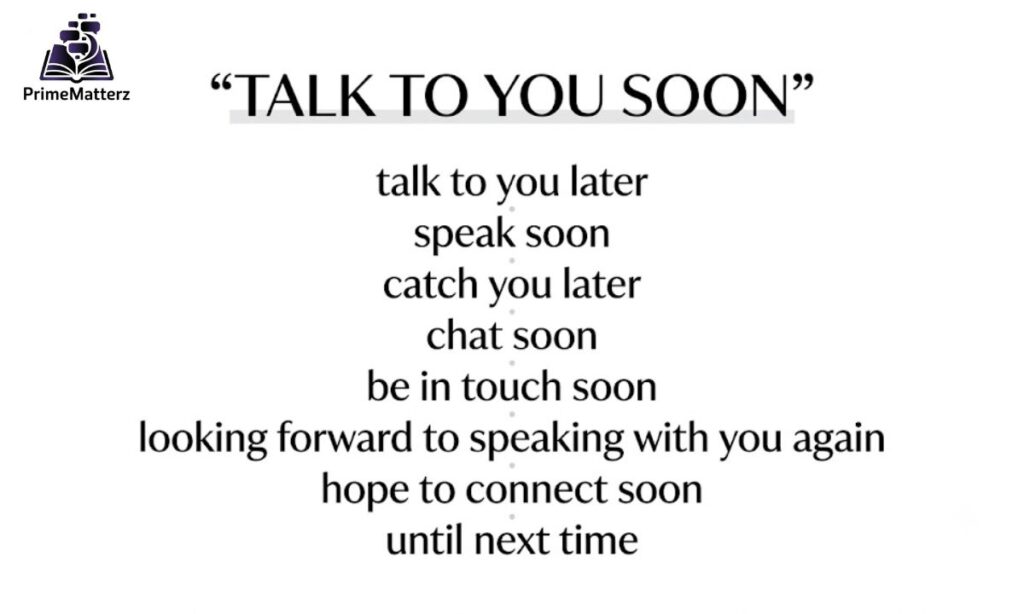
The way you end a conversation says a lot about you. A repeated, tired closing line can make even warm messages feel flat. Choosing the right words instead builds confidence, keeps relationships warm, and makes your emails and texts sound more polished. This guide gives you 15+ other ways to say“talk to you soon” so every goodbye feels natural and clear.
“Talk to you soon” is a friendly way to end a conversation while hinting that you will speak again shortly. It does not give an exact time, just a general promise to reconnect.
People use it because it feels warm and open-ended. It works for texts, calls, and casual emails without sounding too formal or too final.
When Should You Use “Talk to You Soon”?
In workplace chats, it works well for quick messages between coworkers who talk often. In emails, it feels slightly informal, so it suits friendly business relationships more than strict, formal ones.
In customer service, it can sound a little too casual unless the brand voice is relaxed. With friends and family, it fits naturally into daily texts and calls without needing much thought.
Is “Talk to You Soon” Professional or Polite?
It can work in many settings, but its casual tone has limits.
Pros
Sounds warm and friendly
Easy to use in texts and calls
Keeps the door open for future contact
Cons
Can feel too casual for formal emails
Vague about exact timing
May sound empty if overused without follow-up
Grammar & Correct Usage of “Talk to You Soon”
It is grammatically correct as a short, informal closing phrase.
A common mistake is pairing it with overly formal language, which feels mismatched.
Correct structure: “Thanks again, talk to you soon!”
Informal: “Talk to you soon!” Formal: “I look forward to speaking with you again soon.”
Common Mistakes When Using “Talk to You Soon”
Overuse: Repeating it in every message makes it feel automatic instead of sincere.
Wrong context: Using it to close a serious business email can feel too light.
Tone issues: Saying it after a tense conversation can sound dismissive.
Grammar errors: Mixing it awkwardly with formal phrases, like “Talk to you soon, sincerely,” breaks the natural tone.
How to Respond to “Talk to You Soon”
1. “Sounds good, talk soon!” Meaning: A simple, friendly agreement. Best use: Texts with friends or coworkers. Example: “Talk to you soon!” → “Sounds good, talk soon!”
2. “Looking forward to it.” Meaning: Shows genuine anticipation for the next chat. Best use: Semi-formal emails or calls. Example: “Talk to you soon.” → “Looking forward to it.”
3. “Take care until then!” Meaning: Adds warmth and care to the goodbye. Best use: Personal conversations with family or close friends. Example: “Talk to you soon.” → “Take care until then!”
4. “Same here, have a good one.” Meaning: Matches the friendly tone while wishing them well. Best use: Casual daily chats. Example: “Talk to you soon.” → “Same here, have a good one.”
5. “Will do, catch you later.” Meaning: Confirms the plan to reconnect soon. Best use: Quick informal exchanges. Example: “Talk to you soon.” → “Will do, catch you later.”
15+ Other Ways to Say “Talk to You Soon”
Talk to You Later
Meaning: A relaxed, everyday way to end a chat without setting a specific time. It feels light and easy. Example:
Person A: “Alright, talk to you later.”
Person B: “Sounds good, have a great day.”
Best Use: Texts, casual calls. Worst Use: Formal business emails. Tone: Casual, Friendly
Speak Soon
Meaning: A slightly more polished version that still feels warm, often used in semi-professional settings. Example:
Person A: “Thanks for the update, speak soon.”
Person B: “Of course, speak soon!”
Best Use: Work emails with familiar clients. Worst Use: Very formal legal or official letters. Tone: Friendly, Semi-Formal
Catch You Later
Meaning: A playful, relaxed goodbye often used between friends or casual coworkers. Example:
Person A: “Catch you later, good luck with the meeting.”
At work, “touch base later” or “speak soon” sound natural without being too casual. In emails, “I look forward to hearing from you soon” gives a polished, professional finish.
When writing to a manager, “I look forward to speaking with you again” shows respect and clarity. With a customer, “be in touch soon” or “hope to connect again soon” keep things warm and professional.
With a friend, “catch you later” or “talk again soon” feel natural and easy. With family, “talk to you later” or “until next time” carry warmth. On social media, “chat soon” or “catch you soon” fit short, friendly messages well.
Frequently Asked Questions
What is another way to say talk to you soon?
“Speak soon” or “talk to you later” are simple, natural alternatives.
What is the most professional way to say talk to you soon?
“I look forward to hearing from you soon” is the most professional choice.
What can I say instead of talk to you soon in an email?
“Hope to connect again soon” or “be in touch soon” both work well in emails.
Is talk to you soon formal or informal?
It is mostly informal, fitting casual texts and friendly conversations best.
What is the difference between talk to you soon and talk to you later?
“Talk to you soon” suggests a closer timeframe, while “talk to you later” feels more open-ended.
Final Thoughts
A simple closing phrase can shape how warm, professional, or memorable your message feels. With these 15+ alternatives to “talk to you soon,” you can match your tone to any situation, from quick texts to formal emails. Small word choices like these make your communication feel more thoughtful and genuine every time.