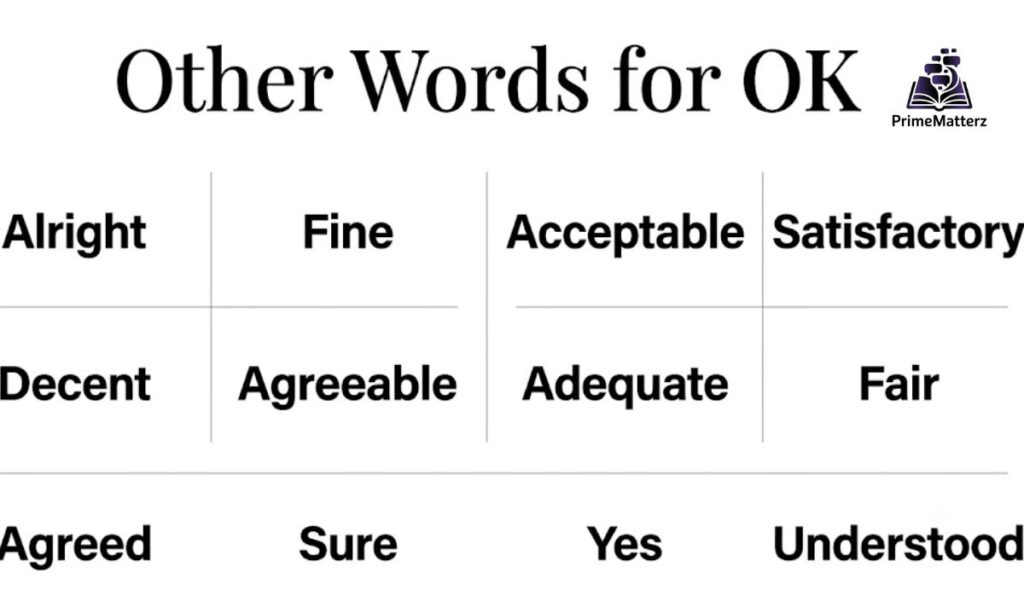
The word “OK” is one of the words that we might often overuse. Once you start noticing it, you will hear or read it constantly in emails or texts, in general. Using different synonyms for OK can make you sound better and more professional than just using this one. Here are 20 alternatives for you to consider.
What Does “OK” Mean?
“OK” is one of the most flexible words in English—it can be used to agree, to indicate that something is satisfactory, or simply to acknowledge what has been said.
It can act as an adjective, an adverb, a noun, a verb, and even an exclamation mark. This versatility is precisely the reason why it is used so often in the English language—since with one word, you can perform the function of five.
Grammar and Correct Usage of “OK”
OK as an Adjective
Here, “OK” describes quality. “The meal was OK” means it was acceptable, not amazing. This use often signals a neutral or slightly unenthusiastic opinion.
OK as an Interjection
This is the most common use. “OK, let’s go” shows agreement or readiness. It’s quick, casual, and works in almost any spoken conversation.
OK as a Noun or Verb
As a noun, “OK” means approval: “I got the OK from my manager.” As a verb, it means to approve something: “She OK’d the budget.”
OK vs Okay: Spelling Notes
Both spellings are correct. “OK” is more common in headlines and casual writing. “Okay” feels slightly more formal and reads better in longer sentences.
15+ Other Ways to Say “OK”
1. Alright
Meaning: A relaxed way to show agreement. It feels casual and easygoing, without sounding overly formal.
Example:
- Person A: “Can we push the meeting to 3 PM?”
- Person B: “Alright, that works for me.”
Best Use: Casual conversations with friends or coworkers. Worst Use: Formal business emails. Tone: Casual
2. Fine
Meaning: Shows acceptance, sometimes with a hint of reluctance. It’s simple and direct, but tone matters a lot here.
Example:
- Person A: “We need to reschedule again.”
- Person B: “Fine, just send me the new time.”
Best Use: Everyday conversations, informal replies. Worst Use: Situations needing enthusiasm or warmth. Tone: Neutral
3. Sure
Meaning: A light, friendly way to agree. It sounds open and easygoing, without overthinking the response.
Example:
- Person A: “Want to grab lunch at noon?”
- Person B: “Sure, sounds good.”
Best Use: Casual invitations or quick agreements. Worst Use: Serious business decisions. Tone: Friendly
4. Sounds Good
Meaning: A warm way to confirm a plan. It adds a touch of enthusiasm compared to a flat “OK.”
Example:
- Person A: “I’ll send the report by Friday.”
- Person B: “Sounds good, thanks.”
Best Use: Confirming plans with coworkers or friends. Worst Use: Formal legal or contractual agreements. Tone: Warm
5. Understood
Meaning: Confirms you’ve grasped instructions clearly. It sounds confident and professional, without extra words.
Example:
- Person A: “Please submit the form by 5 PM.”
- Person B: “Understood, I’ll have it ready.”
Best Use: Workplace instructions, formal replies. Worst Use: Casual chats with friends. Tone: Professional
6. Agreed
Meaning: A strong, clear way to confirm you share the same opinion or decision. It feels decisive.
Example:
- Person A: “Let’s move the deadline to Monday.”
- Person B: “Agreed, that gives us more time.”
Best Use: Meetings, negotiations, group decisions. Worst Use: Casual texting between friends. Tone: Formal
7. No Problem
Meaning: Shows willingness and ease. It reassures the other person that the request wasn’t a burden.
Example:
- Person A: “Could you resend that file?”
- Person B: “No problem, sending it now.”
Best Use: Customer service, helpful replies. Worst Use: Formal written contracts. Tone: Friendly
8. Works for Me
Meaning: Confirms a plan fits your schedule or preferences. It sounds cooperative and easygoing.
Example:
- Person A: “Let’s meet at 10 AM tomorrow.”
- Person B: “Works for me; see you then.”
Best Use: Scheduling, coordinating plans. Worst Use: Serious or emotional conversations. Tone: Casual
9. Got It
Meaning: A quick, confident confirmation that you understand. It feels efficient and to the point.
Example:
- Person A: “Send the invoice before noon.”
- Person B: “Got it. On it now.”
Best Use: Fast-paced work environments, texts. Worst Use: Formal presentations or reports. Tone: Casual
10. Fair Enough
Meaning: Shows you accept a point, even if you didn’t fully expect it. It signals openness and flexibility.
Example:
- Person A: “I’d rather handle this myself.”
- Person B: “Fair enough, let me know if you need help.”
Best Use: Discussions, debates, respectful disagreements. Worst Use: Situations needing full enthusiasm. Tone: Respectful
11. Absolutely
Meaning: A strong, enthusiastic yes. It communicates confidence and full support for an idea.
Example:
- Person A: “Can you lead the presentation?”
- Person B: “Absolutely, I’d love to.”
Best Use: Confident agreements, enthusiastic responses. Worst Use: Minor or unimportant requests. Tone: Confident
12. Will Do
Meaning: A short promise to complete a task. It feels action-focused and reliable.
Example:
- Person A: “Please update the spreadsheet today.”
- Person B: “Will do, thanks for the reminder.”
Best Use: Task confirmations at work. Worst Use: Emotional or personal conversations. Tone: Professional
13. That’s Acceptable
Meaning: A formal way to approve something without strong emotion. It sounds measured and businesslike.
Example:
- Person A: “Here’s the revised proposal.”
- Person B: “That’s acceptable; let’s proceed.”
Best Use: Formal reviews, business writing. Worst Use: Casual, friendly conversations. Tone: Formal
14. Satisfactory
Meaning: Describes something that meets expectations without being outstanding. It’s neutral and measured.
Example:
- Person A: “How was the vendor’s performance?”
- Person B: “Satisfactory, though there’s room to improve.”
Best Use: Reviews, evaluations, reports. Worst Use: Casual daily conversation. Tone: Neutral
15. All Set
Meaning: Confirms everything is ready or complete. It sounds upbeat and reassuring.
Example:
- Person A: “Did you finish the setup?”
- Person B: “All set, ready when you are.”
Best Use: Wrapping up tasks or preparations. Worst Use: Formal legal documents. Tone: Friendly
16. Cool
Meaning: A relaxed, informal way to agree. It’s popular in casual and youth-oriented conversation.
Example:
- Person A: “Let’s meet at the café instead.”
- Person B: “Cool, see you there.”
Best Use: Texting, casual chats with friends. Worst Use: Professional emails or meetings. Tone: Casual
17. Roger That
Meaning: Originally radio slang, now used to confirm instructions clearly. It adds a playful, confident edge.
Example:
- Person A: “Head to the north entrance first.”
- Person B: “Roger that, on my way.”
Best Use: Playful confirmations among coworkers or friends. Worst Use: Formal client communication. Tone: Casual
18. Very Well
Meaning: A slightly formal, old-fashioned way to accept something. It carries a calm, composed tone.
Example:
- Person A: “We’ll proceed with the original plan.”
- Person B: “Very well, let’s continue.”
Best Use: Formal or old-fashioned writing styles. Worst Use: Everyday texting or casual talk. Tone: Formal
19. Consider It Done
Meaning: A confident promise that a task will be completed. It shows ownership and reliability.
Example:
- Person A: “Can you handle the client call?”
- Person B: “Consider it done.”
Best Use: Confident workplace commitments. Worst Use: Uncertain or tentative situations. Tone: Confident
20. Noted
Meaning: A brief way to confirm you’ve received and understood information. It’s efficient and professional.
Example:
- Person A: “The meeting moved to Thursday.”
- Person B: “Noted, I’ll update my calendar.”
Best Use: Emails, quick professional replies. Worst Use: Warm, personal conversations. Tone: Professional
Frequently Asked Questions
What is a professional alternative to “OK”?
“Understood,” “noted,” and “that’s acceptable” all sound more professional than a plain “OK.”
What can I say instead of “OK” in an email?
Try “understood,” “sounds good,” or “will do,” depending on how formal the email needs to be.
What is a polite way to say “OK”?
“Fair enough” and “that works for me” both sound polite and considerate.
Is it rude to say “OK” in a text?
Not usually, but a flat “OK” can sound cold, so adding warmth with “sounds good” often reads better.
Is “OK” too informal for business writing?
It’s acceptable in casual business chats, but formal documents usually read better with “acceptable” or “approved.”
Final Thoughts
“OK” is useful, but it’s not your only option. Swapping it out keeps your writing fresh and your tone accurate. Try a few of these alternatives this week and notice how much clearer your communication becomes.