25 Other Ways to Say “I Am Writing to Inform You” in Emails
Hayat
August 13, 2026No comments
The words you use to open an email set the tone for everything that follows. If you always start with “I am writing to inform you,” your messages can start to feel stiff and repetitive. Small changes in phrasing make you sound more human, more approachable, and still just as professional. This guide gives you 25 fresh alternatives to say “I am writing to inform you” so your emails never sound like a template again.
This phrase simply means you’re contacting someone to share information, an update, or a decision. It’s a formal way to open a message before the actual news comes. You’ll see it most in business emails, official notices, and school or government letters. It works, but it can feel a little cold if you use it every single time.
Is It Professional?
Yes, it’s professional and grammatically correct. It fits formal settings like HR emails, legal notices, and policy updates. But “professional” doesn’t always mean “best.” Overusing it can make your writing sound robotic, especially in everyday work emails where a warmer tone builds better relationships.
Grammar and Correct Usage
The structure is simple: “I am writing to inform you” plus “that” or “of” followed by the information. For example, “I am writing to inform you that the meeting has moved.” Keep following sentences short and clear. Avoid stacking multiple pieces of news in one sentence, since that makes the message harder to read.
When to Use It
Use it for formal notices, policy changes, official decisions, and situations where you need a written record. It also works well when writing to someone you don’t know well or in industries like law, government, and education, where formality is expected.
When Not to Use It
Skip it in casual emails, quick updates, Slack messages, or texts. It also doesn’t fit well when delivering personal or sensitive news, since it can feel distant. If you already have an ongoing relationship with the reader, a simpler opener usually works better.
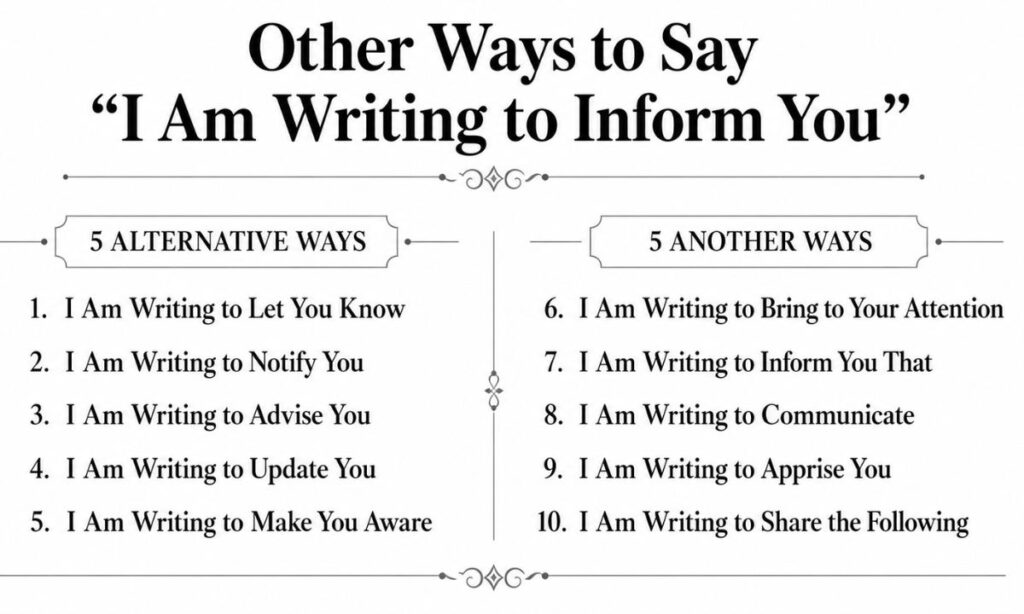
25 Better Alternatives to “I Am Writing to Inform You”
1. I Wanted to Let You Know
Meaning: A warm, everyday way to share information without sounding formal. It softens the message while staying clear. Works well in most workplace settings.
Example conversation:
Person A: “I wanted to let you know the shipment is delayed.”
Person B: “Thanks for the heads-up; I’ll adjust the schedule.”
Best Use: Everyday work emails. Worst Use: Legal or official notices.
Tone: Friendly, natural. Quick Tip: Great default for most situations.
2. I’m Reaching Out to Share
Meaning: Signals a personal, proactive message. Feels collaborative rather than one-directional. Common in client or team communication.
Example conversation:
Person A: “I’m reaching out to share some good news.”
Person B: “Love hearing that; tell me more.”
Best Use: Client updates. Worst Use: Formal legal communication.
Tone: Warm, engaged. Quick Tip: Pairs well with positive news.
3. Please Note That
Meaning: Direct and to the point, often used for instructions or policy details. Slightly formal but not cold.
Example conversation:
Person A: “Please note that the office closes early Friday.”
Person B: “Got it, thanks for letting us know.”
Best Use: Internal memos. Worst Use: Personal or emotional topics.
Tone: Neutral, direct. Quick Tip: Best for short factual updates.
4. I Wanted to Update You On
Meaning: Signals ongoing communication about a specific topic. Useful for projects with multiple check-ins.
Example conversation:
Person A: “I wanted to update you on the budget review.”
Person B: “Perfect timing; I was just about to ask.”
Best Use: Project status emails. Worst Use: One-time announcements.
Tone: Professional, informative. Quick Tip: Works well as a subject line too.
5. This Is to Notify You
Meaning: More formal than “inform,” often used for official or required notices. Carries a sense of authority.
Example conversation:
Person A: “This is to notify you of the new deadline.”
Person B: “Understood, we’ll adjust our timeline.”
Best Use: Compliance or policy notices. Worst Use: Casual team chats.
Tone: Formal, official. Quick Tip: Use sparingly to avoid sounding bureaucratic.
6. I’m Writing to Update You
Meaning: A balanced, professional way to share new developments. Slightly more formal than “let you know” but still approachable.
Example conversation:
Person A: “I’m writing to update you on the vendor contract.”
Person B: “Appreciate it; send the details when ready.”
Best Use: Business correspondence. Worst Use: Text messages.
Tone: Balanced, professional. Quick Tip: Ideal for mid-formality emails.
7. Just a Quick Heads-Up
Meaning: Casual and friendly, best for short, low-stakes information. Signals the message won’t take long to read.
Example conversation:
Person A: “Just a quick heads-up, parking is closed today.”
Person B: “Thanks, glad you told me.”
Best Use: Team chats, quick notices. Worst Use: Formal reports.
Tone: Casual, light. Quick Tip: Keep the message short to match the tone.
8. I Would Like to Inform You
Meaning: Polished and courteous, close to the original phrase but slightly softer. Common in client-facing writing.
Example conversation:
Person A: “I would like to inform you that your order shipped.”
Person B: “Great, thank you for the update.”
Best Use: Customer service emails. Worst Use: Casual internal messages.
Tone: Polite, formal. Quick Tip: Good substitute when writing to strangers.
9. I’m Pleased to Let You Know
Meaning: Reserved for good news. Adds warmth and a sense of celebration to the message.
Example conversation:
Person A: “I’m pleased to let you know you got the role.”
Person B: “That’s amazing news, thank you!”
Best Use: Approvals, job offers. Worst Use: Bad news or neutral updates.
Tone: Positive, warm. Quick Tip: Never use this for disappointing news.
10. I Regret to Inform You
Meaning: The standard formal phrase for delivering bad news. Signals empathy while staying professional.
Example conversation:
Person A: “I regret to inform you that the event is cancelled.”
Person B: “That’s disappointing, but thanks for telling us early.”
Best Use: Rejections, cancellations. Worst Use: Positive or neutral news.
Tone: Formal, empathetic. Quick Tip: Follow with a brief reason if possible.
11. Here’s an Important Update
Meaning: Direct and attention-grabbing. Works well as an opener when the news needs quick attention.
Example conversation:
Person A: “Here’s an important update on the merger.”
Person B: “Reading it now, thanks for flagging.”
Best Use: Urgent internal updates. Worst Use: Minor or routine news.
Tone: Direct, urgent. Quick Tip: Save this phrase for genuinely important news.
12. I Wanted to Flag Something
Meaning: Signals a concern or issue rather than a routine update. Common in workplace collaboration.
Example conversation:
Person A: “I wanted to flag something about the invoice.”
Person B: “Thanks for catching that; let’s look together.”
Best Use: Raising concerns. Worst Use: Formal legal notices.
Tone: Collaborative, alert. Quick Tip: Best used before explaining a problem.
13. Kindly Note That
Meaning: Polite and slightly formal, often used in customer or administrative writing. Common outside the US.
Example conversation:
Person A: “Kindly note that payments are due Friday.”
Person B: “Noted, I’ll process it today.”
Best Use: Administrative notices. Worst Use: Casual peer conversations.
Tone: Polite, formal. Quick Tip: Common in international business writing.
14. I’m Following Up to Share
Meaning: Useful when continuing a previous conversation or thread. Shows the update connects to earlier context.
Example conversation:
Person A: “I’m following up to share the final numbers.”
Person B: “Perfect, that’s exactly what I needed.”
Best Use: Continuing conversations. Worst Use: First-time contact.
Tone: Professional, connected. Quick Tip: Reference the earlier conversation briefly.
15. I Wanted to Give You a Heads-Up
Meaning: Friendly and considerate, often used to prepare someone before a bigger conversation or change.
Example conversation:
Person A: “I wanted to give you a heads-up before the meeting.”
Person B: “Thanks, that helps me prepare.”
Best Use: Preparing someone for news. Worst Use: Formal written records.
Tone: Thoughtful, casual. Quick Tip: Pairs well with a short explanation after.
16. This Email Is to Inform You
Meaning: A modern, slightly softer version of the original phrase. Still formal but a bit more natural.
Example conversation:
Person A: “This email is to inform you of a schedule change.”
Person B: “Got it, thanks for the notice.”
Best Use: Business notices. Worst Use: Personal messages.
Tone: Formal, neutral. Quick Tip: Works well as a subject line opener.
17. I Wanted to Bring to Your Attention
Meaning: Signals something specific needs review or awareness, often used for issues or concerns.
Example conversation:
Person A: “I wanted to bring to your attention a billing error.”
Person B: “Thanks for catching that; I’ll fix it now.”
Best Use: Reporting issues. Worst Use: Routine, minor updates.
Tone: Respectful, direct. Quick Tip: Best followed by a clear explanation.
18. I’m Writing to Confirm
Meaning: Used when verifying details rather than announcing new information. Common in scheduling and agreements.
Example conversation:
Person A: “I’m writing to confirm our meeting on Monday.”
Person B: “Confirmed, see you then.”
Best Use: Confirming plans or details. Worst Use: Sharing brand-new information.
Tone: Clear, professional. Quick Tip: Pair with specific dates or details.
19. For Your Information
Meaning: A quick way to share something without much explanation needed. Often shortened to “FYI” in casual writing.
Example conversation:
Person A: “For your information, the deadline moved to Friday.”
Person B: “Thanks, updating my calendar now.”
Best Use: Quick internal notes. Worst Use: Sensitive or formal communication.
Tone: Brief, casual. Quick Tip: Best for short, factual notes.
20. I Wanted to Make You Aware
Meaning: Considerate and respectful, often used before explaining something the reader should know but isn’t urgent.
Example conversation:
Person A: “I wanted to make you aware of the policy update.”
Person B: “Appreciate you telling me directly.”
Best Use: Internal awareness messages. Worst Use: Urgent alerts.
Tone: Considerate, calm. Quick Tip: Works well for non-urgent but important news.
21. Just So You Know
Meaning: Very casual, often used between coworkers or friends. Signals the information is helpful but low-stakes.
Example conversation:
Person A: “Just so you know, the printer’s out of ink again.”
Person B: “Thanks, I’ll grab more from storage.”
Best Use: Casual workplace chats. Worst Use: Formal reports.
Tone: Relaxed, informal. Quick Tip: Avoid using this in client-facing writing.
22. I’m Writing With an Update
Meaning: Straightforward and professional, useful when the update is the main focus of the message.
Example conversation:
Person A: “I’m writing with an update on the renovation.”
Person B: “Great, I’ve been waiting to hear.”
Best Use: Progress reports. Worst Use: Brief casual notes.
Tone: Professional, steady. Quick Tip: Good for longer, detailed updates.
23. Heads-Up On
Meaning: A shorter, more casual version often used as a subject line or quick message starter.
Example conversation:
Person A: “Heads-up on tomorrow’s schedule change.”
Person B: “Thanks for the early warning.”
Best Use: Quick notices, subject lines. Worst Use: Formal documentation.
Tone: Casual, brief. Quick Tip: Works well paired with bullet points below it.
24. I Wanted to Share Some News
Meaning: Neutral enough to work for both good and mildly disappointing news while staying warm.
Example conversation:
Person A: “I wanted to share some news about the project.”
Person B: “Okay, go ahead, I’m listening.”
Best Use: Mixed or uncertain news. Worst Use: Strictly formal legal notices.
Tone: Neutral, warm. Quick Tip: Let the next sentence set the emotional tone.
25. Please Be Informed
Meaning: Formal and slightly old-fashioned, still common in legal, government, and official writing.
Example conversation:
Person A: “Please be informed that the office is relocating next month.”
Person B: “Noted, thank you for the update.”
Best Use: Legal and official notices. Worst Use: Everyday team communication.
Tone: Formal, traditional. Quick Tip: Pair with clear next steps for the reader.
Common Mistakes to Avoid
Using the same opener in every single email
Choosing a formal phrase for casual conversations
Picking a warm phrase for serious or legal news
Forgetting to match the tone of the rest of the message
Overloading the opening sentence with too much information
Comparison Table
Phrase
Tone
Best For
I wanted to let you know
Friendly
Everyday emails
This is to notify you
Formal
Official notices
I regret to inform you
Formal, empathetic
Bad news
Just a quick heads-up
Casual
Short notices
I’m pleased to let you know
Positive
Good news
Please be informed
Traditional
Legal writing
Frequently Asked Questions
What can I say instead of “I am writing to inform you”?
You can use phrases like “I wanted to let you know” or “I’m reaching out to share” depending on the tone you need.
Is “I am writing to inform you” too formal for email?
It can feel too formal for everyday emails, so it’s better saved for official or legal communication.
What’s the most natural alternative?
“I wanted to let you know” is widely seen as the most natural and versatile option.
Can I use casual alternatives at work?
Yes, casual alternatives work well for internal team messages, but formal alternatives suit client or legal writing.
How do I choose the right alternative?
Match the phrase to your audience, the seriousness of the news, and the relationship you have with the reader.
Final Thoughts
Your opening line shapes how the rest of your message gets read. Switching up your phrasing keeps your writing natural and shows you’re paying attention to your reader. Use this list to match your tone to the moment, not just the habit.