The way you confirm a plan says a lot about you. A stiff, repetitive message can feel cold, while the right phrase builds trust and keeps things clear. Word choice affects confidence, professionalism, and how smooth your relationships feel, especially when you’re checking on a meeting, date, or appointment. If you keep typing “are we still on for tomorrow,” it’s time to mix things up.
What Does “Are We Still on for Tomorrow?” Mean?
This phrase simply asks if a plan made earlier is still happening. It checks that nothing has changed since you last agreed on a time or place.
People use it because it’s quick and direct. It works in texts, emails, and casual chats when you just want a fast yes or no.
When Should You Use “Are We Still on for Tomorrow?”
This phrase fits casual settings best, like messaging a friend before a dinner plan or confirming a coffee date. It’s short, friendly, and gets straight to the point.
In workplace emails or client messages, it can feel a little too casual. A softer or more formal version usually reads better in professional communication and customer service.
Is “Are We Still on for Tomorrow?” Professional or Polite?
It’s polite, but it’s not always professional. The tone depends heavily on who you’re talking to and the setting.
Pros
- Quick and easy to understand
- Friendly, casual tone
- Common in everyday conversation
- Works well over text or chat
Cons
- Sounds too casual for formal emails
- May seem abrupt with clients or executives
- Lacks detail about time or location
- Can feel repetitive if overused
Grammar & Correct Usage of “Are We Still on for Tomorrow?”
- It’s grammatically correct as an informal question.
- A common mistake is dropping the word “still,” which changes the meaning entirely.
- Correct structure: “Are we still on for [time/event]?”
- Formal version: “I wanted to confirm that our meeting tomorrow is still scheduled.”
- Informal version: “We still on for tomorrow?”
- Example (formal): “Could you confirm whether our 10 a.m. meeting is still on for tomorrow?”
- Example (informal): “Hey, still on for tomorrow?”
Common Mistakes When Using “Are We Still on for Tomorrow?”
- Overuse: Sending this exact phrase every time makes messages feel robotic.
- Wrong context: Using it in formal emails to clients or senior managers can sound too relaxed.
- Tone issues: It can come across as rushed if there’s no greeting or context before it.
- Grammar errors: Skipping “still” or “on” changes the meaning or sounds unnatural, like “Are we for tomorrow?”
How to Respond to “Are We Still on for Tomorrow?”
1. “Yes, still good on my end.” Meaning: A simple confirmation that nothing has changed. Best use: Texting a friend or coworker. Example: “Yes, still good on my end. See you at noon.”
2. “Absolutely, looking forward to it.” Meaning: Confirms the plan while adding warmth. Best use: Casual or semi-formal messages. Example: “Absolutely, looking forward to it tomorrow.”
3. “Confirmed. I’ll see you then.” Meaning: A short, professional confirmation. Best use: Work emails or client replies. Example: “Confirmed. I’ll see you then at 9 a.m.”
4. “Yes, but can we move it to 3 p.m.?” Meaning: Confirms with a small adjustment. Best use: When the plan needs a minor change. Example: “Yes, but can we move it to 3 p.m. instead?”
5. “Actually, something came up. Can we reschedule?” Meaning: Politely cancels and asks for a new time. Best use: When you can’t make it anymore. Example: “Actually, something came up. Can we reschedule for Thursday?”
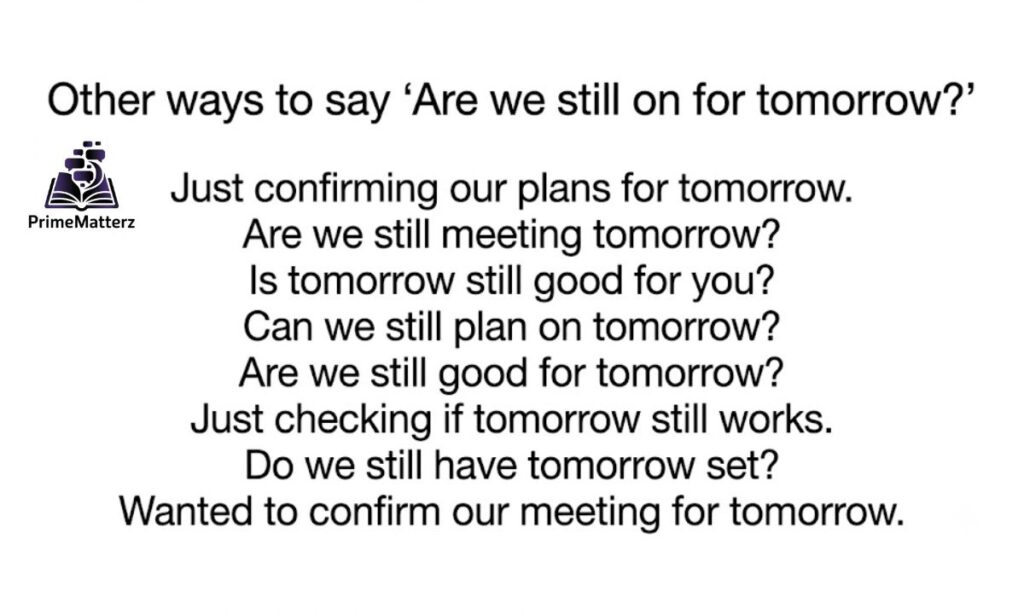
15+ Other Ways to Say “Are We Still on for Tomorrow?”
1. Just Confirming Our Plan for Tomorrow
Meaning: A gentle way to double-check without sounding pushy. It shows you’re organized and considerate of the other person’s time. Example:
- Person A: “Just confirming our plan for tomorrow.”
- Person B: “Yes, still good!” Best Use: Work emails or group chats. Worst Use: Very casual texts between close friends. Tone: Professional, Neutral
2. Still Good for Tomorrow?
Meaning: A short, friendly check-in that feels light and easy. It keeps the tone relaxed while still getting an answer. Example:
- Person A: “Still good for tomorrow?”
- Person B: “Yep, see you then.” Best Use: Texting friends or family. Worst Use: Formal business emails. Tone: Casual, Friendly
3. Are We Still Meeting Tomorrow?
Meaning: A clear, direct way to confirm without extra words. It works well when time matters and you need a fast reply. Example:
- Person A: “Are we still meeting tomorrow?”
- Person B: “Yes, same time.” Best Use: Scheduling calls or appointments. Worst Use: Romantic or personal plans, where it can sound stiff. Tone: Neutral, Direct
4. Can You Confirm Tomorrow’s Plan?
Meaning: This shifts the responsibility to the other person to confirm. It sounds a bit more formal and request-based. Example:
- Person A: “Can you confirm tomorrow’s plan?”
- Person B: “Confirmed, 10 a.m. works.” Best Use: Client or manager communication. Worst Use: Casual messages with close friends. Tone: Formal, Professional
5. Are We Good for Tomorrow?
Meaning: A relaxed, conversational way to check in. It feels warm and avoids sounding like a formal request. Example:
- Person A: “Are we good for tomorrow?”
- Person B: “All good, see you there!” Best Use: Friends, roommates, casual coworkers. Worst Use: First-time client emails. Tone: Casual, Warm
6. I Wanted to Check if Tomorrow Still Works
Meaning: A polite, considerate phrasing that gives the other person room to change plans. It softens the question nicely. Example:
- Person A: “I wanted to check if tomorrow still works for you.”
- Person B: “Yes, it still works.” Best Use: Professional emails or sensitive scheduling. Worst Use: Quick texts where brevity matters more. Tone: Polite, Respectful
7. Are We Still Set for Tomorrow?
Meaning: This phrase feels slightly more formal while staying friendly. It works well for both work and personal settings. Example:
- Person A: “Are we still set for tomorrow?”
- Person B: “Yes, still set.” Best Use: Semi-formal check-ins. Worst Use: Very casual slang-heavy conversations. Tone: Neutral, Professional
8. Quick Check: Is Tomorrow Still Happening?
Meaning: Adding “quick check” softens the message and signals you don’t need a long reply. It works great for busy schedules. Example:
- Person A: “Quick check: is tomorrow still happening?”
- Person B: “Still happening, yes!” Best Use: Busy coworkers or group plans. Worst Use: Formal client emails, where it can sound too brief. Tone: Casual, Friendly
9. Let Me Know if Tomorrow Still Works for You
Meaning: This gives the other person space to respond at their convenience. It feels considerate rather than demanding. Example:
- Person A: “Let me know if tomorrow still works for you.”
- Person B: “It still works, thanks for checking.” Best Use: Emails, especially with clients or managers. Worst Use: Urgent same-day plans. Tone: Polite, Formal
10. Are We Still Doing This Tomorrow?
Meaning: A casual, slightly playful way to confirm plans. It works well between people who already have a relaxed relationship. Example:
- Person A: “Are we still doing this tomorrow?”
- Person B: “Yep, still doing it!” Best Use: Friends or siblings. Worst Use: Business communication. Tone: Casual, Friendly
11. Touching Base About Tomorrow
Meaning: A common workplace phrase that signals a quick, low-pressure check-in. It feels professional without sounding stiff. Example:
- Person A: “Just touching base about tomorrow.”
- Person B: “All good on my end.” Best Use: Office emails or Slack messages. Worst Use: Personal or romantic plans. Tone: Professional, Neutral
12. Are You Still Free Tomorrow?
Meaning: This focuses on the other person’s availability rather than the plan itself. It works well when scheduling depends on their time. Example:
- Person A: “Are you still free tomorrow?”
- Person B: “Yes, still free after 2 p.m.” Best Use: Scheduling calls, appointments, or favors. Worst Use: Plans that are already fully confirmed. Tone: Neutral, Polite
13. I Just Wanted to Make Sure We’re Still on Track for Tomorrow
Meaning: A longer, more thoughtful version that shows extra care. It works well in situations where details matter. Example:
- Person A: “I just wanted to make sure we’re still on track for tomorrow.”
- Person B: “We’re on track, no changes.” Best Use: Important meetings or events. Worst Use: Quick casual texts. Tone: Formal, Respectful
14. Tomorrow Still a Go?
Meaning: A short, punchy phrase that feels modern and casual. It’s great for fast replies between friends. Example:
- Person A: “Tomorrow still a go?”
- Person B: “Still a go!” Best Use: Text messages, social plans. Worst Use: Formal business settings. Tone: Casual, Friendly
15: Checking In on Our Plan for Tomorrow
Meaning: A balanced phrase that works in both casual and semi-formal settings. It feels warm without being too informal. Example:
- Person A: “Just checking in on our plan for tomorrow.”
- Person B: “Still good to go!” Best Use: Mixed personal and professional contexts. Worst Use: Very strict formal emails. Tone: Warm, Neutral
16. Are We Still Meeting Up Tomorrow?
Meaning: This version feels personal and is often used for social meetups rather than business meetings. It signals a relaxed tone. Example:
- Person A: “Are we still meeting up tomorrow?”
- Person B: “Yes, same spot.” Best Use: Friends, dates, casual hangouts. Worst Use: Corporate scheduling emails. Tone: Friendly, Casual
17. Confirming Tomorrow’s Schedule
Meaning: A clean, business-style way to confirm without small talk. It works well for calendar invites or formal replies. Example:
- Person A: “Confirming tomorrow’s schedule, 9 a.m. works for me.”
- Person B: “Confirmed, see you then.” Best Use: Corporate emails, calendar confirmations. Worst Use: Personal or family conversations. Tone: Formal, Professional
18. Did Anything Change for Tomorrow?
Meaning: This phrase focuses on changes rather than the plan itself, which feels less repetitive. It works well after a long gap since the last conversation. Example:
- Person A: “Did anything change for tomorrow?”
- Person B: “Nope, all the same.” Best Use: Following up after a few days of silence. Worst Use: Same-day confirmations. Tone: Neutral, Casual
19. Are We Still Aligned on Tomorrow’s Plan?
Meaning: A workplace-friendly phrase often used in team settings. It signals professionalism and attention to detail. Example:
- Person A: “Are we still aligned on tomorrow’s plan?”
- Person B: “Yes, fully aligned.” Best Use: Team meetings, project coordination. Worst Use: Casual personal texts. Tone: Professional, Formal
20. Hoping We’re Still on for Tomorrow
Meaning: This softer phrasing adds a touch of warmth and hope, making it feel less transactional. It works well in personal relationships. Example:
- Person A: “Hoping we’re still on for tomorrow.”
- Person B: “We are! Can’t wait.” Best Use: Friends, family, romantic plans. Worst Use: Strict corporate emails. Tone: Warm, Friendly
Formal vs Informal Alternatives
| Formal Alternatives | Informal Alternatives |
| Confirming tomorrow’s schedule | Still on for tomorrow? |
| Are we still aligned on tomorrow’s plan? | Tomorrow still a go? |
| I wanted to check if tomorrow still works | Still good for tomorrow? |
| Let me know if tomorrow still works for you | Are we good for tomorrow? |
| Just touching base about tomorrow | Are we still doing this tomorrow? |
| Can you confirm tomorrow’s plan? | We still on, right? |
| Are we still meeting tomorrow? | Tomorrow still happening? |
| I just wanted to make sure we’re on track for tomorrow | Are you still down for tomorrow? |
| Are we still set for tomorrow? | Are we still meeting up tomorrow? |
| Checking in on our plan for tomorrow | Hoping we’re still on for tomorrow |
Which Alternative Should You Choose?
Workplace: Use phrases like “touching base” or “confirming tomorrow’s schedule.” They sound organized and respectful of time.
Email: Go with longer, polite versions like “I wanted to check if tomorrow still works for you.” Emails read better with a bit more detail.
Manager: Stick to formal phrasing such as “Are we still aligned on tomorrow’s plan?” It shows professionalism without sounding unsure.
Customer: Use polite, clear language like “Can you confirm tomorrow’s appointment?” Clarity matters most here.
Friend: Casual phrases like “Tomorrow still a go?” or “Are we good for tomorrow?” fit naturally.
Family member: Warmer options like “Hoping we’re still on for tomorrow” feel more personal.
Social media: Short, casual lines like “Still on for tomorrow?” or “Tomorrow still happening?” work best in DMs or comments.
Frequently Asked Questions
What does “Are we still on for tomorrow?” mean?
It means you’re checking whether a previously planned event or meeting is still happening.
Is “Are we still on?” professional?
It’s polite but leans casual, so it’s better suited for informal settings than formal business emails.
What are polite alternatives to this phrase?
Options like “Just confirming our plan for tomorrow” or “I wanted to check if tomorrow still works for you” sound more polished.
How do you ask this in an email?
Use a slightly longer, formal version such as “I wanted to confirm that our meeting tomorrow is still scheduled.”
Is it okay to say this in a text?
Yes, it’s perfectly natural and common in everyday texting between friends, family, or casual coworkers.
Final Thoughts
The phrase “are we still on for tomorrow” works fine, but it’s not your only option. Choosing the right alternative makes your message feel more natural, fits the moment better, and shows real thought in how you communicate. A small change in wording can make a big difference in how clear and confident you sound.