The first line of your email can open a door or close it. Most people fall back on “by way of introduction” out of habit, but that phrase can feel stiff, outdated, and a little robotic.
Picking a fresher opening shows you are thoughtful, aware of your audience, and easy to work with. That matters in professional settings, networking, job searches, and even casual outreach where tone sets the whole mood.
What Does “By Way of Introduction” Mean?
“By way of introduction” is a formal phrase people use at the start of an email to signal they are about to introduce themselves or someone else.
It essentially tells the reader: here comes some background before we get to the point. It is polite and clear, which is why it became so common in business writing.
The phrase has been around for a long time, which is both its strength and its weakness. People understand it immediately. But it can also feel like a template line — the kind of thing you write when you are not sure what else to say. That is when alternatives become useful.
When Should You Use “By Way of Introduction”?
This phrase works best in formal settings where you want to signal professionalism before anything else. Think first contact with a senior executive, a cold outreach to a potential client, or a formal business proposal. In those cases, a structured opener sets a respectful tone.
That said, most modern work emails benefit from something warmer and more direct. If you are writing to a new colleague, a potential collaborator, or someone you met at an event, a conversational opener tends to land better. It feels more like a real person wrote it, and that impression matters.
Is “By Way of Introduction” Professional or Polite?
Yes to both, but with conditions. It is perfectly acceptable in formal correspondence, but it can miss the mark if the context calls for something more human.
Pros
- Clearly signals that an introduction is coming
- Sounds respectful and measured
- Works well in legal, academic, or corporate settings
- Easy for the reader to understand immediately
- Safe choice when you do not know the recipient’s preferred tone
Cons
- Can feel overly stiff or old-fashioned
- Does not show much personality
- May feel out of place in modern startup or creative environments
- Occasionally comes across as padding rather than purpose
- Competitors for attention in a busy inbox may tune it out
15+ Other Ways to Say “By Way of Introduction” in an Email
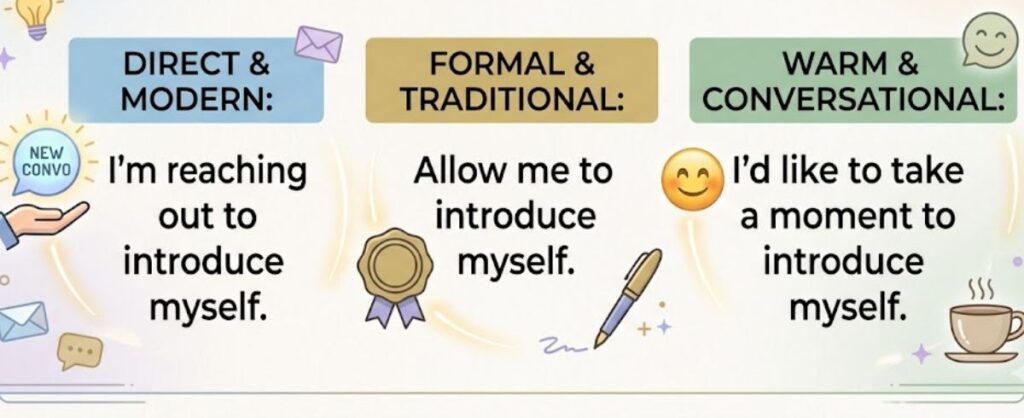
1. Allow Me to Introduce Myself
Meaning: A polished, direct way to kick off a self-introduction
Why It Works: It sounds confident without being arrogant. The phrase signals professionalism while still feeling warm.
Example:
- Person A: [New email from a job applicant]
- Person B: “Allow me to introduce myself. I’m Jamie, a UX designer with five years of experience building mobile apps.”
Best Use: Job applications, first contact with a senior manager, client outreach
Worst Use: Casual team emails where everyone already knows each other
Tone: Formal, Confident, Professional
2. I’d Like to Introduce Myself
Meaning: A friendlier, softer version of a formal self-introduction
Why It Works: The phrase feels approachable and inviting without losing professionalism. It sounds like something a real person would actually say.
Example:
- Person A: [Receiving a welcome email from a new vendor]
- Person B: “I’d like to introduce myself — I’m Sara, your new account manager at Brightline.”
Best Use: New client introductions, onboarding emails, networking follow-ups
Worst Use: Very formal legal or executive correspondence where a stronger opener fits better
Tone: Semi-formal, Warm, Friendly
3. Let Me Preface This With a Quick Introduction
Meaning: Signals that some background is coming before the main point
Why It Works: It sets reader expectations upfront, which makes the rest of the email easier to follow. Readers appreciate knowing what is coming.
Example:
- Person A: [Proposal email to a new partner]
- Person B: “Let me preface this with a quick introduction before I get into the details.”
Best Use: Proposal emails, partnership outreach, cold emails with context
Worst Use: Short, single-purpose emails where the preface adds unnecessary length
Tone: Semi-formal, Organized, Clear
4. Before We Begin, Here’s a Little Background
Meaning: A conversational way to provide context before the main content
Why It Works: It feels natural and human. The word “little” softens the tone and tells the reader this will not take long.
Example:
- Person A: [Team meeting follow-up email to new members]
- Person B: “Before we begin, here’s a little background on who I am and what I do here.”
Best Use: Team introductions, onboarding, project kickoff emails
Worst Use: Formal executive correspondence where a casual tone may undermine credibility
Tone: Casual, Conversational, Friendly
5. To Give You Some Context
Meaning: Sets up background information the reader needs to understand the purpose of the email
Why It Works: It signals usefulness right away. You are not just introducing yourself — you are giving the reader something they actually need.
Example:
- Person A: [Reaching out about a mutual project]
- Person B: “To give you some context, I’ve been managing the marketing side of this campaign for the past six months.”
Best Use: Follow-up emails, cross-team introductions, client updates
Worst Use: Cold introductions where the reader has no prior connection or context to build on
Tone: Professional, Practical, Direct
6. As a Preface to My Main Point
Meaning: Formal way to indicate that an introduction comes before the actual ask or information
Why It Works: It sounds structured and deliberate. Readers in corporate or academic settings often appreciate a clear signal that the email is organized.
Example:
- Person A: [Academic collaboration request]
- Person B: “As a preface to my main point, I’m a researcher at the University of Leeds studying climate communication.”
Best Use: Academic emails, formal business proposals, legal correspondence
Worst Use: Internal team emails or casual colleague communications
Tone: Formal, Academic, Structured
7. Just a Quick Intro Before I Get to the Point
Meaning: A direct, no-nonsense way to signal a brief personal introduction
Why It Works: It respects the reader’s time. The phrase promises brevity, which makes people more willing to read it.
Example:
- Person A: [Networking email after a conference]
- Person B: “Just a quick intro before I get to the point — I’m Alex, we met briefly at the SaaS summit last week.”
Best Use: Networking emails, follow-ups after events, informal professional outreach
Worst Use: Formal board-level communications where this tone may seem too casual
Tone: Casual, Direct, Time-conscious
8. Let Me Start by Telling You a Bit About Myself
Meaning: A warm, conversational self-introduction opener
Why It Works: It sounds like a real person. The phrase feels personal and invites a human connection before the business part of the email.
Example:
- Person A: [Email to a new mentor]
- Person B: “Let me start by telling you a bit about myself — I’ve been in digital marketing for three years and I’m looking to pivot into content strategy.”
Best Use: Mentorship requests, informational interview emails, community introductions
Worst Use: Urgent business emails where brevity matters more than warmth
Tone: Friendly, Personal, Approachable
9. To Lay the Groundwork
Meaning: Formal phrase meaning you are setting up foundational information before the main topic
Why It Works: It implies careful preparation and respect for the reader’s time. It suggests you are organized and thoughtful.
Example:
- Person A: [Partnership proposal email]
- Person B: “To lay the groundwork, our company has partnered with over 200 businesses in the logistics sector.”
Best Use: Business proposals, investment pitches, consulting outreach
Worst Use: Short, informal emails where the phrase sounds overly serious
Tone: Formal, Strategic, Confident
10. First and Foremost, Let Me Introduce Myself
Meaning: Signals that the introduction is the most important starting point
Why It Works: The phrase “first and foremost” adds weight and intention. It communicates that this is not a throwaway opener — the introduction matters.
Example:
- Person A: [Email to a potential client]
- Person B: “First and foremost, let me introduce myself. I’m the head of partnerships at TechBridge, and I’ve been following your work for a while.”
Best Use: Client acquisition emails, executive outreach, formal business introductions
Worst Use: Light, casual emails where the phrase may feel too heavy
Tone: Formal, Assertive, Professional
11. As an Opening Statement
Meaning: Presents the introduction as a formal, deliberate first remark
Why It Works: The phrase carries the weight of purpose. It signals that what follows is intentional and organized.
Example:
- Person A: [Legal or policy outreach email]
- Person B: “As an opening statement, I represent the communications team at National Health Policy Group.”
Best Use: Legal correspondence, public relations outreach, government or policy emails
Worst Use: Friendly or casual introductions where it may come across as stiff
Tone: Formal, Official, Authoritative
12. To Start Off
Meaning: A relaxed, everyday way to begin a self-introduction
Why It Works: It is simple and clear. No one misunderstands it, and it does not draw attention to itself — it just gets the email moving.
Example:
- Person A: [New team member sending an intro email]
- Person B: “To start off, I’m Marcus, the newest member of the product design team.”
Best Use: Internal team intros, casual colleague emails, community forums
Worst Use: Formal business proposals or executive-level communications
Tone: Casual, Relaxed, Simple
13. Let Me Give You a Brief Overview of Who I Am
Meaning: A structured opener that promises a short personal summary
Why It Works: It sets the reader’s expectations clearly. They know what is coming, which makes the email feel well-organized and considerate.
Example:
- Person A: [Speaker outreach for a podcast]
- Person B: “Let me give you a brief overview of who I am before I explain why I think I’d be a great fit for your show.”
Best Use: Speaker pitches, PR outreach, guest blogging requests, media inquiries
Worst Use: Short transactional emails where background information is not needed
Tone: Semi-formal, Clear, Organized
14. It’s a Pleasure to Connect With You
Meaning: A warm greeting that doubles as a soft introduction opener
Why It Works: It leads with positivity and signals good faith. The reader feels welcomed before the introduction even begins.
Example:
- Person A: [LinkedIn connection follow-up email]
- Person B: “It’s a pleasure to connect with you. I’m Priya, a content strategist specializing in B2B tech writing.”
Best Use: Networking emails, LinkedIn follow-ups, community introductions
Worst Use: Cold emails to people you have never interacted with, where the warmth may feel premature
Tone: Warm, Friendly, Professional
15. Here’s a Quick Introduction
Meaning: A brief, no-fuss way to signal an upcoming personal or professional overview
Why It Works: It is honest and efficient. Readers appreciate emails that say exactly what they are going to do and then do it.
Example:
- Person A: [Email to a new project team]
- Person B: “Here’s a quick introduction: I’m the project lead for the Q3 product launch, and I’m excited to work with everyone on this.”
Best Use: Project kickoffs, team announcements, new hire welcome emails
Worst Use: Executive-level or formal outreach where brevity may come across as under-prepared
Tone: Direct, Casual, Efficient
16. Before We Dive In
Meaning: Signals a brief contextual moment before getting into the main email content
Why It Works: The word “dive” implies that something interesting is coming. It creates a little forward momentum and keeps the reader curious.
Example:
- Person A: [Workshop facilitator emailing participants beforehand]
- Person B: “Before we dive in, I wanted to share a little about my background and why I designed this workshop the way I did.”
Best Use: Educational content, workshop or event emails, newsletter introductions
Worst Use: Formal corporate or legal emails where casual phrases may undercut tone
Tone: Casual, Engaging, Warm
17. To Briefly Introduce Myself
Meaning: A compact, no-nonsense self-introduction opener
Why It Works: The word “briefly” does a lot of work here. It signals respect for the reader’s time and keeps the promise of efficiency.
Example:
- Person A: [Outreach email to a hiring manager]
- Person B: “To briefly introduce myself, I am a senior data analyst with eight years of experience in the finance sector.”
Best Use: Job application emails, cold outreach to busy professionals, client introduction emails
Worst Use: Emails where a longer, richer introduction is expected or needed
Tone: Professional, Concise, Respectful
18. I Wanted to Reach Out and Introduce Myself
Meaning: A warm, human opener that combines outreach with introduction
Why It Works: It sounds like something a real, thoughtful person would write. It does not feel automated or generic.
Example:
- Person A: [Email from a new freelancer to a potential client]
- Person B: “I wanted to reach out and introduce myself — I’m a freelance photographer based in Toronto, and I specialize in brand storytelling.”
Best Use: Freelancer outreach, small business emails, community networking
Worst Use: Formal corporate settings where the casual tone may not fit expectations
Tone: Warm, Human, Approachable
19. Let’s Start With Some Background
Meaning: A conversational way to provide context before getting into the core message
Why It Works: It sounds like the beginning of a real conversation. It positions the background as helpful, not filler.
Example:
- Person A: [Email to a new strategic partner]
- Person B: “Let’s start with some background on what our team has been working on this year.”
Best Use: Partnership emails, project updates, cross-departmental introductions
Worst Use: Very short emails where background information would feel like padding
Tone: Conversational, Collaborative, Semi-formal
20. To Put This in Context
Meaning: Signals that the introduction will help the reader understand the email better
Why It Works: It frames the opener as genuinely useful, not just obligatory. The reader feels like the context is for their benefit, not a formality.
Example:
- Person A: [Email explaining a new business initiative]
- Person B: “To put this in context, our team has been developing this product for two years and we’re finally ready to share it with partners.”
Best Use: Business updates, proposal emails, collaborative project outreach
Worst Use: Simple introductions where the phrase implies a complexity that is not there
Tone: Professional, Purposeful, Informative
How to Pick the Right Phrase for Your Email
The phrase you choose should match three things: your relationship with the recipient, the formality of the setting, and what you want the reader to feel when they read that first line.
If you are writing to a senior executive you have never met, go with something structured and confident like “First and foremost, let me introduce myself” or “Allow me to introduce myself.”
If you are writing to a new teammate or a peer in your industry, something like “Just a quick intro before I get to the point” or “I wanted to reach out and introduce myself” will feel far more natural.
The goal is always to sound like you — just the most professional, thoughtful version of you.
Common Mistakes to Avoid in Email Introductions
Most email introductions fail for one of two reasons: they are too long or they say nothing useful. A great introduction does three things fast — it tells the reader who you are, why you are reaching out, and what you want them to do next.
Avoid starting with praise about the recipient that feels like flattery. Phrases like “I’ve been such a huge fan of your work” can come across as hollow unless you follow up with specific detail.
Similarly, avoid loading your opener with too many credentials before you make your point. Readers scan. They will not read a three-paragraph biography before your ask. Keep the intro short, specific, and purposeful — then get to the point.
Frequently Asked Questions
What is the best alternative to “by way of introduction” in a formal email?
“Allow me to introduce myself” or “First and foremost, let me introduce myself” are strong formal alternatives that sound confident and professional.
Can I use casual phrases like “to start off” in a work email?
Yes, in most modern workplaces this is perfectly fine for internal emails, team introductions, or emails with colleagues you know reasonably well.
How long should an email introduction be?
Two to three sentences is usually enough — state your name, your role or connection, and the reason you are writing.
Is “by way of introduction” still used in 2026?
It is still understood and accepted, but many readers find it slightly outdated. A fresher alternative tends to make a better impression.
Should I always introduce myself at the start of an email?
Only if the recipient does not know you. If you are emailing someone you have spoken with before, skip the introduction and get straight to the point.
Final Thoughts
The right introduction phrase will not write your email for you, but it will start it on the right foot. Whether you lean formal or conversational depends on your audience, your industry, and the relationship you are trying to build.
The 20 alternatives in this guide give you real options for every situation, so you never have to default to a phrase that does not fit. Try a few, see what feels natural, and let your opening line do the work it is supposed to do.