Choosing the right words changes how people see you at work and in daily life. Good communication builds strong relationships, shows confidence, and keeps your messages clear. While it is a very common phrase, finding other ways to say “I didn’t expect that” makes you sound more professional. Using different phrases helps you match the exact tone you need for any surprising situation.
This phrase is a direct way to show you are surprised by a new event or piece of information. Its literal meaning is simply expressing that you did not predict or plan for what just happened.
People use it constantly in daily conversations to quickly acknowledge a sudden change without starting a long debate. It is a safe, honest response that works well when you just need to process shocking news.
When Should You Use “I didn’t expect that”?
You should use this phrase in workplace communication and emails when a coworker gives you a sudden project update. It also works perfectly in customer service when a client reports a rare issue or strange delay.
In your personal life, it is great for daily conversations with friends and family about sudden schedule changes. It fits best when the information is surprising but does not require a huge emotional reaction.
Is “I didn’t expect that” Professional or Polite?
This phrase is both professional and polite, but it has some limits depending on who you are talking to.
Pros:
It is very honest and shows instant transparency about your thoughts.
It keeps workplace emails short, clear, and easy to read.
It works safely across almost all casual and business situations.
Cons:
It can sound a bit defensive or unprepared if you use it too much.
It might seem too casual when speaking to a strict boss or high-level manager.
It does not show strong leadership if the news shared was a major crisis.
Grammar & Correct Usage of “I didn’t expect that”
Is it grammatically correct? Yes, it is a perfectly correct and complete sentence in modern English.
Common grammar mistakes: People often wrongly say “I didn’t expected that” or “I don’t expect that” for past events.
Correct sentence structures: Always use the base verb “expect” after the helping verb “didn’t.”
Formal vs informal usage: “I didn’t expect that” is informal, while “I did not anticipate that” is slightly more formal.
Examples: “I did not expect that outcome” (Formal) or “Wow, I didn’t expect that!” (Informal).
Common Mistakes When Using “I didn’t expect that”
Overuse: Typing this exact phrase in every single email makes you look like you are never prepared.
Wrong context: Using it when someone shares very obvious news makes you seem disconnected.
Tone issues: Saying it with a flat voice in person can sound sarcastic or annoyed instead of surprised.
Grammar errors: Adding an “ed” and saying “I didn’t expected that” sounds broken and confusing.
How to Respond to “I didn’t expect that”
1. “I know, it was a huge surprise to me too!”
Meaning: Validates their shock and agrees with their feelings.
Best use: Casual chats with friends or coworkers.
Example: “I know, it was a huge surprise to me too! I could not believe it.”
2. “Yes, things changed very quickly.”
Meaning: Explains the sudden shift without blaming anyone.
Best use: Workplace updates and team meetings.
Example: “Yes, things changed very quickly. We have to adapt now.”
3. “I understand, it caught us all off guard.”
Meaning: Shows deep empathy for their confusion and stress.
Best use: When delivering difficult or sudden news to a group.
Example: “I understand, it caught us all off guard. Let’s work together.”
4. “Let me explain how this happened.”
Meaning: Offers clarity and context to calm them down.
Best use: Customer service or talking to angry clients.
Example: “Let me explain how this happened so it makes more sense.”
5. “It is definitely unusual, but we will handle it.”
Meaning: Reassures them and shows strong leadership skills.
Best use: Talking to a manager or a worried team member.
Example: “It is definitely unusual, but we will handle it before Friday.”
15+ Other Ways to Say “I didn’t expect that”
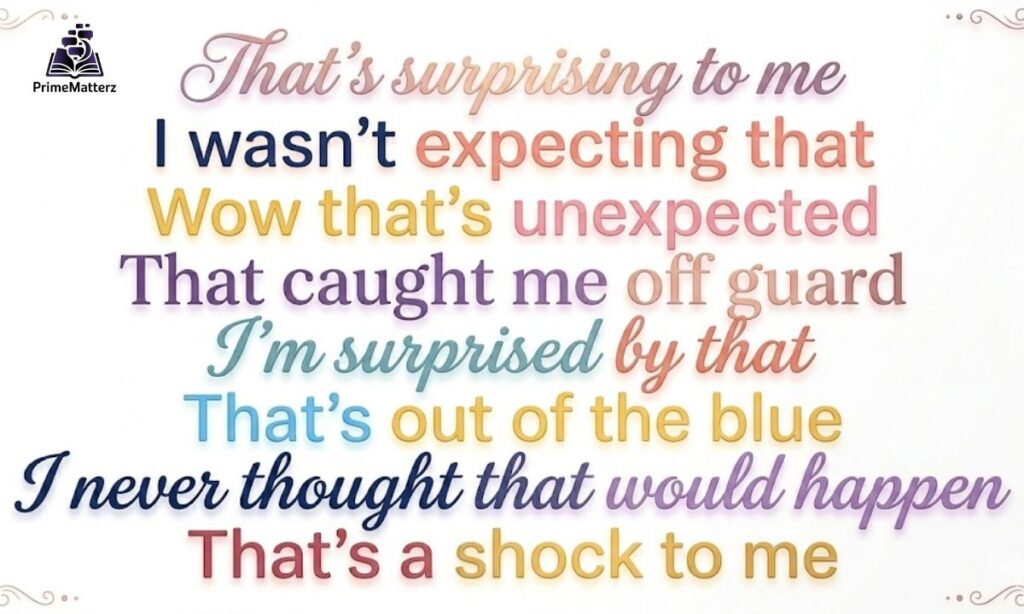
That caught me off guard.
Meaning: Shows you were not ready for the news. It makes you sound honest and human.
Person A: “The boss just moved our deadline to tomorrow.”
Person B: “That caught me off guard. I will start working now.” Best Use: Sudden workplace changes. Worst Use: Formal legal documents. Tone: Casual and honest.
I did not anticipate this.
Meaning: A highly professional way to admit a surprise. It shows you usually plan things carefully.
Person A: “Our software costs just doubled this month.”
Person B: “I did not anticipate this. Let me check the budget.” Best Use: Formal business meetings. Worst Use: Chatting with a close friend. Tone: Very formal.
That took me by surprise.
Meaning: A gentle way to express mild shock. It keeps the conversation calm and polite.
Person A: “The client decided to cancel the entire order.”
Person B: “That took me by surprise. I will call them today.” Best Use: Discussing sudden client decisions. Worst Use: Reacting to dangerous emergencies. Tone: Professional and polite.
I didn’t see that coming.
Meaning: A fun, visual way to say you were shocked. It builds a relaxed connection with others.
Person A: “Sarah just quit her job to travel the world.”
Person B: “I didn’t see that coming. Good for her!” Best Use: Office gossip or friendly chats. Worst Use: Talking to a strict manager. Tone: Very casual.
That is quite surprising.
Meaning: A neutral way to acknowledge strange facts. It buys you time to think about your next step.
Person A: “The store is completely sold out of laptops.”
Person B: “That is quite surprising. Let’s check another shop.” Best Use: Reacting to weird but harmless news. Worst Use: When someone shares deeply personal secrets. Tone: Neutral and calm.
I was completely unaware of this.
Meaning: Clearly states you had zero prior knowledge. It protects you from taking blame for mistakes.
Person A: “The server has been broken since last night.”
Person B: “I was completely unaware of this. I will fix it.” Best Use: Defending yourself in a professional setting. Worst Use: When you actually should have known. Tone: Formal and defensive.
That came out of left field.
Meaning: Uses a sports idiom to describe a random event. It makes your speech sound very natural.
Person A: “They want us to paint the whole building pink.”
Person B: “That came out of left field. Are you sure?” Best Use: Reacting to bizarre or crazy ideas. Worst Use: Serious medical or financial discussions. Tone: Highly informal.
I had no idea.
Meaning: A fast, simple way to show total ignorance. It is highly effective for quick text messages.
Person A: “The highway is closed for construction today.”
Person B: “I had no idea. Thanks for the warning.” Best Use: Quick daily updates from friends. Worst Use: When a boss asks about your own project. Tone: Casual and direct.
This is a sudden development.
Meaning: A very corporate way to describe a fast change. It makes you sound like a strong leader.
Person A: “Our main supplier just went out of business.”
Person B: “This is a sudden development. We need a new plan.” Best Use: High-level corporate strategy meetings. Worst Use: Talking about weekend dinner plans. Tone: Highly professional.
I was not prepared for this.
Meaning: Openly admits you lack readiness for the situation. It builds trust through deep vulnerability.
Person A: “You need to give a speech to the whole company.”
Person B: “I was not prepared for this. Give me ten minutes.” Best Use: When asked to do a sudden, hard task. Worst Use: Routine, easy daily chores. Tone: Honest and serious.
That is certainly unexpected.
Meaning: A polite, diplomatic way to handle weird news. It avoids showing too much negative emotion.
Person A: “The hotel gave away our reserved room.”
Person B: “That is certainly unexpected. Let’s talk to the manager.” Best Use: Dealing with bad customer service. Worst Use: Celebrating a happy birthday surprise. Tone: Formal and diplomatic.
I am a bit taken aback.
Meaning: Shows you are slightly offended or deeply shocked. It sets a serious boundary in the conversation.
Person A: “The client said our design was completely terrible.”
Person B: “I am a bit taken aback. We worked hard on that.” Best Use: Reacting to rude or harsh feedback. Worst Use: Hearing a funny joke. Tone: Serious and respectful.
This is news to me.
Meaning: Confirms you are hearing this for the first time. It clears up any confusion about your knowledge.
Person A: “Did you know the company is moving to Texas?”
Person B: “This is news to me. When did they announce it?” Best Use: Finding out about big company rumors. Worst Use: When reading a public, obvious sign. Tone: Casual and clear.
I never would have guessed that.
Meaning: Shows that the truth is very different from your thoughts. It makes the other person feel smart.
Person A: “The secret ingredient in this cake is actually avocado.”
Person B: “I never would have guessed that. It tastes amazing.” Best Use: Reacting to fun trivia or hidden secrets. Worst Use: Serious business financial reports. Tone: Friendly and warm.
That is a pleasant surprise.
Meaning: Specifically highlights that the shock is a good thing. It spreads positive energy and happiness.
Person A: “We decided to give you a bonus this month.”
Person B: “That is a pleasant surprise. Thank you so much!” Best Use: Receiving gifts, awards, or good news. Worst Use: Hearing about a tragic accident. Tone: Warm and grateful.
I was blindsided by this.
Meaning: Expresses that you were hit with shocking, bad news. It shows deep frustration or confusion.
Person A: “The landlord is doubling our rent next month.”
Person B: “I was blindsided by this. We have to move.” Best Use: Reacting to unfair or hidden negative changes. Worst Use: Minor, harmless daily mistakes. Tone: Serious and frustrated.
This is quite a shock.
Meaning: A strong phrase for very big, life-changing news. It shows deep emotional impact.
Person A: “Our favorite local restaurant burned down last night.”
Person B: “This is quite a shock. I loved that place.” Best Use: Hearing about major accidents or big events. Worst Use: Finding out the grocery store is out of milk. Tone: Serious and emotional.
Who would have thought?
Meaning: A rhetorical question that shows mild amusement. It keeps the mood light and fun.
Person A: “It is snowing in the middle of July.”
Person B: “Who would have thought? The weather is crazy.” Best Use: Reacting to weird but funny coincidences. Worst Use: Professional emails to a client. Tone: Very casual.
That is a sudden twist.
Meaning: Compares the situation to a movie plot. It makes the conversation feel dramatic and engaging.
Person A: “The rival company just offered to buy our business.”
Person B: “That is a sudden twist. What should we do?” Best Use: Discussing crazy business or life drama. Worst Use: Boring, routine daily updates. Tone: Casual and dramatic.
I am stunned by this news.
Meaning: Shows you are completely frozen by the information. It is perfect for massive, unbelievable updates.
Person A: “We just won the national lottery jackpot!”
Person B: “I am stunned by this news. I cannot believe it.” Best Use: Reacting to massive, life-altering events. Worst Use: Small, unimportant daily changes. Tone: Highly emotional.
Formal vs Informal Alternatives
Formal Alternatives
Informal Alternatives
I did not anticipate this.
I didn’t see that coming.
This is a sudden development.
That came out of left field.
I was completely unaware of this.
I had no idea.
That is certainly unexpected.
Who would have thought?
That took me by surprise.
That caught me off guard.
Which Alternative Should You Choose?
Workplace Use clear, polite phrases like “That took me by surprise” to keep projects moving smoothly. It shows you are engaged without sounding panicked.
Email Choose “I did not anticipate this” to maintain a clean, professional written record. It sounds great in any corporate inbox.
Manager Say “This is a sudden development” to show deep respect for their leadership and time. It proves you take their messages seriously.
Customer Use “That is certainly unexpected” to make them feel heard and valued. It turns a complaint into a calm, positive moment.
Friend Say “I didn’t see that coming” to keep the chat relaxed, fun, and totally natural. It fits perfectly in text messages.
Family member Choose “I never would have guessed that” to show warm, personal care and love. It makes your family feel appreciated.
Social media Use “Who would have thought?” or “I had no idea” for fast, easy public replies. They are short enough for quick comments.
Frequently Asked Questions
Is it rude to say “I didn’t expect that”?
It is not rude, but it can sound a bit blunt if you say it with a flat or angry voice.
Can I say “that came out of left field” to my boss?
You can use it if you have a relaxed relationship, but “that took me by surprise” is much safer.
How do I say this in a formal business email?
The best formal choice is “I did not anticipate this” because it sounds highly professional.
What is a good reply when someone surprises me with a gift?
You should say “That is a pleasant surprise” to show you are happy and grateful.
Is “this is news to me” sarcastic?
It can sound sarcastic if you roll your eyes, so always say it with a calm, friendly tone.
Final Thoughts
Finding other ways to say “I didn’t expect that” instantly upgrades your daily communication skills. Using the right phrase at the right time shows people that you truly respect their effort. Practice these simple alternatives today to build stronger, more professional relationships everywhere you go.