Modelling vs Modeling: Which Spelling Should You Use?
Hayat
June 30, 2026No comments
You’ve seen both spellings used confidently in different places. One isn’t wrong and one isn’t right. The real answer comes down to where your reader lives.
Modeling, in either spelling, refers to creating a representation of something, demonstrating a process, or posing for visual work. It works as a verb describing an action in progress, and it also appears as a noun for the activity itself.
The meaning stays identical no matter which spelling you choose. Only the letter count and regional preference change.
Form
Meaning
Verb
Building, showing, or representing something
Noun
The act or profession of modeling
Adjective use
Describes something related to modeling, like a modeling agency
Modelling vs Modeling: The Real Difference
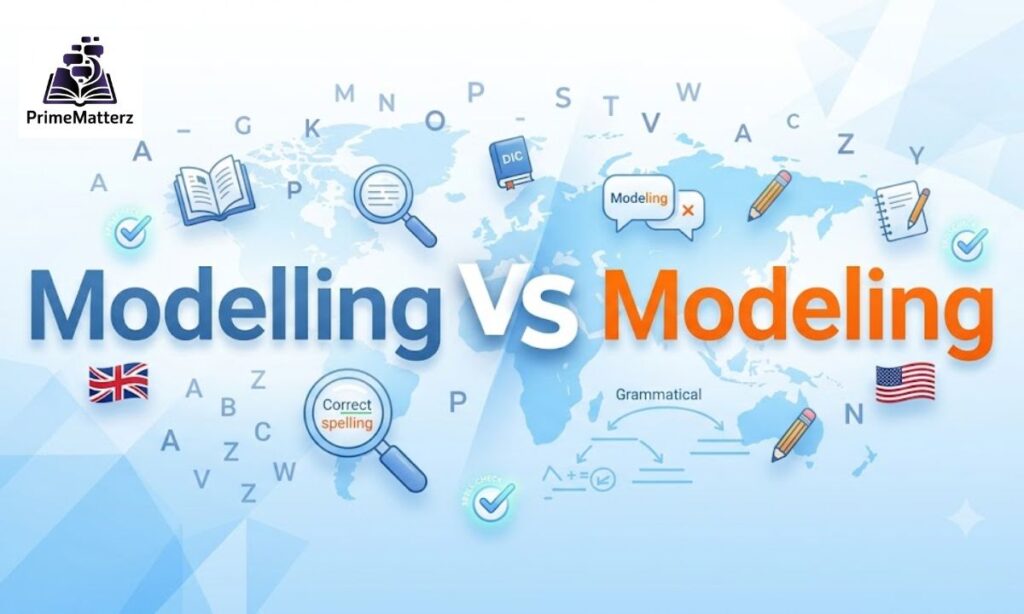
The split between these two spellings comes from regional English standards, not meaning. American English drops the second “l,” while British and Commonwealth English keeps it.
This pattern follows a wider rule in English spelling, where many words ending in a single vowel plus “l” double the “l” in non-American varieties.
Region
Preferred Spelling
United States
Modeling
United Kingdom
Modelling
Canada
Modelling
Australia
Modelling
New Zealand
Modelling
Related Word Forms
The same spelling pattern carries into other forms of the word. Knowing these helps you stay consistent across an entire document.
Base Word
US Spelling
UK Spelling
model
model
model
modeling/modelling
modeling
modelling
modeled/modelled
modeled
modelled
modeler/modeller
modeler
modeller
Examples in Real Sentences
The word shows up across many industries, from fashion to science. Below are natural examples using both spellings, depending on the intended audience.
Industry
US English Example
UK English Example
Fashion
“She started modeling at age 19.”
“She started modelling at age 19.”
Data science
“The team is modeling customer behavior.”
“The team is modelling customer behaviour.”
Construction
“Engineers are modeling the bridge’s stress points.”
“Engineers are modelling the bridge’s stress points.”
Academic research
“His thesis focuses on climate modeling.”
“His thesis focuses on climate modelling.”
Common Mistakes to Avoid
Writers often switch between spellings within the same article without noticing. This creates an inconsistent tone and can make writing look careless to readers who pay attention to detail.
Another mistake is assuming the spelling changes the meaning. It doesn’t. The error usually comes from writing for a British audience using American spelling, or the reverse, without checking the target readership first.
Style Guide Advice
Most publishers, universities, and companies follow one English variant throughout their materials. Pick a spelling based on your audience, then apply it consistently across the entire piece, including related forms like modeled or modelled.
If you’re unsure which audience you’re writing for, check your organization’s house style guide or default to the spelling used by your main readership location.
Writing For
Recommended Spelling
US-based blog or company
Modeling
UK-based blog or company
Modelling
International or mixed audience
Pick one and stay consistent
Academic journal
Follow the journal’s required style guide
Frequently Asked Questions
Is it modelling or modeling?
Both are correct; modeling is American English and modelling is British English.
What is the difference between modelling and modeling?
There is no difference in meaning, only in regional spelling preference.
Is modelling British English?
Yes, modelling with two L’s is the standard British English spelling.
Is modeling American English?
Yes, modeling with one L is the standard American English spelling.
What is the correct past tense: modeled or modelled?
Modeled is American English, while modelled is British English; both are correct in their respective regions.
Final Thoughts
Modelling and modeling carry the exact same meaning, with the spelling shaped entirely by regional English standards. Choosing the right one for your audience, and staying consistent throughout your writing, keeps your content polished and professional.