The phrases we choose during hopeful moments can shape how confident, superstitious, or relaxed we sound to the people around us. Saying “don’t jinx it” over and over can feel repetitive, and it does not always match the tone of every situation, from a casual chat with friends to a careful comment at work.
Learning other ways to say “don’t jinx it” helps you express caution, hope, and personality without sounding stuck on one phrase. The right words also make conversations feel more natural and help you connect better with whoever you’re talking to.
“Don’t jinx it” is a phrase used to warn someone against speaking too soon about a good outcome, out of fear that mentioning it might cause bad luck. It comes from the word “jinx,” which refers to something believed to bring misfortune.
People say it during sports games, exams, job interviews, or any situation where things are going well. It reflects a mix of hope, superstition, and the wish to protect good fortune by staying quiet about it.
When Should You Use “Don’t Jinx It”?
In daily conversations, this phrase fits naturally when chatting with friends or family about a streak of good luck, like a winning team or a string of good grades. It feels playful and light in these settings.
In the workplace or in emails, it is best to avoid this exact phrase, since it can sound too informal or superstitious for professional writing. A calmer alternative usually fits better in customer service or formal updates.
Is “Don’t Jinx It” Professional or Polite?
This phrase is casual by nature, so its fit depends heavily on who you’re speaking with and the setting.
Pros
Adds personality and warmth to a conversation
Instantly understood by most English speakers
Lightens the mood during tense or hopeful moments
Shows shared excitement about a good outcome
Cons
Too informal for business emails or reports
Can sound superstitious in serious contexts
May confuse non-native speakers unfamiliar with the idiom
Overuse can make it lose its playful charm
Grammar & Correct Usage of “Don’t Jinx It”
It is grammatically correct as an informal command, meaning “do not jinx it.”
A common mistake is using it as a noun, such as saying “that’s a jinx it,” which is incorrect.
Correct structure: “Don’t jinx it, the project is going really well.”
Informal version: “Don’t jinx it!”
Formal version: “Let’s not get ahead of ourselves just yet.”
Example: Person A says, “We haven’t lost a game all season.” Person B replies, “Don’t jinx it, we still have three games left.”
Common Mistakes When Using “Don’t Jinx It”
Overuse: Saying it every time something good happens can make it feel like a habit rather than genuine caution.
Wrong context: Using it in formal emails or client meetings feels out of place and unprofessional.
Tone issues: Saying it too sharply can sound like you’re scolding the other person instead of joking with them.
Grammar errors: Adding unnecessary words like “don’t jinx it up” creates awkward phrasing that native speakers rarely use.
How to Respond to “Don’t Jinx It”
1. “You’re right, I’ll stay quiet.” Meaning: Agrees with the caution and promises to hold back further comments. Best use: Casual chats with friends or family. Example: “Don’t jinx it.” → “You’re right, I’ll stay quiet.”
2. “Too late, I already said it.” Meaning: A playful, lighthearted acknowledgment that the comment is already out. Best use: Joking conversations among close friends. Example: “Don’t jinx it!” → “Too late, I already said it.”
3. “Okay, fingers crossed then.” Meaning: Shifts the focus to hope rather than fear of bad luck. Best use: Sports, exams, or anticipated results. Example: “Don’t jinx it.” → “Okay, fingers crossed then.”
4. “I didn’t mean it that way.” Meaning: Clarifies that the comment wasn’t meant to tempt fate. Best use: When the original comment was misunderstood. Example: “Don’t jinx it.” → “I didn’t mean it that way, I’m just hopeful.”
5. “Relax, it’s just luck.” Meaning: Reassures the other person that outcomes aren’t controlled by words. Best use: Calming a superstitious friend or teammate. Example: “Don’t jinx it.” → “Relax, it’s just luck, not magic.”
15+ Other Ways to Say “Don’t Jinx It”
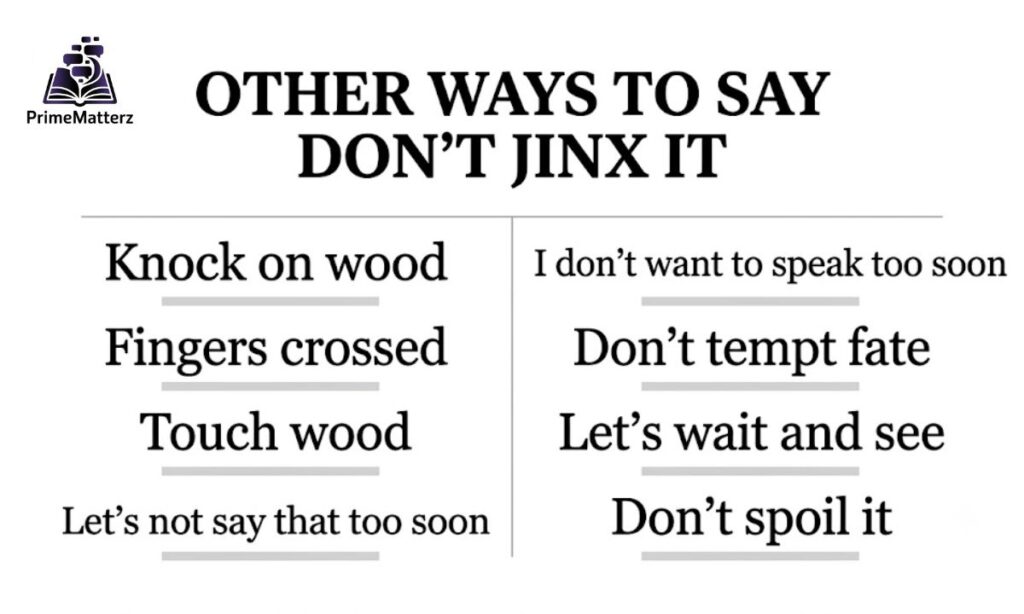
1. Knock on Wood
Meaning: A classic superstition-based phrase used to protect good luck right after mentioning it. It adds a touch of tradition to everyday hope. Example:
Person A: “We’ve never had a delay on this route.”
Person B: “Knock on wood, let’s hope it stays that way.” Best Use: Casual talk about luck or streaks. Worst Use: Formal business presentations. Tone: Casual, Friendly
2. Touch Wood
Meaning: The British version of the same superstition, used to ward off bad luck after a hopeful statement. It carries a light, almost playful caution. Example:
Person A: “Our flight has been on time all week.”
Person B: “Touch wood, hopefully it continues.” Best Use: Everyday British English conversations. Worst Use: Written professional reports. Tone: Casual, Warm
3. Fingers Crossed
Meaning: Shifts attention toward hopeful anticipation rather than fear of bad luck. It feels positive and forward-looking. Example:
Person A: “The interview went really well.”
Person B: “Fingers crossed they call you back soon.” Best Use: Personal updates and encouraging messages. Worst Use: Serious legal or financial discussions. Tone: Friendly, Hopeful
4. Let’s Not Get Ahead of Ourselves
Meaning: A calmer, more mature way to suggest caution without sounding superstitious. It works well in professional settings. Example:
Person A: “This deal looks like it’s basically done.”
Person B: “Let’s not get ahead of ourselves until it’s signed.” Best Use: Workplace meetings and business talks. Worst Use: Light, playful conversations with friends. Tone: Professional, Neutral
5. Don’t Tempt Fate
Meaning: A slightly more dramatic warning that mirrors the original phrase’s superstitious tone. It suits storytelling or vivid conversation. Example:
Person A: “Nothing ever goes wrong on these trips.”
Person B: “Don’t tempt fate, we still have the mountain pass ahead.” Best Use: Travel stories or adventurous situations. Worst Use: Calm, factual business updates. Tone: Casual, Dramatic
6. I Don’t Want to Speak Too Soon
Meaning: Expresses careful optimism while acknowledging the outcome isn’t guaranteed yet. It feels thoughtful and measured. Example:
Person A: “How’s the new product launch going?”
Person B: “Great so far, but I don’t want to speak too soon.” Best Use: Workplace updates and progress reports. Worst Use: Quick, casual texts among friends. Tone: Professional, Cautious
7. Let’s Wait and See
Meaning: Encourages patience instead of celebrating early, without directly mentioning luck or jinxes. It feels calm and balanced. Example:
Person A: “I think we’re going to win this contract.”
Person B: “Let’s wait and see how the final review goes.” Best Use: Business negotiations and uncertain outcomes. Worst Use: Lighthearted conversations about small luck, like winning a game. Tone: Neutral, Professional
8. Don’t Spoil It
Meaning: A direct way to ask someone to stop talking before they ruin a good outcome, often used playfully. It carries a slightly protective tone. Example:
Person A: “We’re definitely getting that promotion.”
Person B: “Don’t spoil it, let’s just keep working hard.” Best Use: Friendly banter among coworkers. Worst Use: Formal written communication. Tone: Casual, Playful
9. I Hope I’m Not Speaking Too Early
Meaning: A polite, self-aware way to express optimism while admitting the result isn’t confirmed. It softens the original warning. Example:
Person A: “Sales have been amazing this quarter.”
Person B: “I hope I’m not speaking too early, but it looks promising.” Best Use: Emails and professional updates. Worst Use: Quick casual chats. Tone: Polite, Professional
10. Let’s Keep Our Fingers Crossed
Meaning: A slightly extended version of “fingers crossed” that adds a shared sense of hope between two or more people. It feels collaborative. Example:
Person A: “The weather forecast looks clear for the wedding.”
Person B: “Let’s keep our fingers crossed it stays that way.” Best Use: Group conversations about shared hopes. Worst Use: Strictly formal or legal communication. Tone: Friendly, Hopeful
11. I Don’t Want to Curse It
Meaning: A more informal, almost humorous way of admitting fear of jinxing something good. It carries a light superstitious charm. Example:
Person A: “We haven’t had a single customer complaint this month.”
Person B: “I don’t want to curse it, but that’s amazing.” Best Use: Casual workplace banter. Worst Use: Client-facing emails. Tone: Casual, Humorous
12. Let’s Not Celebrate Too Early
Meaning: Suggests holding back excitement until the outcome is fully confirmed. It feels practical and grounded. Example:
Person A: “We’re basically guaranteed to hit our target.”
Person B: “Let’s not celebrate too early, anything can happen.” Best Use: Project updates and team discussions. Worst Use: Light, joking conversations about small luck. Tone: Professional, Cautious
13. Hope It Stays That Way
Meaning: A simple, optimistic phrase that avoids superstition while still expressing the same cautious hope. It feels easygoing and natural. Example:
Person A: “This has been our best week in months.”
Person B: “Hope it stays that way.” Best Use: Everyday conversations and casual updates. Worst Use: Highly formal documents. Tone: Friendly, Hopeful
14. Let’s See How It Goes
Meaning: A neutral way to acknowledge a good sign without committing to celebration. It keeps expectations realistic. Example:
Person A: “The new hire seems perfect for the role.”
Person B: “Let’s see how it goes after the first month.” Best Use: Workplace decisions and evaluations. Worst Use: Emotional, personal conversations needing warmth. Tone: Neutral, Practical
15. I Won’t Say Anything Else About It
Meaning: A direct way of stopping yourself from continuing to talk about good luck, almost self-correcting. It shows awareness of superstition without naming it directly. Example:
Person A: “Should we talk about how well things are going?”
Person B: “I won’t say anything else about it, just in case.” Best Use: Friendly conversations with a humorous edge. Worst Use: Professional status updates. Tone: Casual, Playful
16. Let’s Not Push Our Luck
Meaning: Warns against testing fate further after a string of good outcomes. It feels grounded and slightly cautious. Example:
Person A: “We’ve won three matches in a row.”
Person B: “Let’s not push our luck, the next team is tough.” Best Use: Sports talk and competitive situations. Worst Use: Serious business forecasts. Tone: Casual, Cautious
17. Touch and Go For Now
Meaning: Suggests the outcome is still uncertain, gently discouraging early celebration. It feels balanced and realistic. Example:
Person A: “The surgery seems to be going smoothly.”
Person B: “It’s touch and go for now, but we’re hopeful.” Best Use: Medical, emotional, or high-stakes situations. Worst Use: Light, playful banter about minor luck. Tone: Cautious, Respectful
Formal vs Informal Alternatives
Formal Alternatives
Informal Alternatives
Let’s not get ahead of ourselves
Knock on wood
I don’t want to speak too soon
Touch wood
Let’s wait and see
Fingers crossed
I hope I’m not speaking too early
Don’t tempt fate
Let’s not celebrate too early
Don’t spoil it
Let’s see how it goes
I don’t want to curse it
It’s touch and go for now
Let’s not push our luck
Let’s keep our expectations realistic
Hope it stays that way
We’ll know more soon
Let’s keep our fingers crossed
The outcome is still uncertain
I won’t say anything else about it
Which Alternative Should You Choose?
Workplace: Use “let’s not get ahead of ourselves” or “let’s wait and see” to stay professional while still showing caution.
Email: Choose “I don’t want to speak too soon” for a polished, written tone that avoids superstition.
Manager: “Let’s see how it goes” shows realistic confidence without sounding casual.
Customer: “We’ll know more soon” keeps things professional while managing expectations.
Friend: “Knock on wood” or “fingers crossed” feels natural and playful.
Family member: “Don’t spoil it” or “don’t tempt fate” fits the relaxed tone of close relationships.
Social media: Short, upbeat phrases like “fingers crossed 🤞” or “hope it stays this way!” match casual online style.
Frequently Asked Questions
What does “don’t jinx it” mean?
It means asking someone not to speak too confidently about a good outcome, out of fear it might cause bad luck.
Is “don’t jinx it” formal or informal?
It is informal and works best in casual conversations rather than professional writing.
What can I say instead of “don’t jinx it”?
Phrases like “let’s not get ahead of ourselves” or “fingers crossed” work well as substitutes.
Is “knock on wood” the same as “don’t jinx it”?
They share the same superstitious purpose, but “knock on wood” is an action-based phrase while “don’t jinx it” is a direct warning.
Can I use “don’t jinx it” in professional writing?
It is best avoided in professional writing since it sounds too casual and superstitious for formal contexts.
Final Thoughts
Choosing the right way to say “don’t jinx it” helps you express hope and caution without sounding repetitive or overly superstitious. The best phrase depends on your audience, the setting, and how serious the situation feels.
With these alternatives, you can respond naturally in sports talk, workplace updates, or everyday conversations with friends and family.