The words you choose when saying goodbye say more than you might think. A simple farewell can feel warm, cold, professional, or personal depending on how you phrase it.
Knowing different ways to say “have a great evening” helps you sound more natural, more confident, and more thoughtful — whether you are writing an email, ending a work call, or waving goodbye to a friend.
“Have a great evening” is a polite wish you give someone at the end of a conversation. It usually happens in the late afternoon or evening, right before parting ways.
It carries a warm, slightly formal tone. People use it to show they care about the other person’s time beyond the conversation — hoping the rest of their day goes well.
When Should You Use “Have a Great Evening”?
This phrase works well in professional settings — ending a work email, closing a customer service call, or wrapping up a meeting. It is respectful without being stiff.
It also fits casual conversations with friends, neighbors, or acquaintances. The tone is flexible enough to cross the line between formal and friendly without sounding out of place.
Is “Have a Great Evening” Professional or Polite?
It is both — and that is one of its strengths. Most people find it pleasant and easy to receive. But it is not perfect for every situation.
Pros:
Sounds warm and genuinely caring
Works in professional and personal settings
Easy to say and easy to understand
Fits emails, calls, and face-to-face conversations
Appropriate across most cultures and age groups
Cons:
Can feel slightly generic if used too often
May sound overly formal in a close friendship
Does not always fit a late-night situation (when “evening” feels off)
Can sound hollow if the tone does not match the emotion
Grammar & Correct Usage of “Have a Great Evening”
✅ It is grammatically correct as a standalone sentence
The subject “you” is implied — it is an imperative form: (You) have a great evening
Correct: “Have a great evening!” — Incorrect: “Has a great evening” or “Having a great evening”
Formal: “I hope you have a great evening.” — adds politeness in written communication
Informal: “Have a great evening!” — short and natural in spoken conversation
In emails, add it as a closing line before your name: “Have a great evening, and feel free to reach out if you need anything.”
Common Mistakes When Using “Have a Great Evening”
Using it too early in the day — saying this at 10 a.m. sounds odd; save it for late afternoon or evening
Overusing it in every message — it loses warmth when repeated in every single email or call
Wrong tone in writing — in a formal legal or medical document, it can feel too casual
Saying it robotically — if your tone is flat or rushed, it sounds like a script, not a genuine farewell
Confusing evening with night — “evening” is roughly 5–9 p.m.; saying it at midnight feels mismatched
How to Respond to “Have a Great Evening”
1. “You too!” Meaning: A quick, warm return of the wish. Best use: Any casual or professional setting. Example — “Have a great evening!” / “You too, thanks!”
2. “Thanks, same to you!” Meaning: Polite and slightly warmer than just “you too.” Best use: Customer service or work calls. Example — “Have a great evening!” / “Thanks so much, same to you!”
3. “I will — you have a good one too!” Meaning: Relaxed and friendly. Best use: Conversations with coworkers or familiar clients. Example — “Have a great evening!” / “I will! Hope yours is great too.”
4. “Thanks for the kind words — you as well!” Meaning: Acknowledges the gesture warmly. Best use: After a meaningful or longer conversation. Example — “Have a great evening!” / “That’s kind of you — you as well!”
5. “Appreciate it — take care!” Meaning: Grateful and warm. Best use: Ending a helpful interaction. Example — “Have a great evening!” / “Appreciate it — take care of yourself!”
15+ Other Ways to Say “Have a Great Evening”
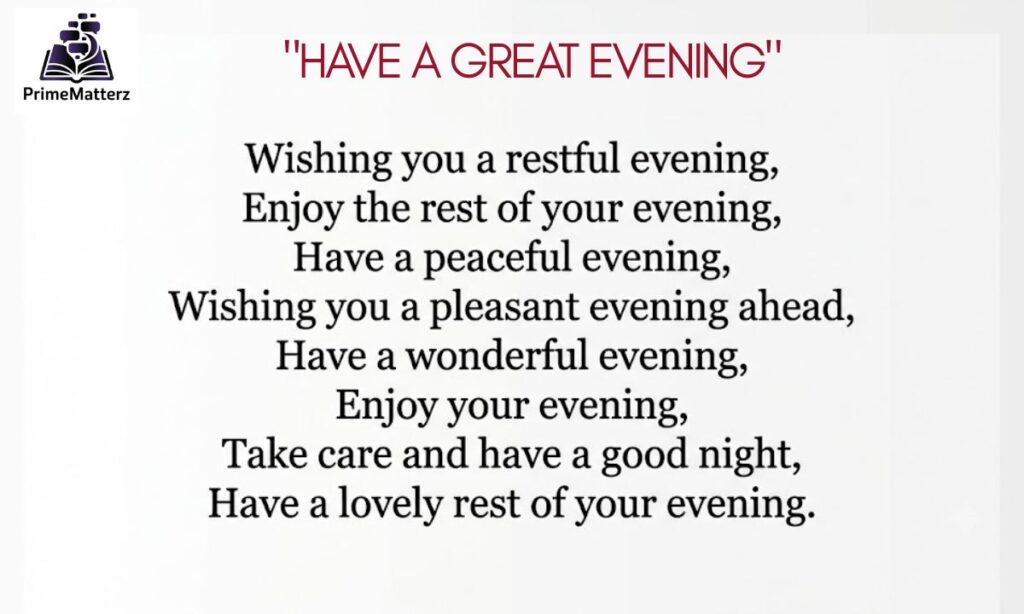
Enjoy Your Evening
Meaning: A relaxed, warm wish that feels personal without being too formal. It sounds genuine and easy. Example:Person A: “We’re all done here.” / Person B: “Perfect — enjoy your evening!”Best Use: Casual workplace or end of a meeting. Worst Use: Very formal written correspondence. Tone: Friendly, Warm
Have a Wonderful Evening
Meaning: A slightly elevated version that adds extra warmth. It feels more heartfelt than the standard phrase. Example:Person A: “I’ll talk to you tomorrow.” / Person B: “Sounds good — have a wonderful evening!”Best Use: Emails to clients or customers you have a good relationship with. Worst Use: Quick, rushed conversations. Tone: Warm, Professional
I Hope Your Evening Goes Well
Meaning: This sounds thoughtful and sincere — like you are genuinely wishing them a smooth rest of the day. Example:Person A: “Thanks for everything today.” / Person B: “Of course — I hope your evening goes well!”Best Use: Professional emails or customer follow-ups. Worst Use: Fast casual chats where a short phrase sounds better. Tone: Formal, Sincere
Have a Lovely Evening
Meaning: Soft and warm — slightly British in feel, but widely understood and appreciated anywhere. Example:Person A: “I’ll let you go now.” / Person B: “Thank you — have a lovely evening!”Best Use: Polite customer service or formal email closings. Worst Use: Among close friends who prefer casual language. Tone: Polite, Warm, Slightly Formal
Take Care This Evening
Meaning: Shows personal concern beyond just pleasantness. It implies you care about their wellbeing. Example:Person A: “I’ve got a busy night ahead.” / Person B: “I hear you — take care this evening!”Best Use: When someone mentions they are tired or having a rough day. Worst Use: Quick transactional exchanges. Tone: Caring, Warm
Wishing You a Relaxing Evening
Meaning: Perfect for when someone seems stressed or overworked. It adds a layer of personal thoughtfulness. Example:Person A: “It’s been a long day.” / Person B: “I bet — wishing you a relaxing evening!”Best Use: After a tough meeting or a customer who had a frustrating experience. Worst Use: Energetic or celebratory goodbyes. Tone: Empathetic, Professional
Have a Good Night
Meaning: A simpler, slightly more casual version that works well later in the evening. Example:Person A: “I’m heading out.” / Person B: “Alright — have a good night!”Best Use: Casual conversations, later in the day when night feels more accurate. Worst Use: Early afternoon or overly formal emails. Tone: Casual, Friendly
Hope You Have a Great Rest of Your Day
Meaning: Works perfectly when you are not sure whether it is evening for the other person — especially in different time zones. Example:Person A: “Talk soon.” / Person B: “Absolutely — hope you have a great rest of your day!”Best Use: Remote work, global teams, professional emails. Worst Use: Face-to-face conversations where it sounds a bit long. Tone: Professional, Considerate
Enjoy the Rest of Your Evening
Meaning: Implies the evening is already underway — adding a personal, real-time feel to the farewell. Example:Person A: “Thanks for the call.” / Person B: “My pleasure — enjoy the rest of your evening!”Best Use: Evening phone calls or customer service closings. Worst Use: Morning or midday conversations. Tone: Warm, Professional
Have a Peaceful Evening
Meaning: Softer and more intentional — works especially well when someone is going through a hard time. Example:Person A: “I really needed this chat.” / Person B: “I’m glad it helped — have a peaceful evening.”Best Use: Emotional support conversations, mental health or care-related contexts. Worst Use: High-energy or celebratory moments. Tone: Gentle, Warm, Empathetic
Good Evening to You
Meaning: A classic, slightly old-fashioned farewell that sounds refined and respectful. Example:Person A: “That’ll be all for today.” / Person B: “Understood — good evening to you!”Best Use: Formal written or spoken professional settings. Worst Use: Among close friends who prefer casual speech. Tone: Formal, Respectful
Have a Safe Evening
Meaning: Adds an element of care beyond pleasantness — especially meaningful when weather or travel is involved. Example:Person A: “I’m driving home now.” / Person B: “Please do — have a safe evening!”Best Use: When someone mentions travel, bad weather, or a late commute. Worst Use: Purely transactional business exchanges. Tone: Caring, Warm
Until Next Time — Have a Great Evening!
Meaning: Combines a forward-looking farewell with an evening wish, making it feel complete and personal. Example:Person A: “Same time next week?” / Person B: “Works for me — until next time, have a great evening!”Best Use: Recurring meetings, regular clients, ongoing professional relationships. Worst Use: One-time or first-time interactions. Tone: Friendly, Professional
Catch You Later — Have a Good One!
Meaning: Casual and upbeat. “Have a good one” works as a shortened version of any time-specific wish. Example:Person A: “I’m off the clock.” / Person B: “Nice — catch you later, have a good one!”Best Use: Coworkers, close acquaintances, casual work culture. Worst Use: Formal emails or conversations with senior leadership. Tone: Casual, Upbeat
Wishing You a Great Evening Ahead
Meaning: Sounds especially natural in written messages. The word “ahead” gives it a forward-looking, thoughtful feel. Example:Person A: “I’ll send that report tomorrow.” / Person B: “Perfect — wishing you a great evening ahead!”Best Use: Email sign-offs, professional messages later in the day. Worst Use: Quick verbal farewells where it sounds too scripted. Tone: Professional, Warm
Hope You Enjoy Your Evening
Meaning: A light and genuine wish that feels natural in almost any setting without overdoing it. Example:Person A: “I’ve got dinner plans tonight.” / Person B: “Oh nice — hope you enjoy your evening!”Best Use: Casual professional conversations and friendly emails. Worst Use: Formal or legal correspondence. Tone: Friendly, Natural
Formal vs Informal Alternatives
Formal Alternatives
Informal Alternatives
I hope you have a wonderful evening
Have a good one!
Wishing you a great evening ahead
Catch you later!
Have a lovely evening
Enjoy your night!
I hope your evening goes well
Take it easy tonight!
Wishing you a relaxing evening
Talk soon — have a good night!
Have a peaceful and pleasant evening
See ya — have fun!
Good evening to you
Later! Have a great one!
Until next time — have a great evening
Hope your night’s chill!
Enjoy the rest of your evening
Have a blast tonight!
Take care this evening
Don’t stay up too late!
Which Alternative Should You Choose?
Workplace / Manager: Go with “Wishing you a great evening ahead” or “Have a wonderful evening.” These are warm but professional.
Email to a client: Use “I hope your evening goes well” or “Enjoy the rest of your evening.” Both work perfectly as closing lines.
Customer service:“Have a lovely evening” or “Take care this evening” both feel genuine without being over the top.
Friend or family:“Have a good one” or “Catch you later — enjoy your night” feels natural and personal.
Social media: Keep it light — “Hope you all have a great evening!” or “Wishing everyone a peaceful night” work well in posts or comments.
Frequently Asked Questions
Is “have a great evening” formal or casual?
It sits right in the middle — polite enough for professional use but warm enough for casual conversations.
What is the difference between “have a great evening” and “have a great night”?
“Evening” refers to roughly 5–9 p.m., while “night” works better later when people are heading to sleep.
Can I use “have a great evening” in a professional email?
Yes — it makes a warm and natural closing line, especially for emails sent in the late afternoon.
What is a more creative alternative to “have a great evening”?
Try “Wishing you a relaxing evening ahead” or “Hope the rest of your evening is exactly what you need.”
Is it okay to say “have a great evening” to someone in a different time zone?
It can sound off — use “hope you have a great rest of your day” instead to stay safe across time zones.
Final Thoughts
Saying goodbye well is a small thing that makes a big impression. Whether you are closing an email, ending a call, or waving goodbye after a long day, choosing the right words shows warmth, attention, and care. Keep this list close — and next time you part ways, make your farewell actually mean something.