15+ Other Ways to Say “Thanks for letting me know.”
Hayat
June 20, 2026No comments
Choosing the right words changes how people see you at work and in daily life. Good communication builds strong relationships, shows confidence, and keeps your messages clear. While it is a very common phrase, finding other ways to say “thanks for letting me know” makes you sound more professional. Using different phrases helps you match the exact tone you need for any situation.
This phrase is a polite way to show you received and understood someone’s message. Its literal meaning is simply expressing gratitude to another person for sharing new information with you.
People use it constantly in daily conversations to quickly acknowledge facts without starting a long chat. It is a safe, friendly response that works well when you just need to confirm you heard them.
When Should You Use “Thanks for letting me know.”?
You should use this phrase in workplace communication and emails when a coworker gives you a quick project update. It also works perfectly in customer service when a client reports a minor issue or delay.
In your personal life, it is great for daily conversations with friends and family about schedule changes. It fits best when the information is helpful but does not require a big emotional reaction.
Is “Thanks for letting me know.” Professional or Polite?
This phrase is both professional and polite, but it has some limits depending on who you are talking to.
Pros:
It is very polite and shows instant respect for the other person’s effort.
It keeps workplace emails short, clear, and easy to read.
It works safely across almost all casual and business situations.
Cons:
It can sound a bit robotic or boring if you use it too much.
It might seem too casual when speaking to a strict boss or high-level manager.
It does not show strong emotion if the news shared was very important or urgent.
Grammar & Correct Usage of “Thanks for letting me know.”
Is it grammatically correct? Yes, it is a perfectly correct and complete sentence in modern English.
Common grammar mistakes: People often wrongly say “Thanks to let me know” or “Thank you for let me know.”
Correct sentence structures: Always use the gerund form (“letting”) after the preposition “for.”
Formal vs informal usage: “Thanks for letting me know” is informal, while “Thank you for letting me know” is slightly more formal.
Examples: “Thank you for letting me know about the meeting” (Formal) or “Thanks for letting me know, I’ll be there” (Informal).
Common Mistakes When Using “Thanks for letting me know.”
Overuse: Typing this exact phrase in every single email makes you look like you are not paying attention.
Wrong context: Using it when someone shares very bad news or highly sensitive personal information seems cold.
Tone issues: Saying it with a flat voice in person can sound sarcastic or annoyed instead of grateful.
Grammar errors: Forgetting the “me” and saying “Thanks for letting know” sounds broken and confusing.
How to Respond to “Thanks for letting me know.”
1. “You’re welcome!”
Meaning: A classic, polite way to accept their thanks.
Best use: Casual chats with friends or friendly coworkers.
Example: “You’re welcome! See you tomorrow at the office.”
2. “No problem at all.”
Meaning: Shows that sharing the information was easy and stress-free.
Best use: When you gave someone a quick, helpful tip.
Example: “No problem at all. Let me know if you need anything else.”
3. “Of course, happy to help.”
Meaning: Expresses a warm, positive attitude toward assisting them.
Best use: Customer service or helping a new team member.
Example: “Of course, happy to help. Have a great weekend!”
4. “Anytime!”
Meaning: A very relaxed way to say you are always available to share updates.
Best use: Text messages with close friends or family.
Example: “Anytime! I will text you if anything else changes.”
5. “Please let me know if you have questions.”
Meaning: Keeps the door open for further professional communication.
Best use: Formal business emails with clients or managers.
Example: “Please let me know if you have questions about the new schedule.”
15+ Other Ways to Say “Thanks for letting me know.”
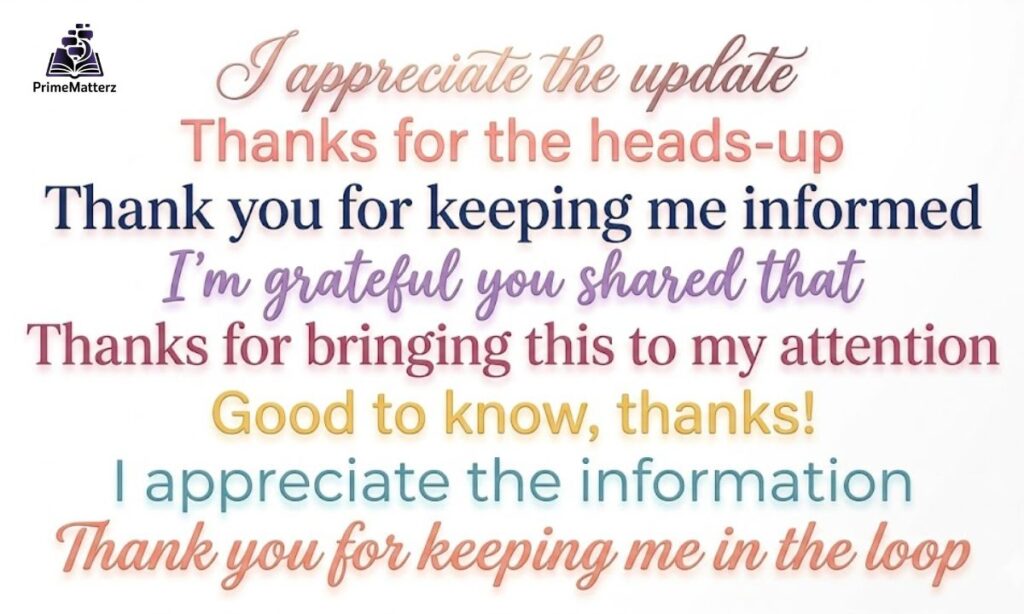
I appreciate the update.
Meaning: Shows you value the new details they provided. It builds a strong professional connection.
Person A: “The meeting is moved to 3 PM today.”
Person B: “I appreciate the update. I will adjust my calendar.” Best Use: Daily workplace emails and team chats. Worst Use: When a friend tells you a funny joke. Tone: Professional and polite.
Thanks for the heads-up.
Meaning: Thanks someone for giving you an early warning. It helps you prepare for what is coming.
Person A: “Traffic is really bad on Main Street right now.”
Person B: “Thanks for the heads-up. I will take the highway.” Best Use: Casual warnings between friends or close coworkers. Worst Use: Formal emails to a company CEO. Tone: Casual and friendly.
Thank you for informing me.
Meaning: A highly respectful way to acknowledge facts. It shows you take their message seriously.
Person A: “Your account has been successfully updated in our system.”
Person B: “Thank you for informing me. Have a good day.” Best Use: Official business letters and customer service replies. Worst Use: Texting your sibling about dinner plans. Tone: Very formal.
Good to know.
Meaning: A quick way to say the information is useful. It keeps the conversation moving fast.
Person A: “The coffee machine in the breakroom is finally fixed.”
Person B: “Good to know. I need a cup right now.” Best Use: Quick office chats or instant messages. Worst Use: When someone shares serious or sad news. Tone: Casual and neutral.
Thanks for keeping me in the loop.
Meaning: Shows gratitude for being included in ongoing news. It makes the other person feel valued.
Person A: “We are still waiting on the client’s signature for the contract.”
Person B: “Thanks for keeping me in the loop. Let’s wait.” Best Use: Long-term projects with multiple team members. Worst Use: A one-time interaction with a stranger. Tone: Professional and collaborative.
I appreciate you bringing this to my attention.
Meaning: Thanks someone for pointing out a specific issue. It shows you are ready to fix a problem.
Person A: “There is a typo on the homepage of our website.”
Person B: “I appreciate you bringing this to my attention. I will fix it.” Best Use: When a customer or boss points out an error. Worst Use: Casual chats about weekend plans. Tone: Highly professional and respectful.
Thanks for the information.
Meaning: A direct way to accept facts or data. It is clear, simple, and gets straight to the point.
Person A: “Here are the sales numbers for last month.”
Person B: “Thanks for the information. I will review them.” Best Use: Replying to emails containing reports or documents. Worst Use: Emotional or personal conversations. Tone: Neutral and direct.
Noted, thank you.
Meaning: Confirms you have recorded or memorized the detail. It is very short and highly efficient.
Person A: “Please remember to lock the door when you leave tonight.”
Person B: “Noted, thank you. I will make sure it is locked.” Best Use: Quick confirmations of rules or instructions. Worst Use: When someone expects a detailed, thoughtful reply. Tone: Formal and concise.
Thanks for sharing that with me.
Meaning: A warm way to accept personal or helpful news. It builds emotional trust between people.
Person A: “I finally finished reading that book you recommended.”
Person B: “Thanks for sharing that with me. Did you like it?” Best Use: Personal conversations or mentoring sessions. Worst Use: Automated business replies. Tone: Warm and friendly.
I am glad you told me.
Meaning: Expresses relief or happiness about receiving the news. It shows the information was very needed.
Person A: “The store closes early on Sundays now.”
Person B: “I am glad you told me. I was just about to leave.” Best Use: When the information saves you from making a mistake. Worst Use: Acknowledging basic, boring data. Tone: Friendly and sincere.
Thank you for the clarification.
Meaning: Shows gratitude when someone explains something confusing. It helps clear up misunderstandings smoothly.
Person A: “To be clear, the deadline is Friday, not Thursday.”
Person B: “Thank you for the clarification. That helps a lot.” Best Use: After asking a question about confusing instructions. Worst Use: When the original message was already perfectly clear. Tone: Professional and polite.
Got it, thanks.
Meaning: A very fast way to say you understand. It is perfect for people who are busy.
Person A: “I left the keys on the kitchen counter for you.”
Person B: “Got it, thanks. I see them.” Best Use: Text messages and quick instant messages. Worst Use: Formal emails to important clients. Tone: Very casual.
I appreciate the notice.
Meaning: Thanks someone for an official warning or schedule change. It sounds very organized and polite.
Person A: “The water will be shut off for repairs tomorrow morning.”
Person B: “I appreciate the notice. I will plan ahead.” Best Use: Replying to building managers or HR departments. Worst Use: Chatting with your best friend. Tone: Formal and respectful.
Thanks for reaching out.
Meaning: Acknowledges that they took the time to contact you. It is a great way to start a reply.
Person A: “I am emailing to ask about your new products.”
Person B: “Thanks for reaching out. Here is our catalog.” Best Use: Replying to first-time emails from new contacts. Worst Use: Talking to someone you see every single day. Tone: Professional and welcoming.
Thank you for the details.
Meaning: Shows appreciation for a long or complex explanation. It proves you value their hard work.
Person A: “Here is the step-by-step guide for the new software.”
Person B: “Thank you for the details. This is very helpful.” Best Use: When someone sends you a long, helpful email. Worst Use: When someone sends a one-word text. Tone: Professional and grateful.
I value your transparency.
Meaning: Thanks someone for being deeply honest about a hard topic. It builds strong mutual respect.
Person A: “We are going to miss the deadline by two days.”
Person B: “I value your transparency. Let’s adjust the timeline.” Best Use: When a coworker admits a mistake or delay. Worst Use: Casual, everyday small talk. Tone: Highly professional and serious.
Thanks for the warning.
Meaning: Acknowledges a tip about a potential problem or danger. It shows you are taking their advice.
Person A: “Watch out, the floor in the hallway is very wet.”
Person B: “Thanks for the warning. I will walk carefully.” Best Use: Safety alerts or tips about difficult situations. Worst Use: When someone shares happy, positive news. Tone: Casual and practical.
I appreciate you keeping me posted.
Meaning: Thanks someone for continuous, ongoing updates. It encourages them to keep communicating with you.
Person A: “The package is in transit and should arrive soon.”
Person B: “I appreciate you keeping me posted. I will watch for it.” Best Use: Tracking shipments or ongoing project statuses. Worst Use: A final message where no more updates are needed. Tone: Friendly and professional.
Thank you for pointing that out.
Meaning: Acknowledges a specific detail you might have missed. It shows you are open to feedback.
Person A: “You forgot to attach the file to your last email.”
Person B: “Thank you for pointing that out. Here it is.” Best Use: When someone catches your small mistake. Worst Use: When someone gives you a compliment. Tone: Polite and humble.
That is very helpful to know.
Meaning: Shows that their information directly solves a problem for you. It makes the sender feel useful.
Person A: “You can use the back door to avoid the crowd.”
Person B: “That is very helpful to know. I will do that.” Best Use: When someone gives you a great tip or life hack. Worst Use: When someone shares useless or obvious facts. Tone: Warm and appreciative.
Formal vs Informal Alternatives
Formal Alternatives
Informal Alternatives
Thank you for informing me.
Thanks for the heads-up.
I appreciate the update.
Got it, thanks.
Noted, thank you.
Good to know.
Thank you for the clarification.
Thanks for the warning.
I appreciate you bringing this to my attention.
I am glad you told me.
Which Alternative Should You Choose?
Workplace Use clear, polite phrases like “I appreciate the update” to keep projects moving smoothly. It shows you are engaged without wasting time.
Email Choose “Thank you for the information” to maintain a clean, professional written record. It sounds great in any corporate inbox.
Manager Say “Thank you for informing me” to show deep respect for their leadership and time. It proves you take their messages seriously.
Customer Use “I appreciate you bringing this to my attention” to make them feel heard and valued. It turns a complaint into a positive moment.
Friend Say “Thanks for the heads-up” to keep the chat relaxed, fun, and totally natural. It fits perfectly in text messages.
Family member Choose “I am glad you told me” to show warm, personal care and love. It makes your family feel appreciated.
Social media Use “Good to know” or “Got it, thanks” for fast, easy public replies. They are short enough for quick comments.
Frequently Asked Questions
Is it rude to just say “noted”?
Saying just “noted” can sound cold and rude, so it is better to say “Noted, thank you.”
Can I say “thanks for the heads-up” to my boss?
You can use it if you have a relaxed relationship, but “I appreciate the update” is much safer.
How do I say this in a formal business email?
The best formal choice is “Thank you for informing me” because it sounds highly professional.
What is a good reply when someone corrects my mistake?
You should say “Thank you for pointing that out” to show you are humble and polite.
Is “good to know” sarcastic?
It can sound sarcastic if your voice is flat, so always say it with a warm, friendly tone.
Final Thoughts
Finding other ways to say “thanks for letting me know” instantly upgrades your daily communication skills. Using the right phrase at the right time shows people that you truly respect their effort. Practice these simple alternatives today to build stronger, more professional relationships everywhere you go.