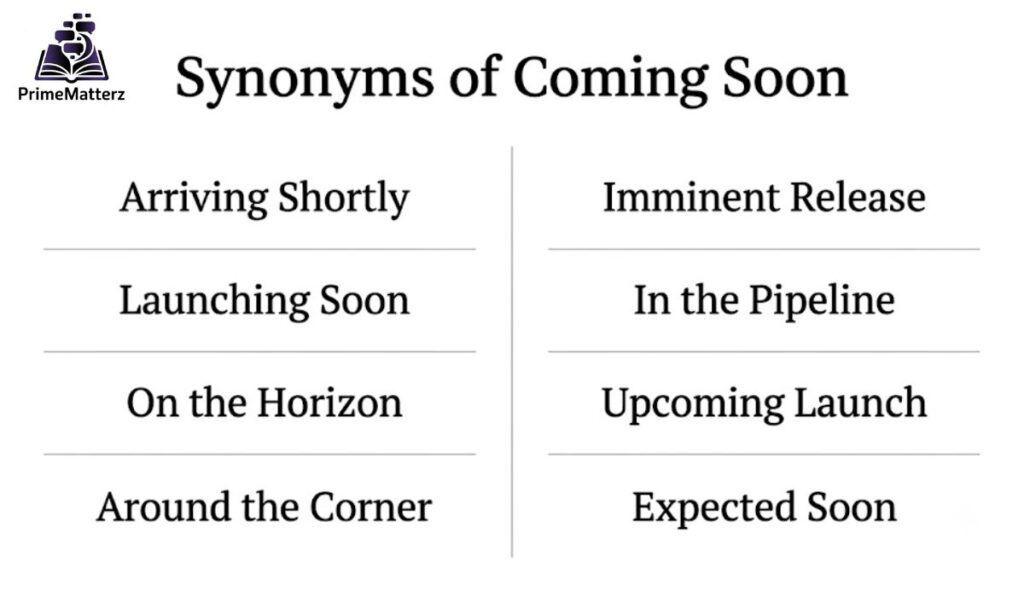
“Coming soon” is a phrase that appears everywhere. You can find it on product pages, event posters, app updates, and even in text messages to friends. However, when you use it too much, it becomes bland and loses its impact.
Choosing a better alternative can make your announcement feel more thrilling, more reliable, and more appropriate for the situation, whether you are launching a product, hinting at an event, or simply sharing what’s next.
Why the Right Word Matters Here
Saying “coming soon” is easy, but it doesn’t always tell people what they need to know. Does soon mean tomorrow or three months from now? The word you pick can make your message feel urgent, exciting, or reliable—or much less so.
If you’re running a product launch, “arriving shortly” builds more urgency than “in the pipeline.” If you’re writing for a formal report, “forthcoming” fits better than “dropping soon.” Matching your word choice to your audience and timeline keeps your message clear and maintains people’s trust.
High-Immediacy Alternatives
These work best when something really is about to happen, not months away.
1. Arriving Shortly
Meaning: Signals that something will show up very soon, usually within days. It creates a sense of urgency without giving a hard date.
Example:
- Person A: “Any update on my order?”
- Person B: “Yes, it’s arriving shortly; it should be at your door by tomorrow.”
Best Use: Shipping updates, product pages, app notifications.
Worst Use: Long-term plans that are still months out.
Tone: Direct, reassuring.
2. Just Around the Corner
Meaning: A warm, familiar way to say something is close, often used for events or seasonal moments. It feels friendly rather than technical.
Example:
- Person A: “Are you excited for the festival?”
- Person B: “So excited; it’s just around the corner now.”
Best Use: Events, holidays, casual conversations.
Worst Use: Formal business documents.
Tone: Friendly, warm.
3. Fast Approaching
Meaning: Suggests something is closing in quickly, often with a bit of pressure attached. It works well when you want people to act before it’s too late.
Example:
- Person A: “Have people signed up for the deadline yet?”
- Person B: “Not everyone. The deadline is fast approaching, though.
Best Use: Deadlines, countdowns, urgent reminders.
Worst Use: Relaxed, no-pressure announcements.
Tone: Urgent, direct.
4. Imminent
Meaning: A stronger, more formal way to say something is about to happen, almost immediately. It carries weight and seriousness.
Example:
- Person A: “Is the merger official yet?”
- Person B: “Not officially, but the announcement is imminent.”
Best Use: News, official statements, formal updates.
Worst Use: Casual texts, where it can sound overly dramatic.
Tone: Formal, weighty.
5. On the Horizon
Meaning: Points to something that’s visible in the near future but not quite here yet. It has a slightly reflective, forward-looking feel.
Example:
- Person A: “What’s next for the company?”
- Person B: “A few exciting projects are on the horizon.”
Best Use: Strategy talks, interviews, planning discussions.
Worst Use: Situations needing a specific date or deadline.
Tone: Optimistic, reflective.
Marketing and Launch Language
These fit product pages, ads, and anything meant to build excitement.
6. Launching Soon
Meaning: A clear, direct way to announce a new product or feature before it’s available. It keeps the focus on the launch itself.
Example:
- Person A: “When does the app update go live?”
- Person B: “It’s launching soon; we’re finishing final testing now.”
Best Use: Product announcements, app updates, marketing pages.
Worst Use: Personal conversations unrelated to a product or service.
Tone: Confident, professional.
7. Slated for Release
Meaning: A more formal, planning-focused phrase that signals a release date has already been decided internally. It sounds organized and deliberate.
Example:
- Person A: “Do we know when the new model comes out?”
- Person B: “It’s slated for release early next year.”
Best Use: Press releases, corporate updates, product roadmaps.
Worst Use: Casual chats with friends or family.
Tone: Formal, organized.
8. Dropping Soon
Meaning: A casual, trend-driven way to say something new is about to be released, often used for music, fashion, or digital content. It feels current and energetic.
Example:
- Person A: “Did the new sneaker collection come out yet?”
- Person B: “Not yet; it’s dropping soon though.”
Best Use: Social media, fashion, music, pop culture content.
Worst Use: Formal business writing.
Tone: Casual, trendy.
9. Set to Debut
Meaning: Highlights a first appearance, often for something new and notable. It works well when the emphasis is on novelty.
Example:
- Person A: “Is the new show out yet?”
- Person B: “Not yet; it’s set to debut next month.”
Best Use: Entertainment, product reveals, first-time launches.
Worst Use: Routine updates with nothing new to highlight.
Tone: Exciting, promotional.
10. Expected Soon
Meaning: A neutral, straightforward way to describe something that hasn’t arrived but is anticipated. It avoids overpromising on timing.
Example:
- Person A: “Any word on the delivery?”
- Person B: “It’s expected soon; it should be here by the end of the week.”
Best Use: Customer service, order updates, general announcements.
Worst Use: Situations where you actually know the exact date.
Tone: Neutral, practical.
Pipeline and Planning Phrases
Use these when something is real and progressing, but not close enough to promise a date.
11. In the Works
Meaning: Suggests active development without giving a timeline. It reassures people that something is happening behind the scenes.
Example:
- Person A: “Is there a sequel planned?”
- Person B: “There’s definitely something in the works, just not ready to share yet.”
Best Use: Early-stage projects, teasers, internal updates.
Worst Use: Situations where people expect a firm date.
Tone: Reassuring, understated.
12. In the Pipeline
Meaning: A common business phrase for projects that are planned and moving forward but still a few steps from completion. It signals progress without urgency.
Example:
- Person A: “Are there more features coming to the platform?”
- Person B: “Yes, quite a few are in the pipeline for next year.”
Best Use: Product roadmaps, team meetings, investor updates.
Worst Use: Casual conversations about personal plans.
Tone: Professional, measured.
13. On the Drawing Board
Meaning: Indicates something is still in the early planning or idea stage, not yet built or confirmed. It sets honest expectations about timing.
Example:
- Person A: “Will there be a bigger office space soon?”
- Person B: “It’s on the drawing board, but nothing is confirmed yet.”
Best Use: Early planning conversations, brainstorming updates.
Worst Use: When people need concrete assurance something will happen.
Tone: Honest, cautious.
14. In the Offing
Meaning: A slightly old-fashioned but useful phrase for something likely to happen soon. It works well in writing that wants a touch of formality.
Example:
- Person A: “Any changes to the team structure?”
- Person B: “There’s a reorganization in the offing; details to follow.”
Best Use: Formal writing, internal memos, news pieces.
Worst Use: Everyday texting or casual speech.
Tone: Formal, slightly reserved.
15. Coming Down the Pike
Meaning: An idiomatic way to describe something approaching, often used in American English. It adds a conversational, storytelling feel.
Example:
- Person A: “What changes should we expect this year?”
- Person B: “A few big ones are coming down the pike; I’ll fill you in soon.”
Best Use: Casual business talk, storytelling, informal updates.
Worst Use: Formal international communication, since the phrase is regional.
Tone: Conversational, folksy.
Formal and Professional Alternatives
These suit reports, official statements, and academic or corporate writing.
16. Forthcoming
Meaning: A polished, formal word for something expected in the near future. It suits writing that needs to sound careful and official.
Example:
- Person A: “When will the report be published?”
- Person B: “The report is forthcoming, likely within two weeks.”
Best Use: Academic papers, official statements, formal emails.
Worst Use: Casual conversations, where it can sound stiff.
Tone: Formal, precise.
17. Upcoming
Meaning: A simple, widely used word for anything happening soon. It works in almost any context without sounding out of place.
Example:
- Person A: “What events does the school have planned?”
- Person B: “There’s an upcoming fundraiser next month.”
Best Use: Calendars, event listings, general announcements.
Worst Use: Situations needing more urgency or specificity.
Tone: Neutral, versatile.
18. Pending Arrival
Meaning: A formal way to describe something that hasn’t arrived yet but is expected soon. It’s often used in shipping, legal, or administrative contexts.
Example:
- Person A: “Has the equipment shown up yet?”
- Person B: “Not yet, it’s pending arrival; it should clear customs this week.”
Best Use: Logistics, legal documents, formal tracking updates.
Worst Use: Personal, informal conversations.
Tone: Formal, procedural.
19. Anticipated Launch
Meaning: Combines excitement with formality, often used for major product or service releases. It signals that something significant is coming.
Example:
- Person A: “When is the new platform going live?”
- Person B: “The anticipated launch is set for early spring.”
Best Use: Press releases, investor communication, big announcements.
Worst Use: Small, low-stakes updates.
Tone: Formal, promotional.
20. Approaching Release
Meaning: Describes a product or update that’s getting close to its final launch stage. It works well when a project has moved past early planning.
Example:
- Person A: “How close is the update to being finished?”
- Person B: “We’re approaching release, just polishing a few last details.”
Best Use: Software updates, product development, team check-ins.
Worst Use: Early-stage ideas with no real progress yet.
Tone: Professional, steady.
Frequently Asked Questions
What is a more exciting way to say “coming soon”?
Phrases like “dropping soon,” “set to debut,” or “just around the corner” add more energy and work well for marketing or social media posts.
What is a formal alternative to “coming soon”?
“Forthcoming,” “pending arrival,” and “anticipated launch” all sound more professional and fit reports, official emails, or press releases.
How do you say “coming soon” without giving an exact date?
Words like “in the works,” “in the pipeline,” or “on the horizon” hint at plans without committing to a specific timeline.
What’s the difference between “coming soon” and “in the pipeline”?
“Coming soon” usually implies something close to launch, while “in the pipeline” suggests it’s still being developed with no fixed date yet.
Why shouldn’t businesses overuse “coming soon”?
Overusing it without context can make customers lose trust, so it helps to pair it with a rough timeline or a brief explanation of progress.
Final Thoughts
“Coming soon” gets the point across, but it doesn’t always match the tone or urgency you need. Choosing the right alternative, whether formal, casual, or somewhere in between, makes your message feel clearer and more genuine. So keep a few of these phrases handy, and your announcements will sound sharper every time.