
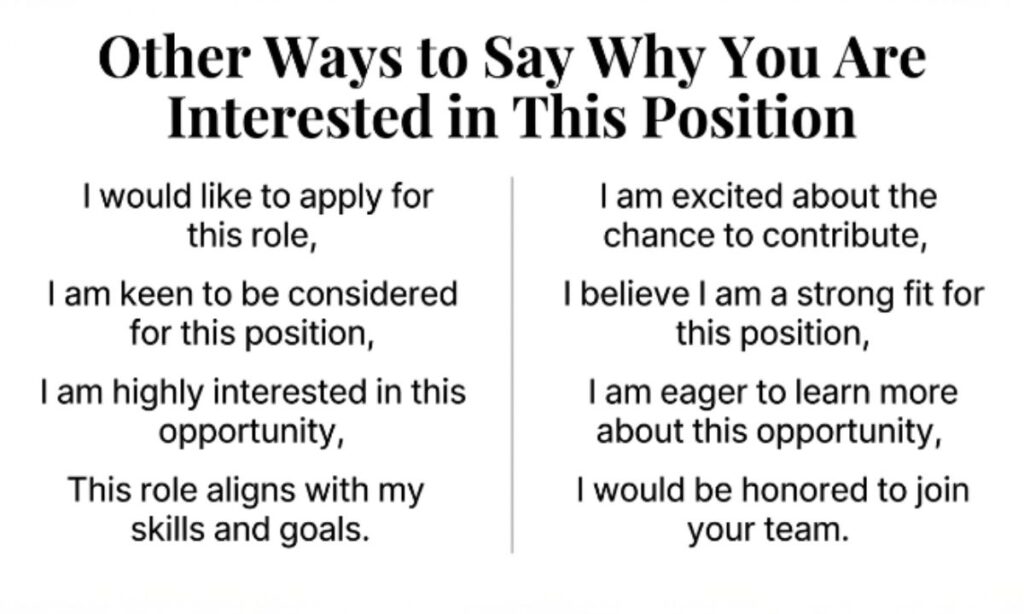
The phrases you use in an interview might change how confident and prepared you sound. Rehearsing “why you are interested in this position” in the same way each time can seem flat. The appropriate words bring clarity, convey professionalism, and help you connect with the person across the table. Little tweaks in language can go a long way in how you come across as interested.
What Does “Why You Are Interested in This Position” Mean?
This phrase asks you to explain why you want to apply for a particular job. It’s not just about liking the title or the paycheck.
A hiring manager wants to know what draws you to the role itself, the organization, and the work you’d actually be performing day to day.
A strong answer relates your skills, values, or career direction to what the role offers. A weak answer essentially repeats the job description back at them.
Grammar and Correct Usage
Getting the wording right matters as much as picking a good synonym. Here’s how to use these phrases correctly.
Verb Tense Matters
Most of these phrases work best in the present tense, since you’re describing a current feeling or motivation, not something in the past.
Formal vs Casual Structure
Interviews call for slightly more formal phrasing than a quick chat with a recruiter over email or LinkedIn. Match your wording to the setting.
Avoid Overexplaining
A good alternative phrase should lead into a short, focused reason. Long, rambling justifications weaken the impact, even if the wording is strong.
Pairing With Specific Details
Any phrase on this list works better when followed by a specific detail about the company, team, or role, not a vague generality.
15+ Other Ways to Say “Why You Are Interested in This Position”
I’d love to explain what draws me to this role
Meaning: This phrase signals openness and invites a real conversation instead of a rehearsed script. It shows you’re ready to talk honestly, not just recite prepared lines.
Example: • Person A: “What made you apply here?” • Person B: “I’d love to explain what draws me to this role.”
Best Use: Interviews where the tone feels conversational and relaxed. Worst Use: Very formal panel interviews expecting a direct answer. Tone: Friendly, Warm
This opportunity caught my attention because
Meaning: This phrase points to a specific trigger, showing your interest wasn’t random. It signals that something concrete pulled you toward the role.
Example: • Person A: “Why this company?” • Person B: “This opportunity caught my attention because of your recent product launch.”
Best Use: Early interview stages when explaining initial interest. Worst Use: Written cover letters, where it can sound slightly casual. Tone: Professional, Neutral
I’m genuinely excited about this position
Meaning: This phrase leads with emotion, showing authentic enthusiasm rather than a rehearsed answer. It works well when your excitement is real and easy to back up.
Example: • Person A: “How do you feel about this role?” • Person B: “I’m genuinely excited about this position and the team behind it.”
Best Use: Final interview rounds after learning more details. Worst Use: First contact emails, where it may feel premature. Tone: Warm, Confident
I’ve been searching for something like this
Meaning: This phrase frames the job as the answer to a personal search, adding a sense of timing and intention. It suggests thoughtful career planning.
Example: • Person A: “Why apply now?” • Person B: “I’ve been searching for something like this for a while.”
Best Use: Career-change conversations or mid-interview reflection. Worst Use: Very short, fast-paced screening calls. Tone: Reflective, Sincere
This role speaks to my strengths
Meaning: This phrase connects your skills directly to the job, showing self-awareness. It positions you as a practical fit, not just an enthusiastic applicant.
Example: • Person A: “Why do you think you fit here?” • Person B: “This role speaks to my strengths in project coordination.”
Best Use: Technical or skill-based interviews. Worst Use: Casual networking chats, where it can sound stiff. Tone: Professional, Confident
I feel drawn to this opportunity
Meaning: This phrase leans on instinct and personal connection rather than a checklist of reasons. It sounds genuine without needing heavy justification.
Example: • Person A: “What’s pulling you toward this job?” • Person B: “I feel drawn to this opportunity and what it represents.”
Best Use: Conversational interviews with senior leaders. Worst Use: Written applications needing concrete reasoning. Tone: Warm, Reflective
I have a clear reason for applying here
Meaning: This phrase signals confidence and preparation, hinting that a specific, well-thought-out answer follows. It sets up trust before you even explain further.
Example: • Person A: “Why did you apply?” • Person B: “I have a clear reason for applying here, and it starts with your mission.”
Best Use: Structured interviews expecting direct answers. Worst Use: Informal chats, where it can sound overly rehearsed. Tone: Confident, Professional
My interest in this position comes from
Meaning: This phrase works as a clean lead-in to a specific story or motivation. It’s straightforward to follow.
Example: • Person A: “Tell me about your interest here.” • Person B: “My interest in this position comes from my background in customer support.”
Best Use: Written cover letters and formal interviews. Worst Use: Quick informal introductions. Tone: Formal, Neutral
This job matches what I’m looking for
Meaning: This phrase frames the role as aligned with your personal goals, not just a random application. It shows intention behind your job search.
Example: • Person A: “Why this job over others?” • Person B: “This job matches what I’m looking for in terms of growth and flexibility.”
Best Use: Comparing multiple offers or explaining priorities. Worst Use: First-round screening calls, where it can sound presumptuous. Tone: Neutral, Confident
Here’s what pulled me toward this position
Meaning: This phrase feels natural and conversational, setting up a personal story about your motivation. It works well when you want to sound relaxed but focused.
Example: • Person A: “What made you apply?” • Person B: “Here’s what pulled me toward this position: your team’s approach to remote work.”
Best Use: Casual interviews or informational calls. Worst Use: Highly formal executive interviews. Tone: Casual, Friendly
Let me share why this role appeals to me
Meaning: This phrase invites the listener into your thought process, making the answer feel personal rather than scripted. It works well for longer, detailed responses.
Example: • Person A: “Go ahead and explain your interest.” • Person B: “Let me share why this role appeals to me on a few levels.”
Best Use: Panel interviews expecting a structured answer. Worst Use: Quick email replies, where it feels too long. Tone: Professional, Respectful
I have a genuine passion for this kind of work
Meaning: This phrase emphasizes long-term interest rather than a one-time reaction to a job posting. It works best when backed by real experience.
Example: • Person A: “Why this field?” • Person B: “I have a genuine passion for this kind of work, especially data analysis.”
Best Use: Career-focused interviews in specialized fields. Worst Use: Entry-level roles without much prior experience to support it. Tone: Sincere, Warm
This position feels like the right fit for me
Meaning: This phrase focuses on alignment rather than excitement alone, showing a grounded, thoughtful decision. It reads as calm and confident.
Example: • Person A: “How do you see yourself here?” • Person B: “This position feels like the right fit for me and my goals.”
Best Use: Mid-career interviews with clear direction. Worst Use: Very early-career conversations lacking specifics. Tone: Confident, Neutral
I’ve thought a lot about why I want this job
Meaning: This phrase signals reflection and seriousness, showing the decision wasn’t impulsive. It builds credibility before you explain your reasoning.
Example: • Person A: “Is this a serious move for you?” • Person B: “I’ve thought a lot about why I want this job, honestly.”
Best Use: Career-change interviews or major job shifts. Worst Use: Fast-paced initial screenings. Tone: Sincere, Reflective
This opportunity aligns with my career direction
Meaning: This phrase connects the job to a bigger picture, showing long-term planning rather than a short-term decision. It sounds strategic and intentional.
Example: • Person A: “Where do you see this leading?” • Person B: “This opportunity aligns with my career direction toward product management.”
Best Use: Interviews focused on growth and career trajectory. Worst Use: Entry-level roles without a clear career plan yet. Tone: Professional, Formal
I see real potential for growth in this role
Meaning: This phrase highlights ambition and future thinking, not just present interest. It shows you’re considering what comes next, not only the job itself.
Example: • Person A: “What excites you about this position?” • Person B: “I see real potential for growth in this role over the next few years.”
Best Use: Interviews with growth-focused companies or startups. Worst Use: Roles explicitly framed as stable, non-advancing positions. Tone: Confident, Ambitious
This is exactly the kind of challenge I’ve been seeking
Meaning: This phrase frames the job as a test of skill rather than just an opportunity. It works well for roles with clear problem-solving demands.
Example: • Person A: “This role has some tough demands. Are you ready?” • Person B: “This is exactly the kind of challenge I’ve been seeking.”
Best Use: Roles involving complex projects or high responsibility. Worst Use: Simple, routine positions, where it can sound exaggerated. Tone: Confident, Bold
I’m motivated by what this position represents
Meaning: This phrase points to deeper values behind the role, not just the day-to-day tasks. It works well when the company mission matters to you.
Example: • Person A: “Why does this role matter to you?” • Person B: “I’m motivated by what this position represents for the industry.”
Best Use: Mission-driven organizations or nonprofits. Worst Use: Purely transactional roles without a strong mission focus. Tone: Sincere, Respectful
This role connects with my long-term goals
Meaning: This phrase ties the job to your plans, showing commitment beyond the immediate position. It works well in interviews focused on retention.
Example: • Person A: “Where do you want to be in five years?” • Person B: “This role connects with my long-term goals directly.”
Best Use: Interviews discussing career progression. Worst Use: Short-term or contract roles. Tone: Professional, Confident
I want to explain my reasons for applying
Meaning: This phrase is simple and direct, setting up a clear, organized answer without extra flair. It works well when you want to sound composed.
Example: • Person A: “Go ahead, tell me your reasons.” • Person B: “I want to explain my reasons for applying, starting with the team culture.”
Best Use: Structured interviews with multiple questions to cover. Worst Use: Casual conversations, where it can sound overly formal. Tone: Neutral, Professional
Frequently Asked Questions
What is the best way to answer why you’re interested in a position?
Connect a specific detail about the role or company to your own skills or goals, instead of giving a generic answer.
Is it okay to say “I’m passionate about this role” in an interview?
Yes, but only if you follow it with a specific reason, since the phrase alone can sound vague without support.
How long should my answer to this question be?
Aim for 30 to 60 seconds, long enough to explain your reasoning but short enough to hold attention.
Should I use different wording in a cover letter versus an interview?
Yes, cover letters can use slightly more formal phrasing, while interviews allow for a more natural, conversational tone.
What should I avoid saying when explaining my interest in a job?
Avoid vague statements like “I just need a job” or generic lines that could apply to any company.
Final Thoughts
Changing how you express interest in a position can shift how confident and genuine you sound. Pick the phrase that matches your tone and the situation, then back it up with a real reason. Small wording choices like these leave a lasting impression on interviewers and readers alike.