“Moving forward” appears in nearly every work email, meeting summary, and personal goal-setting talk. The issue is that it gets used so frequently that it begins to lose its significance. Using a different phrase makes your writing sound more confident. It keeps your tone clear and helps you connect better.
Whether you are wrapping up a business email, supporting a friend, or setting a new personal goal, the right word can change how professional, warm, or decisive you seem. It’s helpful to have more than one phrase to rely on.
Why It’s Worth Learning Synonyms for “Moving Forward”
Repeating the same phrase makes writing feel flat. It can also give the wrong impression. “Moving forward” in a business email sounds neutral and safe. However, if you’re talking to a friend about healing after a tough year, it can come off as cold and formal. Having a variety of options helps you match your tone to the situation, whether it’s formal, friendly, or encouraging.
This variety also improves clarity. Some options refer to a specific action, like “proceeding with the plan,” while others refer to a general future, such as “from here on out.” Choosing the right phrase ensures your reader understands exactly what you mean, rather than guessing your intention.
Formal and Professional Alternatives
These options work well in emails, reports, and meetings where you want to sound polished without sounding stiff.
1. Going Forward
Meaning: A polite, professional way to point at future actions without sounding pushy. It signals continuity and calm direction rather than urgency.
Example:
Person A: “The client flagged a few delays in the last shipment.”
Person B: “Understood. Going forward, we’ll send tracking updates every Friday.”
Best Use: Business emails, status updates, meeting recaps.
Worst Use: Casual chats with friends, where it can feel oddly formal.
Tone: Professional, neutral.
2. Proceeding
Meaning: A direct term for continuing an action or plan that’s already in motion. It works well when you need to sound decisive and official.
Example:
Person A: “Did legal approve the contract changes?”
Person B: “Yes, we’re proceeding with the signed version this week.”
Best Use: Contracts, project updates, formal announcements.
Worst Use: Personal or emotional conversations, where it can sound too clinical.
Tone: Formal, authoritative.
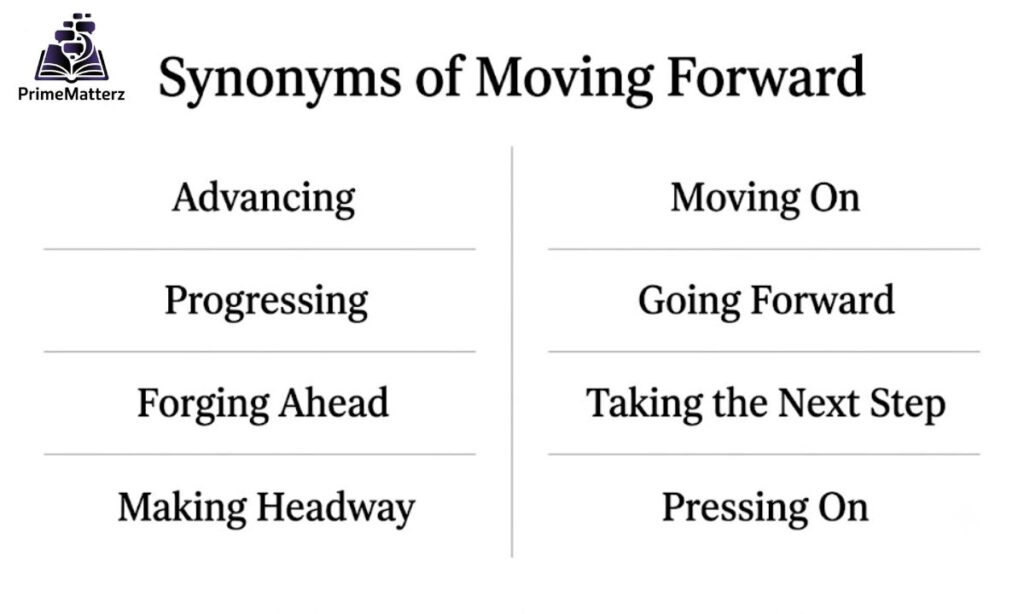
3. Advancing
Meaning: Suggests active, purposeful progress rather than just continuing on autopilot. It carries a sense of momentum and achievement.
Example:
Person A: “How’s the product launch coming along?”
Person B: “We’re advancing on schedule, and design is almost final.”
Best Use: Project reports, performance reviews, leadership updates.
Worst Use: Everyday small talk, where it can sound overly dramatic.
Tone: Confident, action-oriented.
4. Henceforth
Meaning: A formal way to mark a permanent change starting right now. It’s most at home in legal, academic, or official contexts.
Example:
Person A: “Will the new dress code apply to remote staff too?”
Person B: “Henceforth, all employees, remote or in-office, must follow the updated policy.”
Best Use: Legal notices, policy documents, formal speeches.
Worst Use: Texts or casual emails, where it sounds outdated or stiff.
Tone: Formal, almost old-fashioned.
5. From This Point Forward
Meaning: Marks a clear boundary between the past and the future. It works well when you’re introducing a new rule or a fresh start after a mistake.
Example:
Person A: “The last invoice had the wrong billing address.”
Person B: “Apologies for that. From this point forward, we’ll double-check every invoice before sending.”
Best Use: Corrections, policy changes, apologies with a fix attached.
Worst Use: Casual conversation, where it can feel like a scolding.
Tone: Direct, corrective.
Everyday and Conversational Alternatives
These options fit better in casual chats, texts, or relaxed workplace conversations.
6. Moving On
Meaning: Signals a shift to a new topic, task, or chapter, often with a sense of leaving something behind. It’s simple and easy to drop into conversation.
Example:
Person A: “That project finally wrapped up.”
Person B: “Great, moving on, let’s tackle the budget review next.”
Best Use: Meetings, casual chats, changing subjects smoothly.
Worst Use: Sensitive topics like grief, where it can sound dismissive.
Tone: Casual, straightforward.
7. From Here On Out
Meaning: A relaxed, conversational way to describe a new habit or approach starting now. It feels friendly rather than official.
Example:
Person A: “I keep forgetting to lock the office at night.”
Person B: “No worries, from here on out, I’ll send a reminder at 6pm.”
Best Use: Friendly agreements, casual promises, team banter.
Worst Use: Formal legal or financial documents.
Tone: Friendly, easygoing.
8. Pressing On
Meaning: Implies continuing despite difficulty or setbacks. It carries a slight sense of determination and grit.
Example:
Person A: “The weather ruined half our plans for the trip.”
Person B: “True, but we’re pressing on with the hike tomorrow anyway.”
Best Use: Stories about resilience, motivational talks, personal updates.
Worst Use: Neutral business updates with no real obstacle involved.
Tone: Determined, encouraging.
9. Carrying On
Meaning: Suggests steady continuation, often used when something is routine or unremarkable. It feels calm rather than urgent.
Example:
Person A: “Should we pause the event after the mix-up?”
Person B: “No, let’s just carry on as planned.”
Best Use: Everyday routines, calming a tense situation.
Worst Use: Situations that actually need a change in direction.
Tone: Calm, reassuring.
10. Taking the Next Step
Meaning: Frames progress as a specific, small action rather than a vague future. It feels encouraging and grounded.
Example:
Person A: “I finally finished the first draft of my resume.”
Person B: “Nice work. Taking the next step, let’s set up a mock interview.”
Best Use: Coaching conversations, goal-setting, personal development.
Worst Use: Situations where the plan involves many steps at once, not just one.
Tone: Supportive, motivating.
Business and Strategic Alternatives
These alternatives work well in planning discussions, leadership communication, and long-term strategy talks.
11. Looking Ahead
Meaning: Focuses attention on future goals or risks rather than the immediate next step. It has a reflective, planning tone.
Example:
Person A: “This quarter’s numbers were solid.”
Person B: “Agreed. Looking ahead, we should prepare for slower demand in winter.”
Best Use: Strategy meetings, forecasts, leadership updates.
Worst Use: When someone needs an immediate answer, not a future outlook.
Tone: Reflective, strategic.
12. Forging Ahead
Meaning: Implies pushing through obstacles with energy and confidence. It sounds bold and a bit more dramatic than “moving forward.”
Example:
Person A: “The vendor pulled out of the deal last minute.”
Person B: “Frustrating, but we’re forging ahead with a backup supplier.”
Best Use: Overcoming setbacks, rallying a team, leadership speeches.
Worst Use: Minor, low-stakes updates, where it can feel overblown.
Tone: Bold, determined.
13. Gaining Ground
Meaning: Highlights incremental progress, often in a competitive or performance context. It works well when results are improving but not finished.
Example:
Person A: “How are customer satisfaction scores trending?”
Person B: “We’re gaining ground, up six points since last quarter.”
Best Use: Performance reviews, competitive updates, sales reports.
Worst Use: Situations with no measurable progress to point to.
Tone: Encouraging, results-focused.
14. Making Headway
Meaning: Describes visible progress on something that was previously stuck or slow. It reassures people that effort is paying off.
Example:
Person A: “Any luck fixing the software bug?”
Person B: “Yes, we’re finally making headway after two days stuck on it.”
Best Use: Problem-solving updates, technical progress reports.
Worst Use: Situations where progress hasn’t actually started yet.
Tone: Reassuring, practical.
15. Charting a New Course
Meaning: Signals a bigger shift in direction, not just a continuation. It works when a plan or strategy is genuinely changing, not just moving ahead.
Example:
Person A: “Are we sticking with the original marketing plan?”
Person B: “No, we’re charting a new course after the feedback we got.”
Best Use: Strategy pivots, rebrands, major decisions.
Worst Use: Small, routine updates with no real change involved.
Tone: Visionary, decisive.
Personal Growth and Emotional Alternatives
These fit conversations about healing, self-improvement, or personal milestones.
16. Turning the Page
Meaning: A gentle way to describe leaving a difficult period behind and starting fresh. It carries warmth and emotional weight.
Example:
Person A: “It’s been a rough year since the divorce.”
Person B: “I know, but you’re turning the page, and that takes real strength.”
Best Use: Conversations about healing, breakups, or life changes.
Worst Use: Business contexts, where it can feel too personal or poetic.
Tone: Warm, compassionate.
17. Making Strides
Meaning: Highlights steady, noticeable improvement over time, often in personal development. It feels encouraging without overpromising.
Example:
Person A: “How’s therapy been going?”
Person B: “Slow, but I’m making strides, especially with managing anxiety.”
Best Use: Personal growth updates, health journeys, coaching check-ins.
Worst Use: One-time events with no ongoing process behind them.
Tone: Encouraging, honest.
18. Picking Up the Pieces and Moving Ahead
Meaning: Describes recovering from a setback and starting to rebuild. It acknowledges the difficulty before pointing to progress.
Example:
Person A: “Losing the business must have been devastating.”
Person B: “It was, but I’m picking up the pieces and moving ahead one day at a time.”
Best Use: Stories of recovery, loss, or major setbacks.
Worst Use: Minor inconveniences, where it can sound overly dramatic.
Tone: Vulnerable, resilient.
19. Embracing What’s Next
Meaning: Suggests openness and acceptance toward the future rather than just pushing through it. It has a calmer, more accepting tone than “moving forward.”
Example:
Person A: “Nervous about starting the new job?”
Person B: “A little, but I’m embracing what’s next instead of overthinking it.”
Best Use: Life transitions, new beginnings, personal reflection.
Worst Use: Urgent, action-driven business contexts.
Tone: Calm, accepting.
20. Building on This
Meaning: Frames the future as a continuation of something already working, rather than a fresh start. It’s useful when you want to keep momentum without implying a big change.
Example:
Person A: “The workshop got great feedback.”
Person B: “Let’s keep building on this and run a follow-up session next month.”
Best Use: Momentum-based projects, team wins, ongoing initiatives.
Worst Use: Situations that actually need a complete change in approach.
Tone: Collaborative, optimistic.
Frequently Asked Questions
What is a more professional way to say “moving forward”?
“Going forward,” “proceeding,” and “from this point forward” all sound polished and work well in emails and reports.
What can I say instead of “moving forward” in an email?
Try “going forward,” “as we proceed,” or “from here on out” depending on how formal you want the message to sound.
Is “going forward” the same as “moving forward”?
They’re very close in meaning, but “going forward” tends to sound slightly more formal and is common in business writing.
What’s a good synonym for “moving forward” after a hard time?
“Turning the page,” “picking up the pieces,” or “making strides” work well because they acknowledge the difficulty while pointing ahead.
Why should I avoid overusing “moving forward” in writing?
Repeating it too often makes your writing feel repetitive and can weaken your tone, so switching it up keeps your message sharp and engaging.
Final Thoughts
“Moving forward” is useful, but it’s not your only option. Picking the right alternative, whether formal, casual, or emotional, helps your message land the way you actually mean it. Keep a few of these phrases handy and your writing will sound sharper and more natural.