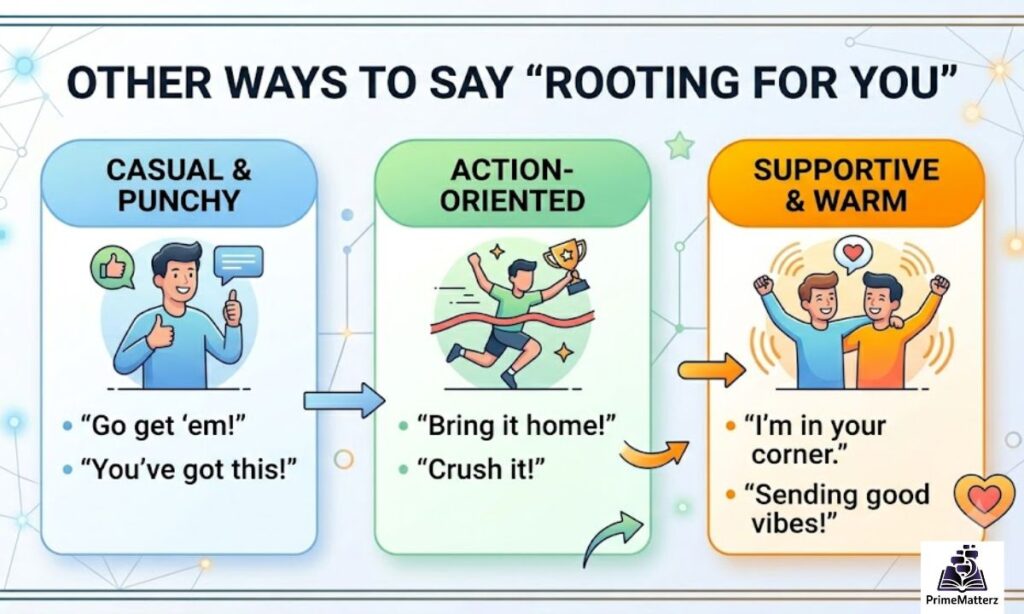
The words you choose when encouraging someone say a lot about you. “Rooting for you” is warm and familiar, but it does not always fit the moment. Sometimes you need something more professional and personal. Sometimes just a little fresher. Knowing the right phrase for the right situation helps you connect better, sound more genuine, and leave a real impression on the people you care about.
What Does “Rooting For You” Mean?
“Rooting for you” means you are actively supporting someone and hoping they succeed. It comes from sports culture, where fans “root” for their team with loud, passionate energy. When you say it to a person, you are telling them you are on their side and you want to see them win.
People use it for all kinds of situations. Before a job interview, a big presentation, an exam, a medical procedure, or even a tough personal decision. It is short, warm, and easy to understand. But because it is so casual, it does not always work in every setting.
When Should You Use “Rooting For You”?
In casual situations, this phrase feels completely natural. Texting a friend before their first day at a new job? Commenting on someone’s social media post about a goal they are chasing? Saying it out loud to a colleague you are close to? All of these work well.
In more formal settings, though, it can feel a little out of place. A formal email to a client, a letter of recommendation, or a message to someone you do not know well might call for a slightly more polished phrase. That is where having alternatives comes in handy.
Is “Rooting For You” Professional or Polite?
It sits somewhere in the middle. It is warm and sincere, but it leans casual. Whether it works professionally depends on your workplace culture and your relationship with the person.
Pros
- Sounds genuine and human
- Easy for everyone to understand
- Works well in texts, chats, and casual emails
- Creates a real sense of connection
- Feels encouraging without being over the top
Cons
- Too informal for strict professional settings
- Can confuse non-native English speakers
- May feel generic if overused
- Does not always match the tone of formal written communication
- The word “rooting” has a different meaning in Australian English (it is slang for sex), so be careful using it with an international audience
15+ Other Ways to Say “Rooting For You”
1. I Believe In You
Meaning: You have full confidence in the person’s ability to succeed.
Why It Works: This phrase is personal and direct. It does not just wish someone luck — it tells them you already trust that they can do it. That is a much stronger message.
Example:
- Person A: “I am really nervous about this interview.”
- Person B: “Don’t be. I believe in you — you’ve prepared so well for this.”
Best Use: Before a big personal challenge, when someone is doubting themselves
Worst Use: With someone you barely know — it can feel a little intense
Tone: Warm, personal, sincere
2. I’m Cheering You On
Meaning: You are actively supporting someone with enthusiasm, every step of the way.
Why It Works: It paints a picture. The person can almost imagine you on the sidelines, making noise for them. It feels energetic and real.
Example:
- Person A: “I start training for the marathon next week.”
- Person B: “I’m cheering you on every mile of the way!”
Best Use: Long-term goals, ongoing efforts, creative projects
Worst Use: Very formal business communication
Tone: Casual, energetic, supportive
3. I’ve Got Your Back
Meaning: You are there to support and protect them, no matter what happens.
Why It Works: This phrase goes beyond hope — it promises action. It tells someone that you will show up for them, not just wish them well from a distance.
Example:
- Person A: “I’m worried the presentation might not land well.”
- Person B: “Don’t stress. I’ve got your back. We’ll prep together tonight.”
Best Use: Close friendships, team situations, challenges that involve real risk
Worst Use: Formal emails or communication with someone you just met
Tone: Loyal, casual, direct
4. You’ve Got This
Meaning: You are sure the person has what it takes to handle what is ahead.
Why It Works: Short and punchy. It does not overthink things. Sometimes that is exactly what someone needs to hear — a simple, confident vote of confidence.
Example:
- Person A: “I’m about to walk into the exam room.”
- Person B: “You’ve got this. You studied hard. Go show them.”
Best Use: Right before a high-pressure moment
Worst Use: When someone is dealing with grief or emotional hardship — it can sound dismissive
Tone: Upbeat, casual, motivating
5. I’m Pulling For You
Meaning: You are hoping and working in your mind for the person to succeed.
Why It Works: It is a softer, quieter version of “rooting for you.” Same energy, slightly more understated. Works well when you want to sound supportive without going over the top.
Example:
- Person A: “The committee reviews my application tomorrow.”
- Person B: “I’m pulling for you. Let me know how it goes.”
Best Use: Competitive situations, waiting for results, professional settings with a casual vibe
Worst Use: Highly formal written communication
Tone: Casual, sincere, low-key warm
6. Wishing You Every Success
Meaning: You hope the person achieves all the good outcomes they are working toward.
Why It Works: This one is polished and professional. It carries genuine warmth but holds its formal shape well. Perfect for professional emails.
Example:
- Person A: “Today is my last day. I’m moving to a new company.”
- Person B: “It has been a pleasure working with you. Wishing you every success in your next chapter.”
Best Use: Formal emails, farewell messages, professional transitions
Worst Use: Casual texts with close friends — it will sound stiff
Tone: Formal, respectful, warm
7. I’m In Your Corner
Meaning: You are firmly on their side, like a boxing coach who supports their fighter no matter what.
Why It Works: The boxing reference gives it a sense of loyalty and grit. It says you are not just cheering from a distance — you are right there with them, ready to help.
Example:
- Person A: “Things have been really hard at work lately.”
- Person B: “I know. And just so you know — I’m in your corner, always.”
Best Use: Emotional support, difficult situations, loyalty moments
Worst Use: Very light or happy occasions where the intensity feels off
Tone: Loyal, grounded, sincere
8. I Have Full Confidence In You
Meaning: You are completely sure the person has the skill, character, and ability to succeed.
Why It Works: More formal than “I believe in you.” This phrase carries professional weight. It is specific and deliberate, which makes it land harder in serious situations.
Example:
- Person A: “I’m nervous about leading the team on this project.”
- Person B: “You should not be. I have full confidence in you.”
Best Use: Professional settings, mentorship, leadership moments
Worst Use: Casual texting — it will feel overly serious
Tone: Professional, authoritative, warm
9. Sending You Good Energy
Meaning: You are directing positive thoughts and wishes their way.
Why It Works: Light, modern, and non-pressure. It does not make big promises — it just says you are thinking of them with warmth. Works especially well in writing.
Example:
- Person A: “Surgery is scheduled for Thursday.”
- Person B: “Sending you so much good energy. You’re going to come through this just fine.”
Best Use: Health situations, personal challenges, text messages, social media
Worst Use: Professional emails — it can feel too spiritual for some workplaces
Tone: Gentle, modern, warm
10. You’re Going To Nail It
Meaning: You are confident they will perform exceptionally well.
Why It Works: Direct and upbeat. “Nail it” is an everyday phrase that most people immediately understand and respond well to. It sets a high but friendly expectation.
Example:
- Person A: “I’ve been rehearsing my pitch for two weeks.”
- Person B: “Two weeks? You’re going to nail it. Don’t even worry.”
Best Use: Performances, presentations, pitches, competitions
Worst Use: Situations with uncertain outcomes where the pressure could backfire
Tone: Casual, confident, energetic
11. You’re Not Alone In This
Meaning: Whatever they are facing, they have people standing beside them.
Why It Works: Sometimes people do not need motivation. They need to feel less isolated. This phrase speaks directly to that. It is about presence and connection, not performance.
Example:
- Person A: “I feel like I’m the only one struggling with this.”
- Person B: “You’re not alone in this. I’m right here with you.”
Best Use: Emotional support, hard times, when someone feels overwhelmed
Worst Use: Before an exciting opportunity — it can unintentionally suggest things might go wrong
Tone: Compassionate, calming, deeply personal
12. I’m Behind You All The Way
Meaning: You offer full and unwavering support through the whole journey, start to finish.
Why It Works: The phrase “all the way” signals total commitment. It is not just “good luck” — it is “I am with you no matter how long this takes.”
Example:
- Person A: “I’m thinking of going back to school while working full-time.”
- Person B: “That’s a big step. I’m behind you all the way.”
Best Use: Long-term plans, major life decisions, big career moves
Worst Use: A quick, casual moment — it can feel heavier than needed
Tone: Committed, warm, semi-formal
13. Go Get ‘Em
Meaning: Go out there and do your best — aggressively pursue what you want.
Why It Works: Short, punchy, and full of energy. It is a push rather than a pat on the back. Works best right before someone walks into a moment.
Example:
- Person A: “Alright, I’m heading into the meeting.”
- Person B: “Go get ’em. They’re going to love you.”
Best Use: Right before someone enters a competitive or performance situation
Worst Use: Sensitive emotional conversations — the energy is completely wrong
Tone: Casual, bold, motivating
14. Break A Leg
Meaning: Good luck — especially before a performance.
Why It Works: It is a classic theatrical idiom that most people recognize. The oddness of it actually makes it stick. Saying it in the right context feels fun and memorable.
Example:
- Person A: “Opening night is tomorrow. I’m terrified.”
- Person B: “Break a leg! You’ve put in the work. It’s going to be incredible.”
Best Use: Theater, public speaking, performances, talent shows
Worst Use: Non-performance situations — outside that context it can confuse people
Tone: Playful, theatrical, informal
15. Wishing You All The Best
Meaning: You genuinely hope everything goes well for them.
Why It Works: It is gentle, professional, and universally understood. Works in almost any context — from a casual goodbye to a formal business email. It does not overpromise anything.
Example:
- Person A: “I’m starting the new position on Monday.”
- Person B: “Wishing you all the best. You’ve worked so hard to get there.”
Best Use: Formal emails, professional farewells, messages to people you do not know closely
Worst Use: When you want to express deep personal loyalty — it can feel a little surface-level
Tone: Polite, professional, warm
16. You Have My Full Support
Meaning: Your backing is complete and unconditional.
Why It Works: It is clear and strong. There is no vagueness here — you are telling someone exactly where you stand. Works especially well in professional or serious personal contexts.
Example:
- Person A: “I’ve decided to launch the startup. It’s a big risk.”
- Person B: “I know it is. And you have my full support, whatever happens.”
Best Use: Big decisions, career pivots, personal risks, professional settings
Worst Use: Overly casual or lighthearted moments — the formality can feel mismatched
Tone: Formal, loyal, committed
17. You’ve Got What It Takes
Meaning: The person has the qualities, skills, and character to succeed.
Why It Works: It goes a step deeper than “good luck.” You are not just wishing them well — you are specifically saying they are capable. That is a different and more powerful message.
Example:
- Person A: “I’m not sure I’m ready for this promotion.”
- Person B: “I’ve watched you work for two years. You’ve got what it takes.”
Best Use: Moments of self-doubt, career decisions, mentorship conversations
Worst Use: Situations where the outcome is genuinely unclear — you do not want to set unrealistic expectations
Tone: Sincere, affirming, grounded
18. Keep Pushing Forward
Meaning: Do not stop. Keep going, even when it gets tough.
Why It Works: This one is less about the outcome and more about the effort. It is for someone who is already in the middle of something hard and needs a nudge to keep going.
Example:
- Person A: “I’ve been applying for jobs for four months. I’m exhausted.”
- Person B: “I know. Keep pushing forward. The right one is coming.”
Best Use: Long struggles, difficult processes, burnout moments
Worst Use: Right before something exciting — it accidentally implies the journey will be painful
Tone: Motivating, honest, grounded
19. I’m Sending You All My Good Thoughts
Meaning: You are thinking of them with warmth and hoping everything goes well.
Why It Works: It is softer and more personal than “good luck.” It carries an emotional weight that feels caring rather than performative.
Example:
- Person A: “Dad’s surgery is tomorrow.”
- Person B: “I’m sending you all my good thoughts. For him and for you.”
Best Use: Health situations, emotional hardship, uncertain times
Worst Use: Competitive or professional settings — it can feel a little too soft
Tone: Gentle, personal, compassionate
20. I Know You’ll Do Great
Meaning: You are confident they will perform well and come through successfully.
Why It Works: It is simple, clear, and it expresses genuine belief without overdoing it. Not too much pressure. Not too casual. Just a clean, honest vote of confidence.
Example:
- Person A: “This is my first time presenting to the whole company.”
- Person B: “Relax. I know you’ll do great. You always come prepared.”
Best Use: Before presentations, interviews, first-time experiences
Worst Use: Situations where you are not actually sure — it only works if it sounds genuine
Tone: Warm, calm, reassuring
How to Choose the Best Alternative
Match the tone to the relationship. The closer you are to someone, the more casual and personal you can be.
Think about the timing. Right before a moment calls for something short and punchy. A message sent the night before can be longer and more thoughtful.
Consider the setting. Professional email? Go formal. Group chat with friends? Keep it casual.
Think about what they need. Do they need confidence? Comfort? A push? Each phrase has a slightly different emotional purpose.
Avoid phrases that set unrealistic expectations. If the outcome is genuinely uncertain, stay away from anything that promises success.
Be specific when you can. “I know you’ll do great in your pitch to the board” lands harder than just “you’ve got this.”
Common Mistakes to Avoid
Using casual phrases in formal emails: “You’re gonna crush it” does not belong in a client communication.
Saying “break a leg” outside of performance contexts: It confuses people when used before a medical procedure or a business decision.
Overusing the same phrase: If you say “you’ve got this” to the same person every week, it stops meaning anything.
Using heavy support phrases for light moments: Saying “you’re not alone in this” before someone goes to get coffee comes across as a little dramatic.
Being vague: Generic encouragement can feel empty. Referencing something specific about the person or their situation makes your words land better.
Ignoring cultural differences: Some phrases do not translate well. “Rooting for you” itself is a real example of this with Australian English.
Forcing formality when warmth is what is needed: “Wishing you success in your endeavors” is not what someone in emotional distress needs to hear.
Frequently Asked Questions
What is a more professional way to say “rooting for you”?
The cleanest options for professional settings are “wishing you every success,” “you have my full support,” and “I have full confidence in you.”
Can you say “rooting for you” in a formal email?
It is better to avoid it in strictly formal emails — phrases like “wishing you all the best” or “I’m confident you’ll succeed” fit the tone better.
Is “I believe in you” appropriate for work?
Yes, in most workplace cultures it works well, especially between a manager and a team member or two close colleagues.
What should I say instead of “good luck” before a presentation?
Try “you’re going to nail it,” “I believe in you,” or “I know you’ll do great” — all of these feel more personal than a generic “good luck.”
What is a comforting way to encourage someone going through something hard?
“You’re not alone in this,” “I’m sending you all my good thoughts,” and “I’ve got your back” all work well when someone is struggling rather than competing.
Final Thoughts
The right words at the right moment can genuinely change how someone feels walking into a challenge. Whether you go formal or casual, short or heartfelt, the most important thing is that your encouragement sounds like you — specific, sincere, and real. Pick the phrase that fits the person, the moment, and the relationship, and you will never go wrong.