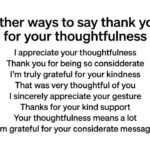
Saying “thank you for the update” works fine — but using the same phrase every time can make your messages feel flat or copy-pasted. The right words show the other person you actually read what they sent and that you value their time.
Whether you’re writing a work email, responding to a client, or texting a friend, having a few solid alternatives makes your communication feel more natural and more you.
“Thank you for the update” is a polite way to acknowledge that someone has shared new information with you. It signals that you received their message, you appreciate the effort, and you’re paying attention.
People use it in all kinds of situations — project check-ins, status emails, meeting follow-ups, or even casual conversations where someone shares a change in plans. It’s short, clear, and gets the job done. The only downside? It can start to sound robotic when you use it in every single reply.
When Should You Use “Thank You for the Update”?
This phrase fits best in professional settings like work emails, client messages, or team chats where someone has shared progress, a status change, or new information. It works just as well when a colleague updates you on a deadline, a manager sends a project note, or a customer explains a change to their order.
In casual situations — texting a friend about a change in plans or messaging a family member — the phrase still works, but you have more room to be warm and relaxed. That’s where the alternatives below really come in handy.
Is “Thank You for the Update” Professional or Polite?
Yes, it’s both. But like most phrases, how well it lands depends on the context.
Pros
Simple and easy to understand
Works in both formal and semi-formal settings
Shows basic courtesy and acknowledgment
Safe choice when you’re unsure about tone
Cons
Can feel generic if you use it too often
Doesn’t tell the other person what specifically you appreciated
Can come across as a filler reply rather than a genuine response
Lacks warmth in personal or friendly conversations
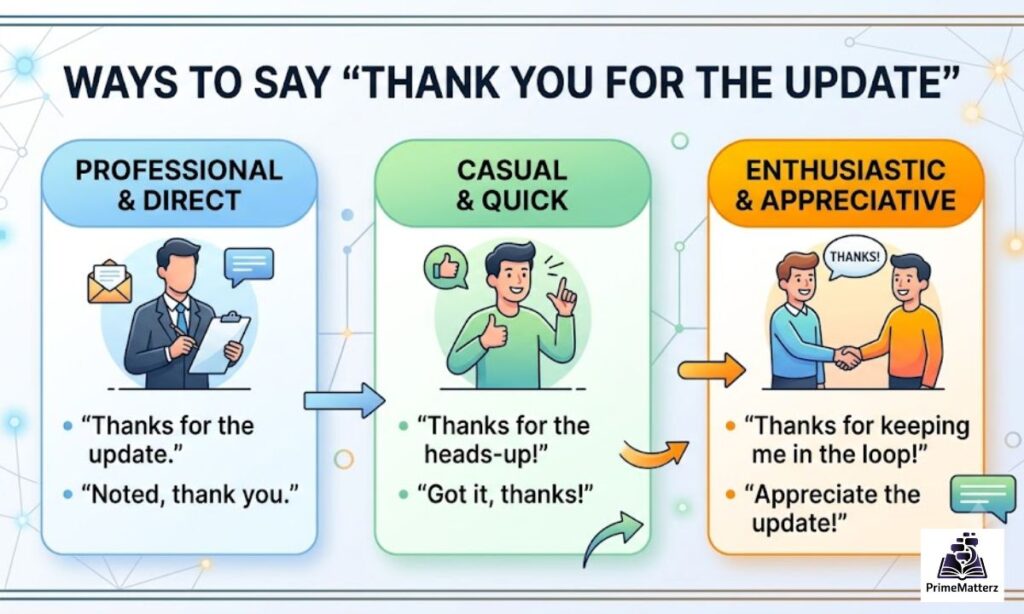
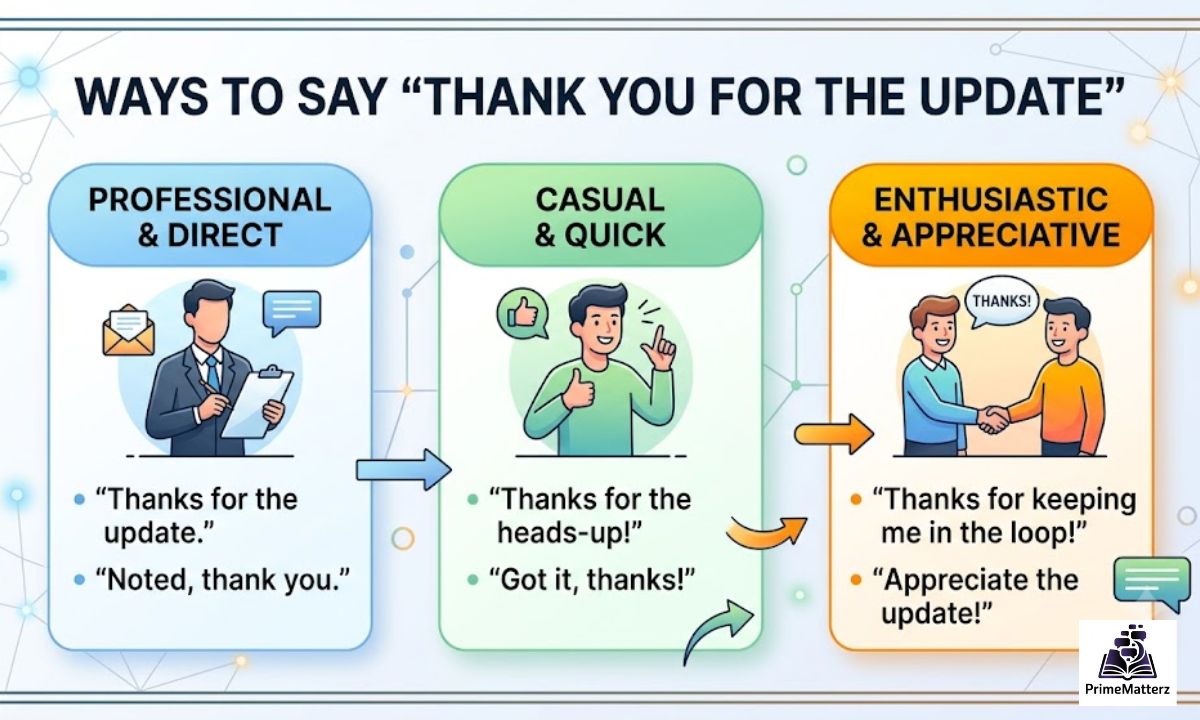
15+ Other Ways to Say “Thank You for the Update”
1. I Appreciate the Update
Meaning: A cleaner, slightly more polished way to say the same thing.
Why It Works: Swapping “thank you” for “I appreciate” gives the phrase a more professional feel without changing the message. It sounds natural in emails to managers, clients, or colleagues.
Example:
Person A: “Just wanted to let you know the report is ready for review.”
Person B: “I appreciate the update — I’ll take a look this afternoon.”
Best Use: Formal and semi-formal work emails Worst Use: Casual texts between friends Tone: Professional, respectful
2. Thanks for Keeping Me in the Loop
Meaning: You’re grateful that someone kept you informed as things developed.
Why It Works: This one feels warmer than a standard thank-you. It acknowledges not just the update itself but the person’s effort to make sure you weren’t left out.
Example:
Person A: “We moved the client call to Thursday, just so you know.”
Person B: “Thanks for keeping me in the loop — I’ll block my calendar.”
Best Use: Team updates, ongoing projects, group chats Worst Use: Very formal correspondence with executives or clients Tone: Friendly, collaborative
3. Thanks for the Heads-Up
Meaning: You’re grateful they warned you or told you early.
Why It Works: This phrase works especially well when the update is a warning or a change that gives you time to prepare. It sounds natural and direct without being stiff.
Example:
Person A: “The system will be down for maintenance tomorrow morning.”
Person B: “Thanks for the heads-up — I’ll save my work tonight.”
Best Use: Early warnings, schedule changes, time-sensitive news Worst Use: Formal reports or official business communication Tone: Casual, practical
4. Thanks for Letting Me Know
Meaning: A simple acknowledgment that you received and noted the information.
Why It Works: Short, natural, and easy to use in almost any situation. It doesn’t try too hard, which actually makes it feel more genuine in everyday communication.
Example:
Person A: “The meeting has been pushed back by 30 minutes.”
Person B: “Thanks for letting me know — see you then.”
Best Use: Quick replies, schedule updates, casual workplace messages Worst Use: Situations requiring formal or detailed responses Tone: Casual, neutral
5. I’m Grateful for the Update
Meaning: A more heartfelt version of the standard phrase.
Why It Works: Adding “grateful” instead of “thankful” lifts the emotional weight slightly. It’s a good choice when the update was genuinely helpful or when you want to add a bit more warmth.
Example:
Person A: “Here’s the full breakdown of the project timeline you asked for.”
Person B: “I’m grateful for the update — this really helps me plan the next steps.”
Best Use: Detailed or helpful updates, semi-formal emails Worst Use: Very quick, casual back-and-forth Tone: Warm, sincere
6. Thanks for Keeping Me Posted
Meaning: You appreciate that someone is updating you regularly as things progress.
Why It Works: This phrase implies ongoing communication, not just a one-time update. It’s great when you’re tracking something that’s still in progress, like a project or a delivery.
Example:
Person A: “The design team is still working on the mockups — should be done by Friday.”
Person B: “Thanks for keeping me posted — I’ll wait to hear from you.”
Best Use: Ongoing projects, status tracking, regular check-ins Worst Use: One-time updates or final decisions Tone: Friendly, engaged
7. That’s Really Helpful, Thank You
Meaning: You found the specific update useful, not just politely noted.
Why It Works: This one actually tells the person their message made a difference. It’s more personal than a generic acknowledgment, which makes it feel more genuine.
Example:
Person A: “I’ve included the latest sales numbers in the report I sent you.”
Person B: “That’s really helpful, thank you — exactly what I needed.”
Best Use: When the update solved a problem or answered a question Worst Use: Routine or expected updates that don’t require extra praise Tone: Warm, direct
8. Thank You for the Clarification
Meaning: You appreciate that they cleared something up or explained something more clearly.
Why It Works: When the update wasn’t just new information but actually cleared up confusion, this phrase fits better than the standard one. It’s specific and professional.
Example:
Person A: “Just to clarify — the deadline is end of day Friday, not Thursday.”
Person B: “Thank you for the clarification — I’ll adjust my schedule.”
Best Use: When something was previously unclear or misunderstood Worst Use: When the update is new information, not a correction Tone: Professional, precise
9. Thanks for Bringing Me Up to Speed
Meaning: You missed something earlier and now you’re caught up, thanks to them.
Why It Works: This works well when you were absent, out of the loop, or rejoining a conversation. It acknowledges that the other person took time to fill in the gaps for you.
Example:
Person A: “Here’s what happened during the meeting you missed yesterday.”
Person B: “Thanks for bringing me up to speed — I feel caught up now.”
Best Use: After being away, missing a meeting, or returning from leave Worst Use: When you were already informed and didn’t miss anything Tone: Casual to semi-formal
10. I Appreciate You Keeping Me Informed
Meaning: You value the fact that they made the effort to communicate with you.
Why It Works: This version is a bit more formal and emphasizes the act of communication itself. It’s a strong choice for professional or client-facing emails.
Example:
Person A: “We’ve updated the contract terms and will send the revised version shortly.”
Person B: “I appreciate you keeping me informed — looking forward to reviewing the changes.”
Best Use: Client emails, formal updates, vendor or supplier communication Worst Use: Everyday casual messaging Tone: Formal, professional
11. Noted, Thank You
Meaning: You’ve received and recorded the information.
Why It Works: Short and efficient. Sometimes you just need to confirm you got the message without adding fluff. This is ideal when quick replies are the norm.
Example:
Person A: “Please be aware that the office will be closed on Friday.”
Person B: “Noted, thank you.”
Best Use: Internal team messages, quick acknowledgments Worst Use: Personal conversations or messages that deserve a warmer response Tone: Neutral, concise, professional
12. Thanks for the Prompt Update
Meaning: You appreciate not just the update but how quickly it arrived.
Why It Works: Speed matters in a lot of work situations. Acknowledging that someone responded quickly shows you noticed and value their responsiveness.
Example:
Person A: “Just wanted to let you know the issue has been resolved.”
Person B: “Thanks for the prompt update — glad it’s sorted out.”
Best Use: Time-sensitive situations, customer service, urgent work matters Worst Use: Updates that came in late or weren’t actually timely Tone: Professional, appreciative
13. Thank You for the Progress Update
Meaning: You’re thanking someone specifically for updating you on how a task or project is moving along.
Why It Works: This phrase is more specific than the generic version. It signals that you’re tracking progress and paying close attention to how things are developing.
Example:
Person A: “We’ve completed phase one of the rollout and are moving to phase two next week.”
Person B: “Thank you for the progress update — it’s great to see things moving forward.”
Best Use: Project management, milestone check-ins, status reports Worst Use: Simple one-off messages unrelated to a project Tone: Professional, engaged
14. I Value Your Communication
Meaning: You appreciate how openly and consistently someone keeps you informed.
Why It Works: This phrase carries more weight than a standard thank-you. It tells the person that their communication style itself is something you respect. Use it when someone consistently keeps you updated without being asked.
Example:
Person A: “I’ll continue to send weekly updates as the project progresses.”
Person B: “I really value your communication — it makes coordination so much easier.”
Best Use: Ongoing professional relationships, vendors, long-term clients Worst Use: One-time updates or casual conversations Tone: Warm, professional, respectful
15. Thanks for Filling Me In
Meaning: You missed something and they caught you up on what you needed to know.
Why It Works: Conversational and friendly. It works well in team settings where people are often jumping in and out of conversations and need quick catch-ups.
Example:
Person A: “Here’s what the client said in the call earlier today.”
Person B: “Thanks for filling me in — I’ll follow up with them this afternoon.”
Best Use: Team environments, after missing a call or meeting Worst Use: Formal or high-level executive communication Tone: Casual, collaborative
16. Good to Know, Thank You
Meaning: The update was useful information you’ll keep in mind.
Why It Works: Casual and light. It acknowledges the message without making too big a deal of it, which is perfect for low-stakes updates that are helpful but not urgent.
Example:
Person A: “The parking situation near the venue can get tricky after 5 PM.”
Person B: “Good to know, thank you — I’ll plan to arrive early.”
Best Use: Casual tips, helpful FYIs, informal team messages Worst Use: Sensitive or serious updates that deserve more than a light acknowledgment Tone: Casual, friendly
17. I Appreciate You Taking the Time to Update Me
Meaning: You recognize the effort it took to write the update and send it your way.
Why It Works: This phrase is specific about what you’re appreciating — the person’s time. It’s a thoughtful addition when someone clearly put effort into a detailed message.
Example:
Person A: “I put together a full summary of the client feedback for your review.”
Person B: “I appreciate you taking the time to update me — I’ll go through it carefully.”
Best Use: Detailed reports, summaries, or updates that required real effort Worst Use: Quick one-liner updates Tone: Warm, formal, considerate
18. This Is Really Useful, Thank You
Meaning: The update gave you something you can actually act on or learn from.
Why It Works: This goes beyond just acknowledging the message — you’re telling the person their information was genuinely valuable. That’s a lot more meaningful than a routine reply.
Example:
Person A: “The survey results show most users prefer the simpler interface.”
Person B: “This is really useful, thank you — it’ll help us make the final design call.”
Best Use: Research updates, data, findings, or anything that changes a decision Worst Use: Routine updates that are expected and non-specific Tone: Genuine, professional
19. Thanks for the Detailed Update
Meaning: You noticed and appreciate that they gave you more than just the bare minimum.
Why It Works: When someone goes out of their way to provide context, explanation, or background, it’s worth calling out. This phrase does exactly that without overdoing the praise.
Example:
Person A: “I’ve included a full breakdown of what changed and why in this update.”
Person B: “Thanks for the detailed update — that context really helps.”
Best Use: Comprehensive status reports, thorough emails, explained decisions Worst Use: Brief, one-sentence updates Tone: Professional, appreciative
20. Your Update Is Much Appreciated
Meaning: A slightly more formal way to say you’re grateful for the information.
Why It Works: Flipping the structure — putting “your update” first — makes the sentence feel more deliberate and considered. It’s a small change that adds polish to a professional email.
Example:
Person A: “I’ve attached the revised budget estimates as requested.”
Person B: “Your update is much appreciated — I’ll review and share my thoughts by end of day.”
Best Use: Formal emails, client-facing communication, official correspondence Worst Use: Casual messaging between friends or teammates Tone: Formal, polished
Professional Alternatives at a Glance
Phrase
Formality Level
Best Situation
I appreciate the update
High
Work emails, formal replies
I appreciate you keeping me informed
High
Client or vendor emails
Thank you for the clarification
High
When something was unclear
Thank you for the progress update
High
Project milestones
Your update is much appreciated
High
Formal or executive emails
Thanks for the prompt update
Medium-High
Time-sensitive replies
Thanks for keeping me in the loop
Medium
Team collaboration
Thanks for keeping me posted
Medium
Ongoing projects
I value your communication
Medium
Long-term relationships
That’s really helpful, thank you
Medium
When info solves a problem
I appreciate you taking the time
Medium
Detailed or effortful updates
Noted, thank you
Low-Medium
Quick acknowledgments
Casual Alternatives
For texts, chats with friends, or informal team messages, these work great:
“Thanks for the heads-up” — Best when someone gave you advance notice
“Thanks for letting me know” — Works in almost any low-key situation
“Good to know, thanks” — Light acknowledgment for helpful FYIs
“Thanks for filling me in” — Great when you missed something earlier
“Thanks for keeping me posted” — When things are still developing
“Got it, thanks” — Short and direct; works in fast-moving chats
Email-Friendly Alternatives
Alternative
Best Email Situation
I appreciate the update
Standard professional reply
Thank you for the clarification
Clearing up confusion
Thank you for the progress update
Project status emails
I appreciate you keeping me informed
Client or partner emails
Your update is much appreciated
Formal acknowledgment
Thanks for the detailed update
Comprehensive reports
Thanks for the prompt update
Urgent or time-sensitive news
I appreciate you taking the time to update me
Long or effort-heavy messages
This is really useful, thank you
Data, findings, or decisions
Thanks for bringing me up to speed
After absence or missed meeting
How to Choose the Best Alternative
Workplace Communication
Match the tone of the person writing to you — if they’re formal, be formal back
Use specific phrases that reflect what the update was about (progress, clarification, timing)
Avoid overly casual replies in emails to senior stakeholders or clients
Customer Service
Stay warm but professional — phrases like “Thanks for the prompt update” or “That’s really helpful, thank you” work well
Acknowledge the specific issue, not just the fact that they wrote
Keep replies concise and solution-focused
Friends and Family
Keep it natural — “Thanks for letting me know” or “Good to know, thanks” are perfect
Don’t overthink tone; go with what sounds like you
A warmer phrase like “I’m grateful for the update” can mean a lot when someone shares personal news
Formal Situations
Go with “I appreciate you keeping me informed” or “Your update is much appreciated”
Avoid contractions (use “I appreciate” not “I’m grateful”)
Follow the phrase with a relevant next step to show you’re acting on the information
Common Mistakes to Avoid
Using the same phrase in every reply. Repeating “thank you for the update” in every email to the same person makes your responses feel like templates.
Picking a phrase that doesn’t match the tone of the conversation. Saying “Noted, thank you” to a close friend or “Thanks for the heads-up!” in a formal client email both feel off.
Forgetting to reference what the update was actually about. A reply like “I appreciate the update on the budget timeline” is always better than a generic one.
Overcomplicating it. Long, formal phrases in casual settings feel stiff. Simple usually wins.
Responding too late. Even the best phrase loses its impact if you wait three days to send it.
Using warm phrases ironically. “I really value your communication” sounds hollow if the relationship doesn’t support it.
Ignoring the next step. After thanking someone, it often helps to mention what you’ll do with the information — it shows you actually read and processed it.
Frequently Asked Questions
Is “thank you for the update” professional?
Yes, it’s professional and widely accepted in workplace communication — just avoid using it in every single reply.
What is a formal alternative to “thank you for the update”?
“I appreciate you keeping me informed” and “your update is much appreciated” are both strong formal options.
Can I use these alternatives in emails?
Yes, all of the alternatives in this guide work well in emails — just match the formality level to the situation.
What’s the most casual way to say “thank you for the update”?
“Thanks for the heads-up” and “thanks for letting me know” are the most natural options for casual conversation.
How do I make my thank-you sound more genuine?
Reference the specific update content in your reply — for example, “Thanks for the update on the project timeline” feels more real than a generic response.
Final Thoughts
The phrase “thank you for the update” does its job — but it’s not the only tool you have. Swapping it out for something more specific or better matched to the tone of the conversation makes your communication feel more thoughtful and more human.
Start with one or two alternatives from this list, use them naturally, and you’ll quickly notice how much better your replies land.