The language you speak can influence the way a message is received. Please be reminded” works, but it seem stiff, and saying it too often can make your communications sound like form letters.
The right alternative keeps things clear, and it seems like it was written by a real person. That matters for professionalism, trust, and how people actually respond to you.
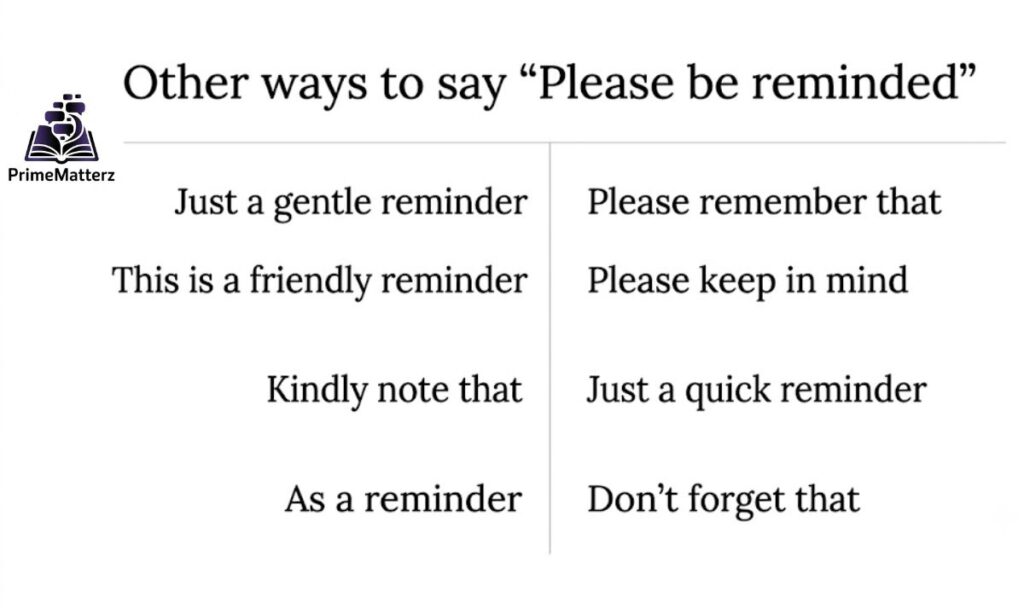
“Please be reminded” is correct and formal. If you want something warmer or more natural, phrases like “just a reminder,” “kindly note,” or “don’t forget” often work better, depending on who you’re talking to.
15+ Alternatives to “Please Be Reminded”
1. Kindly note that
Meaning: A polite way to draw attention to a fact without sounding like a command. It softens the reminder while still keeping things formal.
Example:
Person A: When does the new policy start?
Person B: Kindly note that it takes effect next Monday.
Best Use: Formal emails, official notices, client communication. Worst Use: Texting a friend or casual team chat. Tone: Formal, respectful.
2. As a reminder
Meaning: A neutral, no-frills way to bring something back up. It doesn’t add warmth or formality, it just states the fact.
Example:
Person A: I might be late to the meeting.
Person B: As a reminder, it starts at 9 sharp.
Best Use: Both formal and informal settings, especially group emails. Worst Use: When you want to soften bad news or a sensitive topic. Tone: Neutral.
3. Just a quick reminder
Meaning: A light, friendly nudge that keeps things short and low-pressure. It signals you don’t want to make a big deal out of it.
Example:
Person A: Thanks for the update.
Person B: Just a quick reminder, the form is due Friday.
Best Use: Workplace emails, team chats, client follow-ups. Worst Use: Serious legal or compliance notices. Tone: Friendly, casual.
4. This is to remind you that
Meaning: A formal, almost official phrasing often used in written notices. It reads like something from HR or an institution.
Example:
Person A: Did the office send anything about parking?
Person B: Yes, this is to remind you that permits expire in June.
Best Use: Institutional notices, formal letters, policy updates. Worst Use: One-on-one conversations or casual emails. Tone: Formal, official.
5. A friendly reminder that
Meaning: Adds warmth to a reminder so it doesn’t feel like a demand. Good for keeping relationships comfortable while still being clear.
Example:
Person A: I’ll send the invoice tomorrow.
Person B: A friendly reminder that it was actually due yesterday.
Best Use: Client emails, coworkers, customer service messages. Worst Use: Urgent, time-sensitive warnings. Tone: Warm, friendly.
6. Don’t forget that
Meaning: Direct and simple. It skips the formality and just says what needs to be said, which works well with people you know well.
Example:
Person A: I’m heading out now.
Person B: Don’t forget that we’re picking up the kids at 5.
Best Use: Close coworkers, friends, family, quick messages. Worst Use: First-time client emails or formal reports. Tone: Casual, direct.
7. Just a heads-up
Meaning: Signals a reminder plus a bit of new context, like you’re giving someone advance notice rather than repeating old information.
Example:
Person A: Anything I should know before the call?
Person B: Just a heads-up, the client added two more people.
Best Use: Team communication, internal updates. Worst Use: Formal legal or contractual language. Tone: Casual, informative.
8. Please keep in mind that
Meaning: A gentle way to flag something without pushing too hard. It asks the reader to hold onto the information rather than act right away.
Example:
Person A: I’ll finalize the draft tonight.
Person B: Please keep in mind that the client prefers shorter emails.
Meaning: Formal and firm. It reads like an official statement, often used when a reminder needs to carry some weight or authority.
Example:
Person A: I forgot the rule about late submissions again.
Person B: Let this serve as a reminder that late work isn’t accepted after Friday.
Best Use: Formal notices, policy enforcement, official letters. Worst Use: Friendly or informal exchanges. Tone: Formal, firm.
15. Please be aware that
Meaning: Focuses on awareness rather than action. It’s useful when you want someone informed, not necessarily doing something right away.
Example:
Person A: Will the website be up this weekend?
Person B: Please be aware that it’ll be down for maintenance Saturday.
Best Use: Announcements, service updates, general notices. Worst Use: Direct requests that need a specific action. Tone: Informative, formal.
16. Just touching base about
Meaning: Frames the reminder as a check-in rather than a demand. It feels relationship-friendly and less transactional.
Example:
Person A: How’s the project going?
Person B: Just touching base about the file you still need to send.
Best Use: Client relationships, ongoing projects, follow-ups. Worst Use: First reminders or urgent deadlines. Tone: Friendly, professional.
17. May I remind you that
Meaning: Polite and slightly formal, often used when addressing someone with more authority or when tact matters more than usual.
Example:
Person A: I’ll get to it eventually.
Person B: May I remind you that the client is waiting on this today.
Best Use: Addressing superiors, formal requests, delicate situations. Worst Use: Casual team banter. Tone: Respectful, formal.
18. Please remember that
Meaning: Direct but still polite. It’s one of the more balanced options, working for both formal and semi-formal situations.
Example:
Person A: I’ll bring my laptop tomorrow.
Person B: Please remember that guests need ID to enter the building.
Best Use: General instructions, event details, policy reminders. Worst Use: Very casual conversations between close friends. Tone: Polite, neutral.
19. A quick note to remind you
Meaning: Frames the message as brief and easy to read. It works well when you want to keep things short without sounding abrupt.
Example:
Person A: Anything new on my end?
Person B: A quick note to remind you that your subscription renews Friday.
Best Use: Customer emails, newsletters, short notices. Worst Use: Long, detailed policy explanations. Tone: Friendly, brief.
20. Just circling back on
Meaning: Common in workplace communication, this phrase reminds someone about something without repeating the original ask word for word.
Example:
Person A: Sorry, things got busy this week.
Person B: Just circling back on the proposal, any update?
Best Use: Follow-up emails, project check-ins, sales outreach. Worst Use: First-time reminders with no prior context. Tone: Professional, casual.
Frequently Asked Questions
Is “please be reminded” grammatically correct?
Yes, it’s a correct and polite formal phrase used to bring attention back to something.
Is “please be reminded” too formal for everyday emails?
It can sound stiff in casual or frequent use, so alternatives like “just a reminder” often fit better.
What’s the most common alternative used in professional emails?
“Just a quick reminder” and “as a reminder” are two of the most widely used options.
Can I use casual reminder phrases with my boss?
It’s safer to stick with formal or neutral options like “kindly note” or “please keep in mind” when addressing superiors.
Does changing the reminder phrase actually matter for tone?
Yes, the phrase you choose shapes whether your message feels warm, neutral, or overly formal to the reader.
Final Thoughts
“Please be reminded” is okay, but not your sole choice. Adjust the wording to suit your audience and situation so your reminders don’t seem robotic but more human. Choose the appropriate tone, and your message will land better every time.